Where Are The Only Two Everglades In The World?
The claim that only two everglades exist on Earth comes from tour operators, not from the park service. Here is what the claim means, where the other one is, and how to see the Queensland one.
Where Are The Only Two Everglades In The World?
The two places commonly called everglades are the Florida Everglades in the United States and the upper Noosa River in Queensland, the waterway operators market as the Noosa Everglades. The claim that these are the only two on Earth appears on tour operator listings, not in official park service material. Queensland Parks and Wildlife Service names the local waterway the Upper Noosa River inside the Cooloola Recreation Area, Great Sandy National Park.
The phrase travels fast because it flatters both destinations at once. Florida gets a distant, exotic sibling; Queensland gets a comparison with one of the most famous wetlands on the planet. Search the words and you will find the claim repeated across tour listings, travel blogs and visitor guides for the Sunshine Coast, almost always phrased the same way: one of just two everglades in the world.
This article unpacks where the claim comes from, who actually says it, and what the Queensland waterway really is according to the people who manage it. It also covers the practical side: how the tannin-stained river produces those mirror reflections, and which boat trips take you into the middle of them.
The claim is worth a closer look before you book anything, because the gap between marketing language and official language tells you something useful about the place itself. The upper Noosa River does not need the everglades label to be remarkable. It is a 27.7 km waterway through protected catchment, and two-thirds of that catchment sits inside a national park, a figure the park service states plainly on its own pages.
There is also a practical reason the label endures. Visitors searching for the Florida Everglades stumble onto the Queensland listings, and visitors who have seen Florida often add the Noosa version to their bucket list on the strength of the comparison. The word does commercial work, in other words, and that is precisely why it appears in listing copy rather than in park service descriptions. A government agency has no incentive to borrow a foreign place name for a river it already describes in vivid terms of its own.
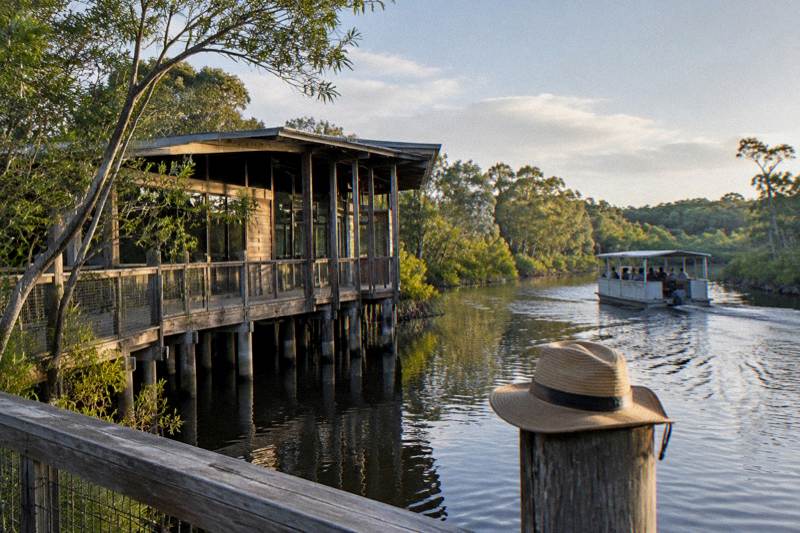
If a boat trip is already on your list, the comparison of afternoon cruises on the site homepage lines up the current listings side by side, and the afternoon cruise through the Noosa Everglades is the most-reviewed option among them, rated 4.5 from 1,093 reviews and priced from $69 per person.
What Does The Only Two Everglades Claim Actually Mean?
The claim means that only two river systems on Earth are popularly called everglades: the Florida Everglades and the Noosa Everglades of Queensland. It originates with tour operators and booking listings, not with any park service or scientific body. Queensland Parks and Wildlife Service never uses the phrase Noosa Everglades, and never states that only two such places exist.
That distinction matters more than it first appears. An everglades, in the loose sense the marketing uses, is a shallow, slow-moving wetland system with tannin-stained water and reflective surface conditions. The word itself comes from Florida, where the native everglades is a vast sheet-flow marsh. Applying the same word to a Queensland river is a comparison, not a classification, and no international body certifies which places qualify.
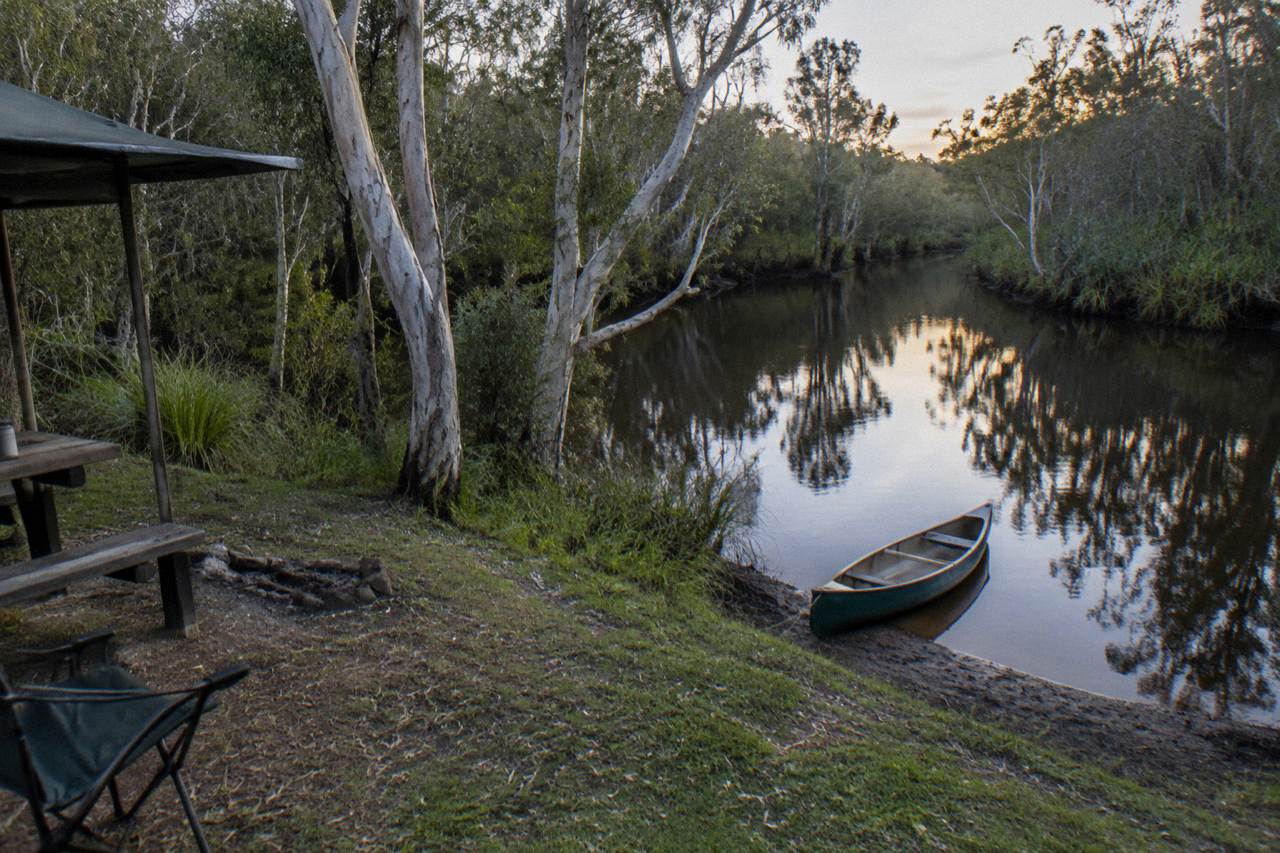
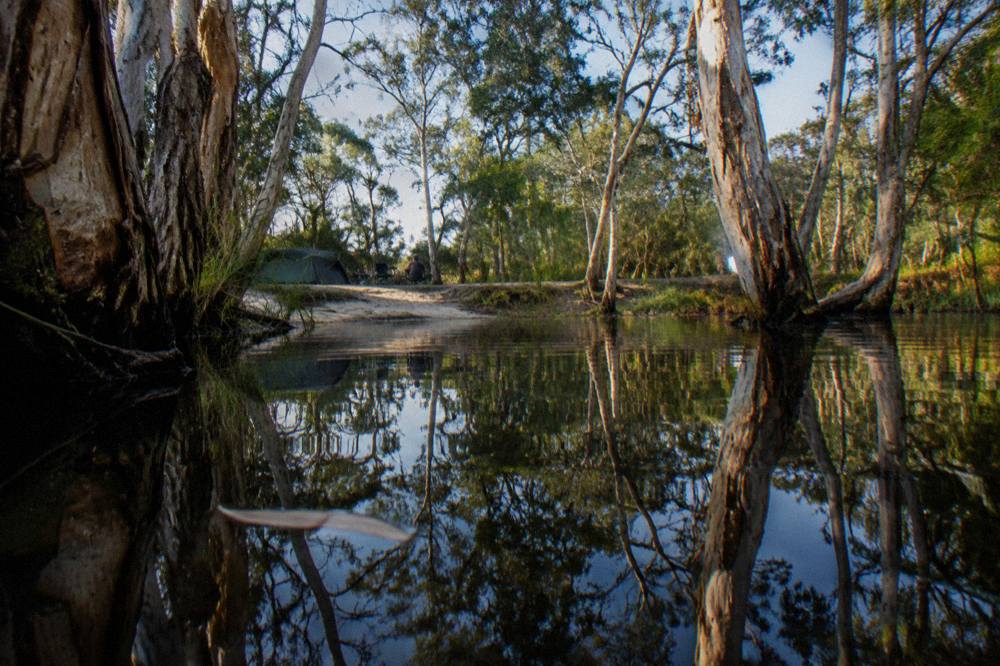
The park service describes the Queensland waterway in its own terms. Its pages describe "the scenic waterways of the Upper Noosa River and its tributaries", noting that "the dark tannin-stained waters offer spectacular reflections of the twisted paperbarks and bloodwoods that line the riverbanks". That is the physical reality behind the marketing word, and it is stated on the official Cooloola pages at parks.qld.gov.au.
The other everglades, the Florida one, needs no introduction and no invented geology here. It is the better-known Florida Everglades, a huge subtropical wetland in the United States, famous worldwide. The two places share shallow, slow, tea-coloured water and reflective calm, which is exactly why the comparison stuck. What they do not share is climate, wildlife or scale, and honest writing about the Queensland river does not need to pretend otherwise.
So when a listing says only two everglades exist, read that as operator copy describing a family resemblance. The river itself is real, the reflections are real, and the protected catchment is real. The superlative is the only borrowed part. Treat it the way you would treat any good tagline: as an invitation to look, not as a finding of fact.
Why The Upper Noosa River Looks Like An Everglades
The upper Noosa River looks like an everglades because its water is stained dark brown by tannins leached from surrounding vegetation, and where that dark water is sheltered and still, it reflects the paperbark forest and the sky with mirror precision. The park service notes the river winds for 2.5 km through a section it calls The Narrows, where the reflections are at their strongest.
Tannins are the same compounds that give tea its colour. Rain falling through the paperbark and bloodwood forest picks them up from leaves, bark and soil, then carries them into the river. Once in the water they stain it the colour of weak black tea, and a dark surface reflects far better than a clear one, which is why the sheltered upper river produces those famous photographs of trees doubled perfectly on the water. The wider set of guides lives on Noosa Everglades Tours.
The geography helps. The upper river is narrow, slow and protected from wind by the forest walls on both banks. Upstream from the Kinaba Information Centre a six-knot, no-wash speed limit applies, which protects the banks from erosion and, as a side effect, keeps the water glassy for everyone. Motorised vessels are permitted only as far as campsite 3, and past that point only electric and non-motorised craft, so the furthest reaches stay close to silent. The official waterway journey page at parks.qld.gov.au sets out these rules.
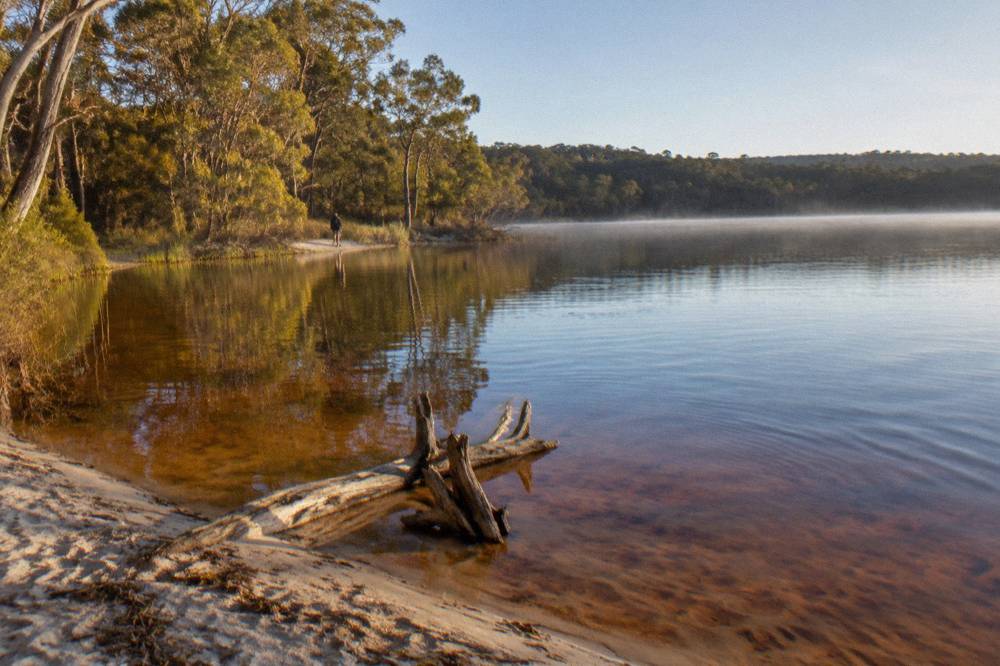
The transition happens gradually as you head upstream. Boats typically cross Lake Cootharaba, an open, shallow lake that can chop up in afternoon wind, then enter the river proper where the water darkens and the forest closes in. The park service advises crossing the lake early in the morning when conditions are likely to be calm, which is one reason morning departures dominate the tour schedules. The change is striking enough that many first-time visitors describe the moment the boat leaves the open lake and enters the dark corridor as the point the trip becomes unforgettable.
The wildlife adds to the everglades feel. The wider Cooloola Recreation Area supports more than 350 bird, 75 mammal, 21 frog and 80 reptile species, and the About page notes rare local animals including the Cooloola acid frog and the ground parrot. Waterbirds such as cormorants, egrets, spoonbills and darters work the shallows around Fig Tree Point in the early morning and late afternoon. More on the river's wildlife appears in our guide to the Noosa Everglades River of Mirrors.
How To See The Noosa Everglades For Yourself
The easiest way into the everglades is a boat tour: an afternoon cruise of about 2.5 hours from Boreen Point, a longer explorer cruise of 4.5 hours, or a full paddle day by kayak or canoe. Cruise prices start from $69 per person, and the two afternoon options both carry a 4.5 rating with free cancellation, though the notice periods differ by listing.
The three boat-based listings compared on this site cover the main choices. Here is how they line up on the figures that matter.
| Listing | Decision name | Price from | Rating | Duration | Cancellation |
|---|---|---|---|---|---|
| Afternoon Cruise through the Noosa Everglades | 2.5-Hour Afternoon Cruise | $69 per person | 4.5 from 1,093 reviews | 2.5 hours | Free, up to 24 hours |
| Serenity Cruise to Australia's Everglades | Afternoon Tea Cruise | $70.10 per person | 4.5 from 472 reviews | About 2 hours 30 minutes | Operator asks 48 hours notice |
| Everglades Explorer Cruise | 4.5-Hour Cruise, Lunch Extra | $117 per person | 4.6 from 279 reviews | 4.5 hours, 9am to 1.30pm | Free, up to 24 hours |
The afternoon cruise is the featured listing for good reason: it is the most-reviewed product on this site, it includes a glass of sparkling wine, beer or juice, and it departs Boreen Point on the upper Noosa River, so you are in the dark water quickly. A coach transfer from selected Noosa stops is included, and the provider confirms your pickup time after booking. The Serenity cruise, run by Everglades Eco Safaris, covers similar water on a vessel with a stated capacity of 36, and includes sparkling wine and beer.
The Explorer cruise is the middle option: 4.5 hours with morning refreshments included and lunch to buy at the on-site bar and bistro, departing 9am to 1.30pm. Check the live listing for the departure point and any transfer options. If you would rather paddle than ride, the same waterway opens up by canoe or kayak, and the choice between guided and self-guided options is covered in our Noosa Everglades kayak tour guide.
For paddlers who want the deepest version of the experience, the full-day guided kayak tour by Kanu Kapers Australia runs about 6 hours from 8:30am, rated 4.9 from 158 reviews and priced from $148 per person, with lunch, fresh fruit, baked bread and drinks included and groups capped at 16. It meets at Elanda Point Canoe Launch, roughly 25 minutes north of Noosa per the listing, with no pickup, and no free cancellation is stated, so check the booking page before committing.
At the other end of the scale, a private hinterland day by Joel's Journeys combines hotel pickup and drop-off across the Sunshine Coast, Noosa and the Hinterland with a 2.5 hour Serenity cruise, a gourmet lunch with a drink in Pomona and complimentary tea or coffee lakeside, over 7.5 hours from $527 per person. It is a new listing with no reviews yet, so there is no rating to report. That is the pick if the everglades is one stop on a bigger day rather than the whole day.
What Queensland Parks Actually Calls This Place
Queensland Parks and Wildlife Service calls this waterway the Upper Noosa River, inside the Cooloola Recreation Area of Great Sandy National Park, and uses The Narrows for the 2.5 km reflective stretch. It never uses the phrases Noosa Everglades or River of Mirrors, which belong to operators, listings and common usage. The journey is 27.7 km one way, with about 5 hours of suggested paddling time.
That official framing is not pedantry. It tells you what is protected and how. Two-thirds of the Noosa River catchment sits inside the national park, which is why the upper river runs dark and quiet rather than developed. The park service states that tour boats operate daily from Noosa and Tewantin, and that canoes, kayaks and small boats can be hired from private operators at Boreen Point and Elanda Point. Both launching areas are accessible by two-wheel-drive vehicles.
The official names also carry the rules that keep the place the way it looks in the photographs. Because the park service manages the Upper Noosa River as a protected waterway rather than as a tourist attraction, the speed limits, vessel restrictions and no-landing zones apply to everyone, commercial operators included. The mirror surface that makes the everglades comparison plausible is, in part, a product of those rules holding for decades. Remove them and the banks erode, the water clouds, and the resemblance fades.
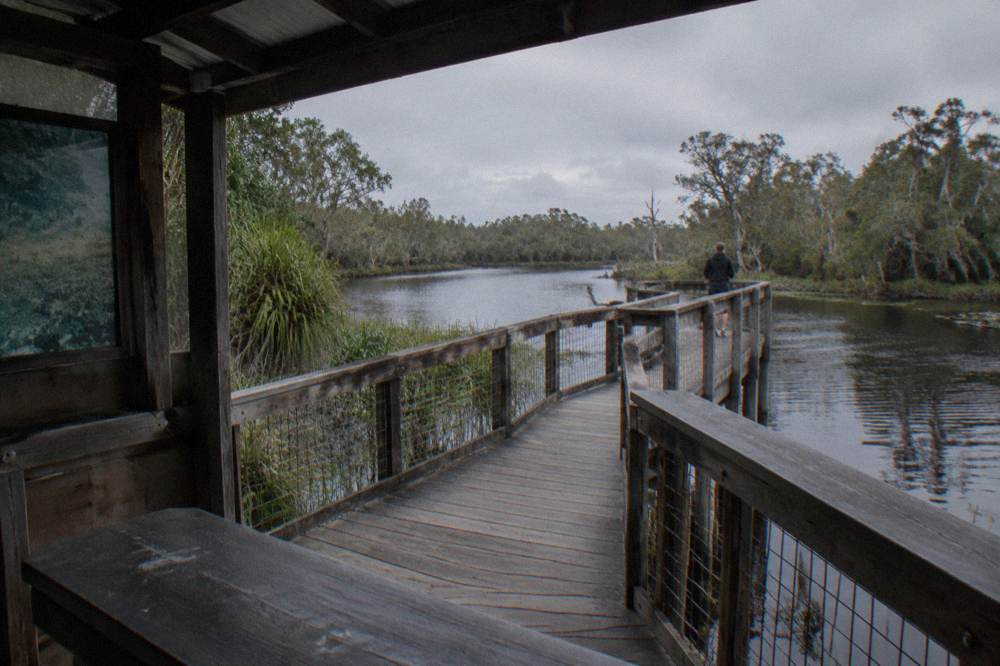
It is not possible to proceed upstream beyond Upper Noosa River campsite 15, so the waterway has a natural end, and the campsites along it are paddle-in or boat-in only. Camping permits are required at all sites, and fees from 1 July are $7.75 per person per night or $31.00 per family per night. If an overnight stay in the everglades appeals, the details are in our guide to Noosa Everglades camping.
The practical takeaway for a visitor is simple. Book the boat or paddle trip under whatever name the listing uses, but plan around the official rules: the speed limit above Kinaba, the vessel limits past campsite 3, the no-landing zone between Fig Tree Point and Harrys Hut, and the current alerts on the park pages. The reflections do not care what the place is called.
Common Questions About The Two Everglades
Where Are The Only Two Everglades In The World?
The two places popularly called everglades are the Florida Everglades in the United States and the upper Noosa River in Queensland, which operators market as the Noosa Everglades. The only-two claim comes from tour listings and operator copy, not from Queensland Parks and Wildlife Service, which names the waterway the Upper Noosa River in the Cooloola Recreation Area, Great Sandy National Park.
Is The Noosa Everglades An Official Name?
No. Queensland Parks and Wildlife Service does not use the phrase Noosa Everglades, or River of Mirrors, on its pages. Those names come from operators, listings and common usage. The park service describes the Upper Noosa River, its tannin-stained waters and the 2.5 km stretch it calls The Narrows.
Why Is The Water In The Noosa Everglades So Dark?
Tannins leached from the surrounding paperbark and bloodwood forest stain the water the colour of weak tea. A dark surface reflects far better than a clear one, so where the narrow, sheltered river is calm, the forest and sky double on the water with mirror precision.
Can You Visit The Noosa Everglades Without A Tour?
Yes. The park service notes that canoes, kayaks and small boats can be hired from private operators at Boreen Point and Elanda Point, and both launching areas are reachable by two-wheel-drive vehicles. A guided or cruise option simply removes the planning, and the most-reviewed cruise on this site runs 2.5 hours from $69 per person.
How Long Do You Need To See The Noosa Everglades?
An afternoon cruise covers the reflective stretch in about 2.5 hours. The Explorer cruise runs 4.5 hours, and full-day kayak tours run about 6 hours from 8:30am. The full waterway journey is 27.7 km one way with about 5 hours of suggested paddling time for those going independently.
Are The Two Everglades Similar?
They share shallow, slow-moving, tannin-stained water and reflective calm, which is why the comparison caught on. They differ in climate, wildlife and scale. The Florida Everglades is a vast subtropical wetland in the United States; the Queensland everglades is a narrow, protected river inside a national park catchment.