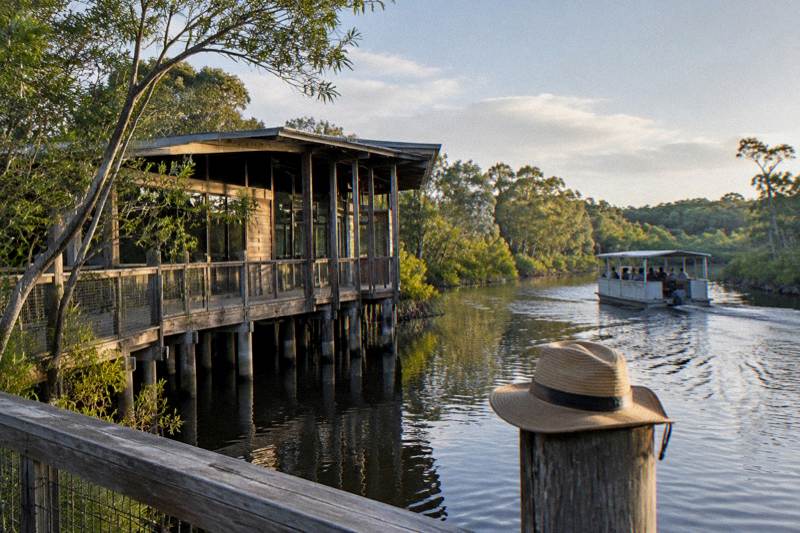
River Of Mirrors Noosa Everglades: Where To Find The Upper Noosa River's Famous Reflections
The dark tannin water of the upper Noosa River can hold a near perfect reflection of the paperbarks and bloodwoods along its banks. Here is where the effect is at its strongest, what the official park pages actually say about it, and how to time a visit so the water is glass.
Short answer
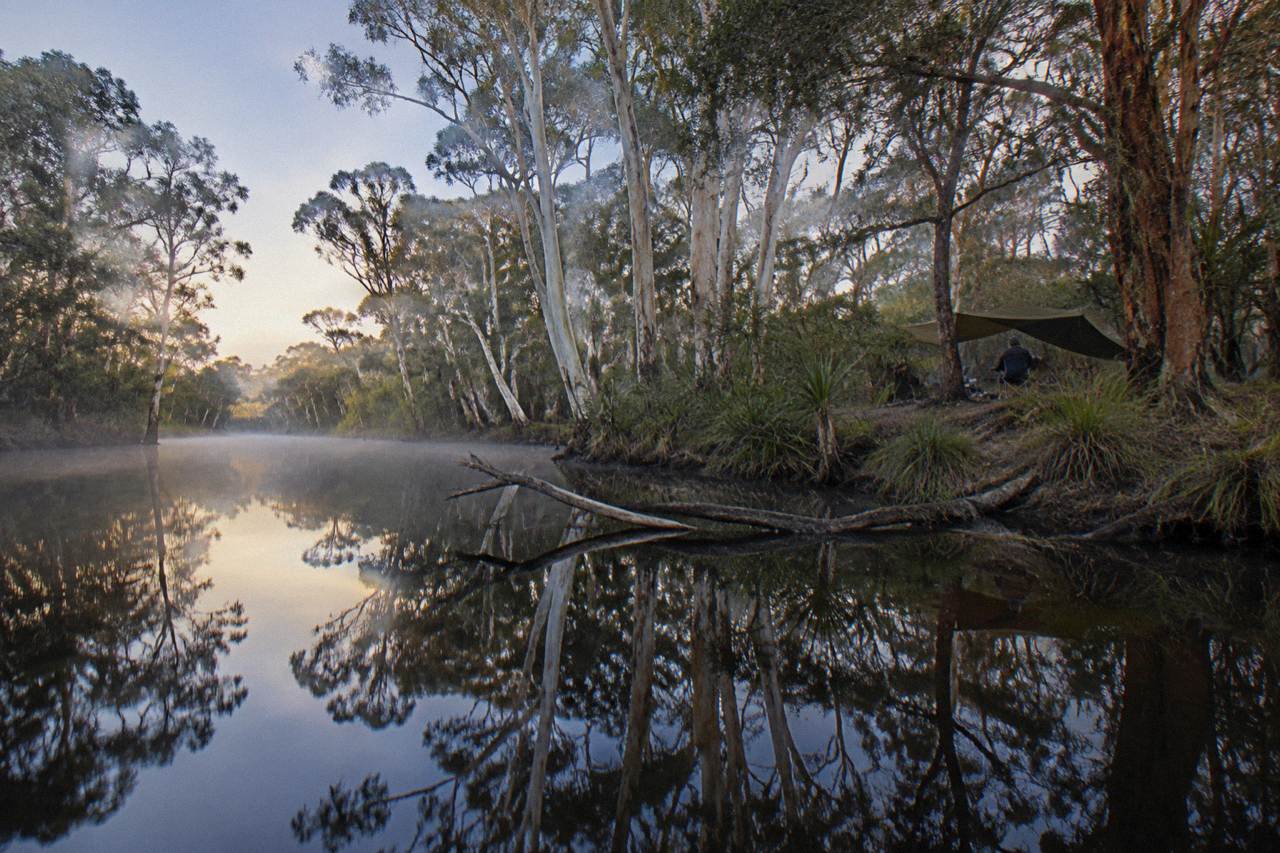
The River of Mirrors is the 2.5 km stretch of the upper Noosa River that Queensland Parks and Wildlife Service calls The Narrows, where tannin stained water reflects forest and sky. Operators use the mirror name for the whole upper river. Calm early morning water gives the best reflections; the 2.5 hour afternoon cruise from $69 reaches the area by boat.
The name on the tour brochures is the River of Mirrors. The name in the official park record is plainer: Queensland Parks and Wildlife Service describes the upper Noosa River inside the Cooloola Recreation Area, Great Sandy National Park, and calls the standout 2.5 km stretch The Narrows, where, in the service's own words, tannin-stained waters reflect forest and sky. Both names describe the same dark water and the same twisted paperbarks. This guide sets out what the effect is, exactly where it sits on the river, what conditions produce the best mirror, and which tours and departure times give you the strongest chance of seeing the water at its calmest. If you're weighing whether the Everglades or the coastal park deserves your limited days, our Noosa National Park guide compares the two experiences side by side.
What Is The River Of Mirrors?
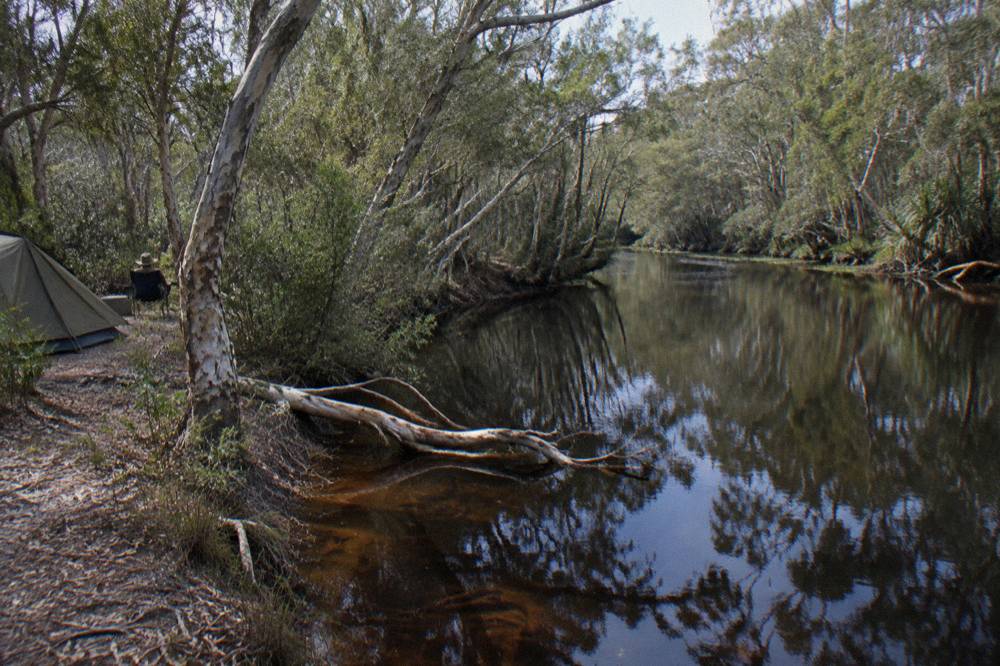
The River of Mirrors is the popular and operator name for the reflective, tannin stained water of the upper Noosa River in the Cooloola Recreation Area, Great Sandy National Park. The park service itself never uses the phrase, nor does it use Noosa Everglades; its pages describe dark tannin-stained waters offering spectacular reflections of the twisted paperbarks and bloodwoods lining the riverbanks. Whatever the official wording, the reflections are at their best when the breeze drops and the water goes glassy, early or late in the day, and our guide to Noosa Everglades sunset tours explains how to catch that light from the water.
The color comes from tannin. Tea colored water is common on coastal Queensland streams that drain paperbark and heath country, but the upper Noosa River holds the effect in an unusually concentrated, unusually still form. Two thirds of the Noosa River catchment is protected inside the national park, so the water arrives essentially unfiltered by farmland or suburbia, carrying the stain of the wetlands it drains.
The mirror itself is a matter of light and stillness rather than chemistry. When the water is calm, the dark surface behaves like a weak mirror: it absorbs most light and returns a sharp image of whatever stands above it, the paperbarks, the bloodwoods, the sky. When wind ruffles the surface the image shatters into fragments, and the same stretch of river looks like any other brown creek. That is why timing matters so much on this waterway, and why the sections below go into the conditions question in detail.
One more naming note, because it keeps coming up in searches. Operators and listings describe this system as one of just two Everglades in the world. That claim comes from operator copy only. No official park page makes it, and the park service's own name for the standout stretch is simply The Narrows. The marketing name is fine as shorthand, but the official record is worth knowing when you read conflicting descriptions of the place.
Where Is The River Of Mirrors Located?
The mirror stretch most people photograph is The Narrows, a 2.5 km section of the upper Noosa River, in the Cooloola Recreation Area about 19 km by road from Tewantin. The wider upper river, from Elanda Point and Boreen Point upstream to campsite 15, is what tours market as the Everglades and the River of Mirrors. Once you've seen the reflections, the wider guide to Noosa's other attractions covers plenty more to fill out your trip.
Access is from two launch points, both reachable by ordinary two wheel drive vehicles. Boreen Point, on Lake Cootharaba, carries the boat ramp used by the cruise vessels. Elanda Point, 1.4 km along the access road off Lake Flat Road, is the canoe and kayak launch. Tour boats operate daily from Noosa and Tewantin, and canoes, kayaks and small boats can be hired from private operators at Boreen Point and Elanda Point, per the park service's waterway page.
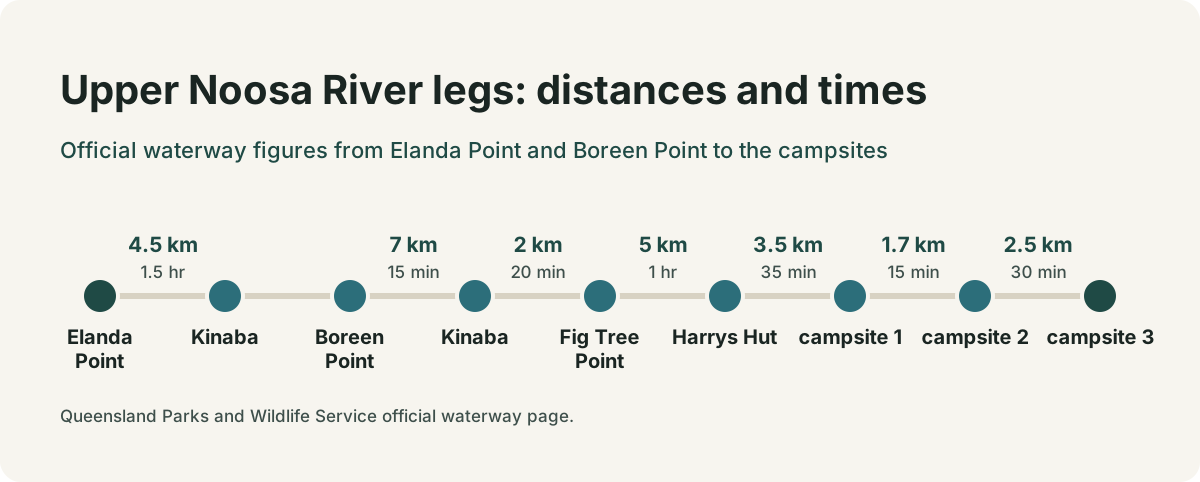
The river's own geography does the rest. From the lake the water narrows past Kinaba Information Centre, threads through The Narrows, then widens at Harrys camping and day use areas. Upstream of Harrys Hut the campsites 1 to 15 run toward the head of navigation; it is not possible to proceed upstream beyond campsite 15. The distances and typical times from the official waterway page:
| Leg | Distance | Canoe time | Boat time |
|---|---|---|---|
| Elanda Point to Kinaba | 4.5 km | 1.5 hr | n/a |
| Boreen Point to Kinaba | 7 km | n/a | 15 min, 40 knot limit |
| Kinaba to Fig Tree Point | 2 km | 20 min | 15 min |
| Fig Tree Point to Harrys Hut | 5 km | 1 hr | 30 min |
| Harrys Hut to campsite 1 | 3.5 km | 35 min | |
| Campsite 1 to campsite 2 | 1.7 km | 15 min | |
| Campsite 2 to campsite 3 | 2.5 km | 30 min | |
| Campsite 13 to campsite 15 | 3 km | 30 min |
A six knot, no wash speed limit applies upstream from the Kinaba Information Centre, which protects the banks from erosion and, as a side effect, protects the mirror: a boat running slowly leaves far less wake to break up the surface. Motorised vessels are permitted only as far as campsite 3; beyond that, electric motors and paddle craft only. That regulatory quiet is a large part of why the upper river can hold a reflection at all.
If you are weighing how to see it, the side-by-side comparison on Noosa Everglades Tours lines up every current listing by price, duration and style. The short version: boats reach the mirror stretch with the least effort, kayaks reach it with the most silence, and the best choice depends on how much of the day you want to spend on the water.
What Makes A Good Mirror On The Water?
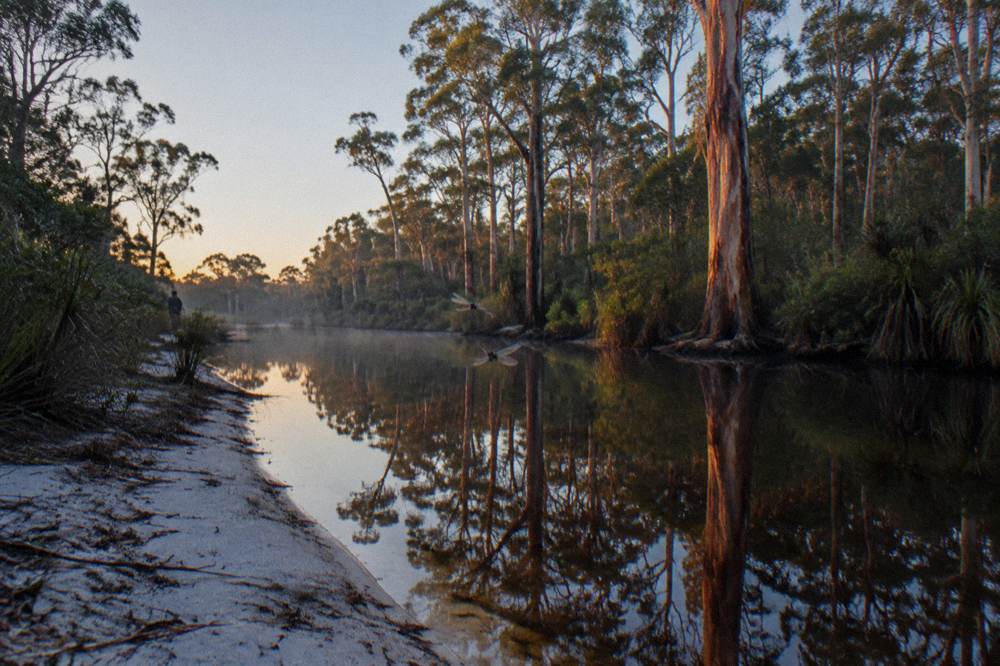
A good mirror needs three things at once: wind still or near still air, a smooth water surface with no boat wake, and good but not harsh light, which on this river usually means early morning or the last hour before dusk. Nothing exotic is required, just patience and the willingness to be on the water when the day is calmest.
Wind is the main enemy. The upper river is sheltered by high banks and dense paperbark forest along much of its length, which is why it can hold a reflection even on days when Lake Cootharaba is choppy. The lake itself is the exposed part: the park service advises planning to cross Lake Cootharaba early in the morning when conditions are likely to be calm and travel is easiest. That advice is aimed at paddlers, but it doubles as mirror advice, because the calm morning window on the lake is usually the calm morning window on the river.
Boat traffic is the second factor, and the six knot no wash limit above Kinaba keeps it manageable. The cruise vessels run daily, and their wash settles within minutes. The stretch that holds the cleanest reflections for the longest is the water away from the launch points and the Fig Tree Point and Harrys day use areas, where the river narrows and the forest closes overhead.
Light is the third. Full overhead sun on dark tannin water produces a deep, saturated reflection, but the most dramatic images tend to come when low sun angles light the trunks and the water still returns them cleanly. Overcast days flatten the effect. The practical planning summary:
| Condition | Effect on the mirror | Planning note |
|---|---|---|
| Calm dawn air | Best surface, often glass | Kayak tours start 8:30am to catch the tail of it |
| Mid morning | Still good, first breeze arriving | Cruises pass through on most schedules |
| Midday | Harsh light, boat wake settling | Fine for wildlife, weaker for photos |
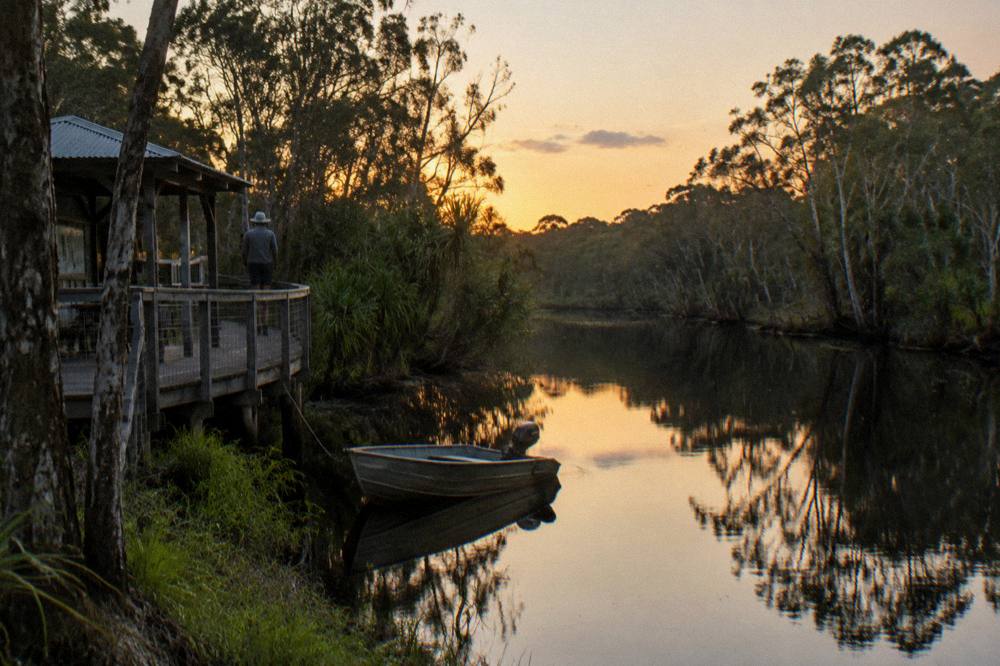
| Late afternoon | Second calm window before dusk | The afternoon cruise times into this |
| After heavy rain | Water levels up, color darker | Check the park conditions report before travel |
Noosa Shire Council monitors recreational water quality at Boreen Point and Elanda Point and advises avoiding swimming in discoloured or murky water, or shortly after heavy rain. Rain does not destroy the tannin stain, it is the stain, but flood water can muddy the surface and damage infrastructure, as the jetty closure at campsite 3 shows. The conditions report for the Cooloola Recreation Area, updated 30 September 2026, is the document to check before any trip in the months ahead.
When Is The Best Time To See The Reflections?
Early morning is the best time to see the River of Mirrors, when the air is calmest and the water most likely to be glass, with a second, shorter calm window in the late afternoon before dusk. By season, spring months average the fewest rain days of the year locally, and September is the driest month on the 30 year record for the nearest weather station.
The climate record for the area is the Bureau of Meteorology's Tewantin station, the nearest to the river, with 30 years of data. Two figures matter for mirror planning. One is rainfall, because rain brings wind with it and can muddy the water. The other is rain days, because a dry spell means settled high pressure, light winds and better odds of glass.
| Month | Mean max C | Mean min C | Mean rain mm | Rain days (1 mm+) |
|---|---|---|---|---|
| July | 21.4 | 11.3 | 71.7 | 7.1 |
| August | 22.5 | 11.8 | 76.9 | 5.5 |
| September | 24.4 | 14.6 | 57.8 | 5.8 |
| October | 25.8 | 17.1 | 112.1 | 8.0 |
| November | 26.9 | 18.9 | 99.0 | 7.9 |
| December | 28.2 | 20.8 | 147.4 | 9.8 |
September and August are the standout months for calm, with mean rain days of 5.8 and 5.5 respectively and the lowest mean rainfall of the year. October and November are warmer and only slightly wetter on average. The summer months carry the highest rain day counts, February and March both above 12, which makes the mirror a matter of luck between systems rather than a reliable morning expectation.
Averages are averages, though, and the median rainfall is lower than the mean in every month of the record, because a few flood years pull the mean up. A typical October is drier than the 112.1 mm mean suggests. The honest planning advice is that any month can deliver a glass morning, but winter and spring deliver them more often, and the shoulder season also carries smaller crowds than the summer holidays.
The other timing question is the clock. Kayak tours on this river start at 8:30am, which is not quite dawn but still inside the calm window. The afternoon cruise departs after lunch and runs into the late afternoon calm. Both work; the guided paddle simply gives you longer inside the quietest hours, while the cruise gives you the same water with a glass of sparkling wine and none of the effort.
Which Tours Show You The Mirror Stretch Best?
Every tour that travels above Kinaba passes through the mirror water, because The Narrows sits on the main channel between the lake and Harrys Hut. The difference between listings is how long you spend in it, how quietly you move through it, and whether you paddle yourself. Boat tours reach it fastest; kayak tours spend the most time inside the quiet sections.
The cruise family is the easiest way in. The featured afternoon cruise, a 2.5 hour trip from Boreen Point rated 4.5 from 1,093 reviews and priced from $69 per person, runs up the river into the reflective stretch with a glass of sparkling wine, beer or juice included. It is the most reviewed listing on the river by a wide margin, and free cancellation applies up to 24 hours before departure. The Serenity cruise, from $70.10 per person with a 4.5 rating from 472 reviews, covers similar water in about two and a half hours with a 36 person vessel, run by Everglades Eco Safaris; that operator asks 48 hours cancellation notice on its own terms. You can compare the two afternoon cruises side by side on the tour page before booking.
The Explorer family goes further and longer. The 4.5 hour Explorer cruise, from $117 per person and rated 4.6 from 279 reviews, runs 9am to 1.30pm with morning refreshments included and lunch to buy at the on site bar and bistro. Its sister listing adds canoeing: the roughly 6 hour Explorer with canoe and optional BBQ lunch, from $119.67 per person, rated 4.6 from 379 reviews, with round trip transfers from central Noosa arrangeable at booking. The two Explorer listings show different durations, 4.5 hours on one and about 6 hours on the other, so read each listing's own figure rather than assuming they match.
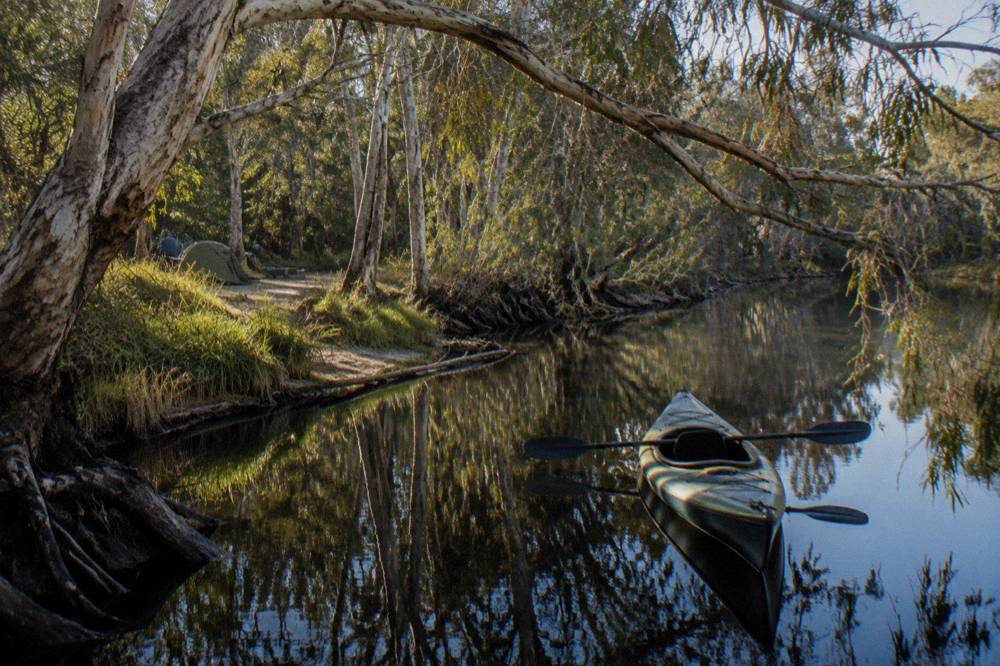
The kayak family is where the mirror is at its best, because a paddle craft leaves no wake at all. Kanu Kapers runs a full day guided kayak tour from $148 per person, rated 4.9 from 158 reviews, about 6 hours from 8:30am with lunch, fresh fruit, baked bread and drinks included, meeting at Elanda Point Canoe Launch, and groups capped at 16. The same operator's self guided kayak day, from $85.68 per person with a 4.8 rating from 133 reviews, covers similar water at your own pace with groups up to 20. Neither listing states free cancellation, so check the booking page before committing.
Adventure Tribe runs two more paddle listings, a 7.5 hour guided kayak day from $137 per person with morning tea, lunch and coffee from local organic food included, and a 7.5 hour self guided day from $80 per person. Both carry a 4.8 rating from small review pools, 9 reviews on the guided trip and 16 on the self guided, so treat those ratings as thin samples rather than settled verdicts. Free cancellation applies to the guided listing. For a fuller rundown of the paddle options, the Noosa Everglades kayak tour guide breaks down guided versus self guided in detail.
Can You Photograph The River Of Mirrors?
Yes, but the camera is the least of it. The shots that work come from being there in the first two hours after dawn or the last hour before dusk, from a stable platform, and from pointing the lens at the sections where the forest closes over the channel.
The reflections read strongest where the banks are close and the trees overhang the water, which is exactly what The Narrows gives you for 2.5 km. Dark tannin water also helps the exposure: the surface acts like a weak neutral filter, so the reflected image comes up saturated without much work. On a calm morning a phone camera held just above the waterline will produce something striking; a polarising filter, used carefully, can either deepen or erase the reflection depending on angle, so experiment before committing.
From a boat, the practical constraint is vibration and wake. Ask the crew where the calm sections fall on the route; the skippers on this river know exactly which bend holds the mirror at which hour. From a kayak, you can stop entirely, drift, and let the water settle around you, which is why paddlers tend to bring back the strongest frames. The Fig Tree Point and Harrys day use areas give land based options with jetties and picnic tables if you would rather not be on the water at all.
One honest caution: the mirror is a condition, not a guarantee. Visitors who arrive at midday on a breezy day sometimes leave disappointed, and the reviews that mention perfect glass tend to come from early departures. Book the earliest start you can, and if the forecast is for strong wind, a cruise with an enclosed cabin or a reschedule option is the safer bet than a paddle day. The Noosa Everglades best time to visit guide covers the seasonal picture in more depth.
Is The River Of Mirrors Worth The Trip?
For most visitors, yes: the upper Noosa River's reflective water is genuinely unusual, protected inside a national park, and reachable on a half day trip from Noosa for from $69 per person. The honest caveat is that the effect depends on conditions, so a trip timed for a calm morning is a different experience from one timed for a windy afternoon.
The case for it is straightforward. Two thirds of the catchment is protected park, the water is dark with tannin rather than pollution, motorised traffic stops at campsite 3, and a six knot limit keeps what traffic exists quiet. The result is a stretch of river where the reflection is not a lucky accident but the ordinary state of the water on a calm day. Very few places within a two hour drive of a major city offer that.
The case against is equally honest. If you visit at the wrong hour, you will see a pleasant brown river with nice trees, and if your only frame of reference is heavily curated photography, the reality can underwhelm. The fix is timing, not expectation management: go early, go in a calm season, or go twice. The is the Noosa Everglades worth it piece weighs the question in full, including what visitors on a tight schedule should skip.
For planning around the next few months specifically, a few current items from the park record matter. The partial jetty closure at campsite 3 runs until 24 October 2026, with the northern camper's jetty open while the southern day use jetty is repaired. A pest control program runs across the Cooloola Recreation Area from 31 October to 28 November 2026, mainly affecting firebreak roads and the Teewah Beach and Freshwater camping areas rather than the river itself. And the Cooloola conditions report was updated 30 September 2026, so download the current version before you travel.
How Do You Plan A Day Around The Mirror Water?
Plan the day backwards from the calm window: be on the water by mid morning or in the late afternoon, build in the drive time from Noosa, and keep the middle of the day for the lake, Kinaba or lunch rather than for expecting glass. A cruise day needs about half a day total; a kayak day needs the full day.
The drive is the first fixed cost. From Tewantin it is 19 km via McKinnon Drive and Louis Bazzo Drive to Boreen Point, then 2 km along Lake Flat Road to the Elanda Point access. Both launch areas are accessible by two wheel drives, so no special vehicle is needed. Note that Doonella Bridge in Tewantin runs one way eastbound only until early December 2026, with westbound traffic detoured via Eumundi-Noosa Road and Beckmans Road, which adds time if you are routing through Tewantin from the south. Check a mapping service for current drive times rather than relying on fixed figures.
For a cruise day, the shape is simple: drive out, check in at Boreen Point, and let the boat do the rest. The afternoon cruise fits comfortably after a morning elsewhere in Noosa. For a paddle day, the 8:30am starts at Elanda Point mean an earlier alarm, and the tours return by mid afternoon. Either way, the getting to the Everglades from Noosa guide covers routes, buses and parking in full.
What to bring is short: sun protection, water, insect repellent as general park preparation, and a dry bag if you are paddling. The what to bring guide has the full list. If the mirror is the priority, add a plan for the first hour on the water, because that is the hour you came for.
What Do People Actually Say About The Reflections?
Visitor feedback across the river's listings leans heavily on the water's appearance: reviews of the cruises and kayak tours repeatedly single out the dark reflective water and the mirror stretches as the highlight of the day, often ahead of the wildlife and the food. The pattern is consistent enough that it is fair to treat the mirror as the river's main draw.
The most reviewed listing, the afternoon cruise with 1,093 reviews at 4.5, and the Serenity cruise with 472 reviews at the same rating, both draw praise that centres on the scenery rather than the service, though the included drinks and the crew commentary get their share. The kayak listings rate higher, 4.9 from 158 reviews on the full day guided trip and 4.8 from 133 on the self guided day, and the consistent theme in that feedback is the closeness to the water: paddlers sit centimetres above the surface, which is the best possible vantage for a reflection.
The pattern worth knowing is that reviews written from early departures describe the water differently from reviews written from midday ones. The same river, the same operator, the same route, and one group describes a mirror while the other describes a nice cruise. That is the single most useful thing you can take from other people's experiences: the river rewards the early start, and the listings that offer one are the listings whose reviews read best.
For the full picture of how the tours stack up on price, duration and inclusions, the how to choose a tour guide walks through every listing on the river, and the Everglades cruise guide covers the boat options in depth.
Common Questions About The River Of Mirrors
What is the River of Mirrors?
It is the popular and operator name for the reflective, tannin stained water of the upper Noosa River in the Cooloola Recreation Area, Great Sandy National Park. Queensland Parks and Wildlife Service does not use the name; its pages describe the dark tannin-stained waters offering spectacular reflections, and call the standout 2.5 km stretch The Narrows.
Where exactly is the mirror stretch?
The Narrows sits between Kinaba Information Centre and Harrys Hut, roughly 2.5 km of narrow channel where the forest closes over the river. The wider upper river from Elanda Point and Boreen Point up to campsite 15 is what tours market as the Everglades.
When is the water most likely to be glass?
Early morning, in the first hours after dawn, and again in the late afternoon before dusk. Spring and late winter average the fewest rain days at the nearest weather station, so those seasons give the best odds of a calm morning.
Can you see the mirror from a boat tour?
Yes. All the cruises from Boreen Point travel the same channel through The Narrows, under a six knot no wash speed limit that keeps the water settled. The featured afternoon cruise runs 2.5 hours from $69 per person and is rated 4.5 from 1,093 reviews.
Is kayaking better than a cruise for the reflections?
A kayak puts you centimetres above the surface with no wake at all, which is the strongest vantage for the mirror. A cruise reaches the same water with no effort and a drink included. The guided full day kayak tour from $148 per person is rated 4.9 from 158 reviews.
Does rain ruin the reflections?
Rain brings wind, and wind is what breaks the mirror. Heavy rain can also muddy the surface and raise water levels. The tannin stain itself is permanent, and the water usually settles again within a day or two of calm weather. Check the Cooloola conditions report before travelling after a storm.
The River of Mirrors is a condition as much as a place, and the whole art of seeing it well is showing up when the condition holds. Pick a calm month, pick an early start, and the dark water will do the rest. The Noosa Everglades cruise guide and the tour pages linked through this article cover the practical next step, and Check availability on the featured afternoon cruise if a glass of sparkling wine on dark water sounds like the right way to meet the river.