Noosa Everglades Camping: Permits, Fees And Campsites On The Upper Noosa River
Camping is the only way to sleep inside the upper Noosa River system, and it runs on a strict permit system set by Queensland Parks and Wildlife Service. Here is what a night on the river actually costs, which sites you can book, and what the tour listings cover instead.
Short answer
Every campsite on the upper Noosa River requires a permit booked in advance, at $7.75 per person per night or $31.00 per family per night, with children under five free. Stays cap at 7 nights at campsites 1 to 15 and 14 nights at Fig Tree Point and Harrys. Open fires are prohibited at all river sites.
What Does Camping In The Noosa Everglades Actually Involve?
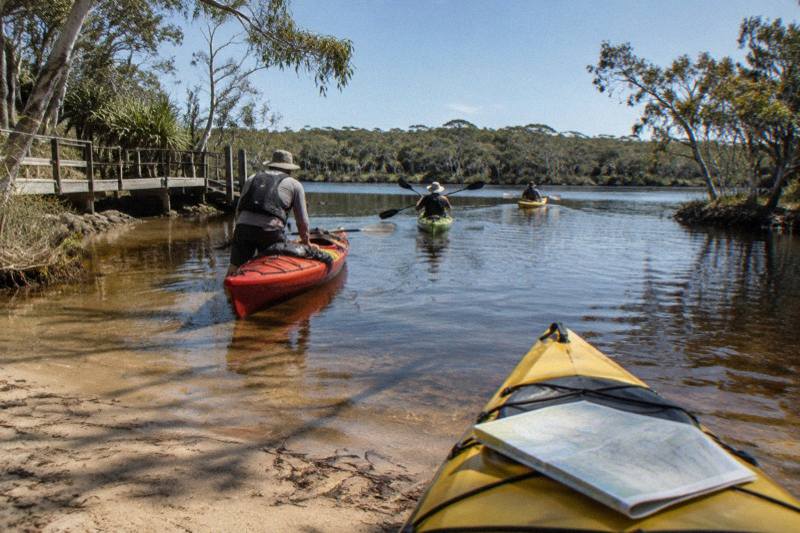
Camping here means a paddle-in or boat-in site on the upper Noosa River inside the Cooloola Recreation Area, Great Sandy National Park, booked under a Queensland Parks and Wildlife Service permit before you go. There is no drive-in campground on the river itself: sites 1 to 15, Fig Tree Point and Harrys are reached by canoe, kayak or boat, and every one of them requires a paid permit. The experience is remote, quiet and tightly regulated.
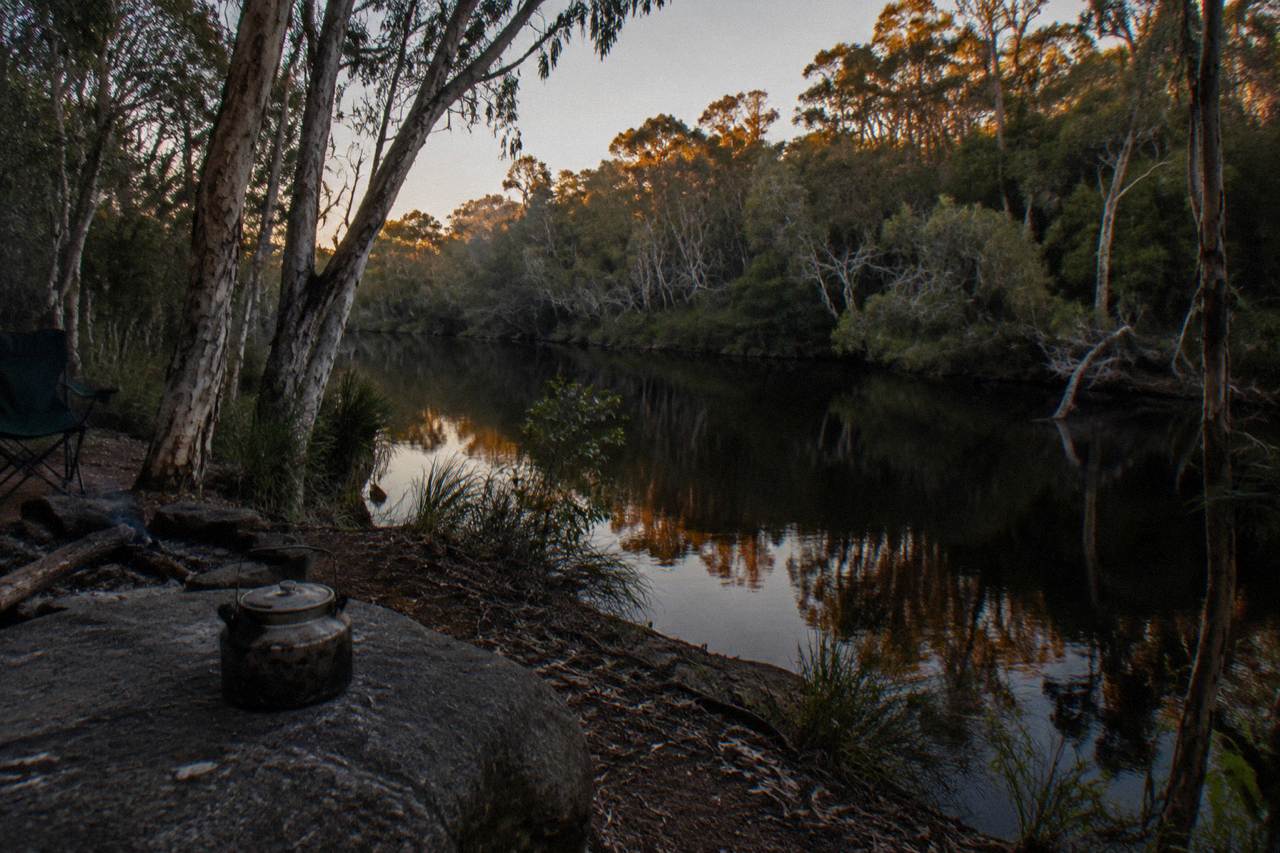
The Queensland Parks and Wildlife Service manages the waterway as the Upper Noosa River in the Cooloola Recreation Area. The dark, tannin-stained water reflects the paperbarks and bloodwoods along the banks, which is why operators and listings market the stretch as the Noosa Everglades, though that name belongs to tourism copy rather than the park's own pages. What the park service does name is The Narrows, a 2.5 km winding section where the reflections are at their best, upstream of Kinaba.
The shape of a camping trip is simple. You launch at Elanda Point or Boreen Point, both reachable by ordinary 2WD vehicles, paddle or motor up the river, and sleep at a riverside campsite with a permit. The full waterway runs 27.7 km one way with a suggested 5 hours of paddling time end to end, and it is not possible to proceed upstream beyond campsite 15. Most camping parties base themselves at one or two sites and day-paddle from there.
One thing to be clear about early: none of the nine bookable tour listings on this site is a camping trip. Every listing is a day experience, from a 2.5 hour afternoon cruise to a 7.5 hour guided kayak day. Camping is a self-organised affair, built around a QPWS permit and your own gear, and the day tours are what you do instead of, or as a scouting run before, an overnight paddle. The rest of this guide covers the permit system, the sites, the rules, and the current alerts, then the day options for travellers who would rather not carry a tent.
How Much Does A Camping Permit Cost Per Night?
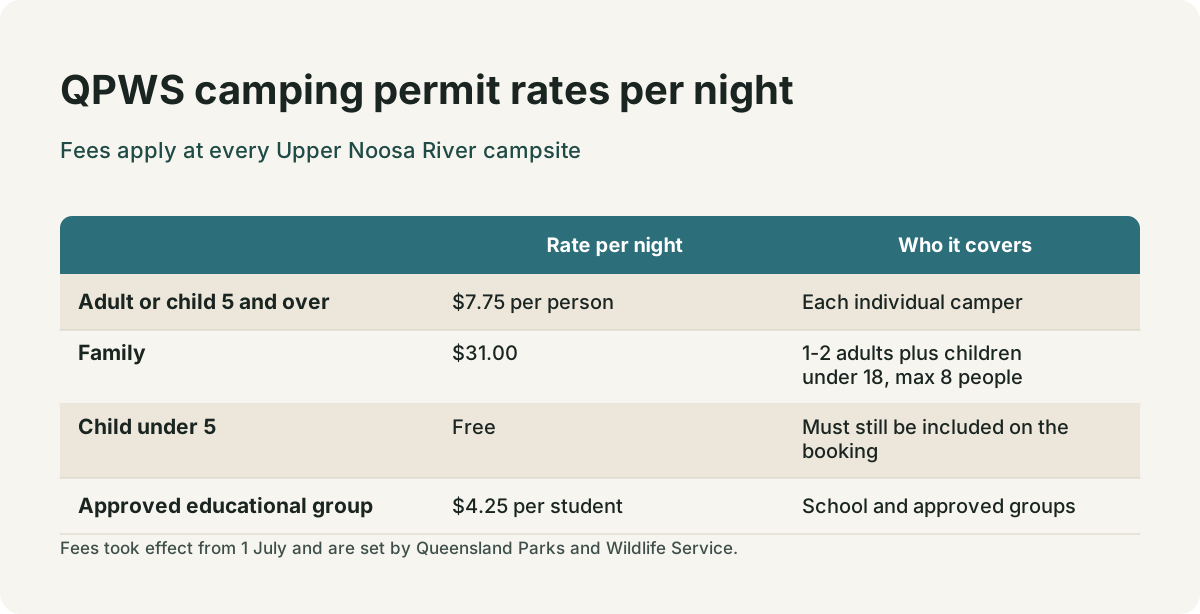
A QPWS camping permit costs $7.75 per person per night, or $31.00 per family per night, with a family defined as one or two adults plus children under 18, up to eight people in total. Children under five camp free, and an approved educational group rate of $4.25 per student per night applies. These fees took effect from 1 July and apply at every Upper Noosa River campsite. If you were hoping to skip the permit fees altogether, our guide to whether free camping exists in Noosa explains why it doesn't and what your legal options are instead.
Permits must be booked before you camp, through the Queensland Government camping booking service, and fees apply at all sites with no walk-up free option anywhere in the recreation area. The booking is per person or per family, per night, so a two-night stay for a couple pricing per person runs to $31.00 in total at the individual rate, against $62 for the same two nights at the family rate, so the family permit only pays off for larger parties sharing one booking.
| Permit type | Rate per night | Who it covers |
|---|---|---|
| Adult or child 5 and over | $7.75 per person | Each individual camper |
| Family | $31.00 | 1-2 adults plus children under 18, max 8 people |
| Child under 5 | Free | Must still be included on the booking |
| Approved educational group | $4.25 per student | School and approved groups |
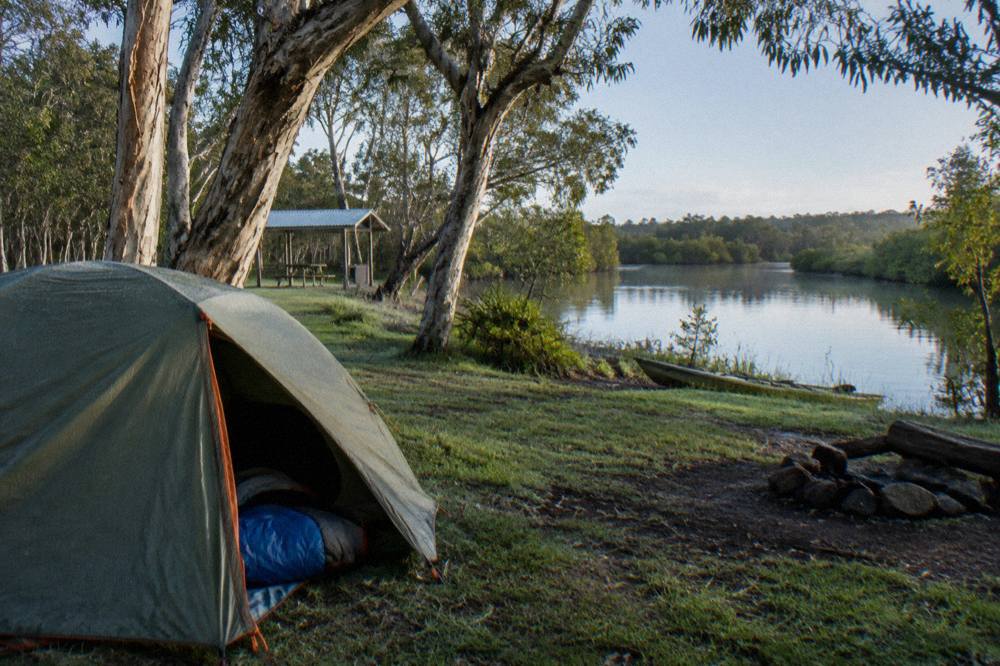
The fee is the same whether you sleep at campsite 3 or campsite 13, so the choice of site comes down to facilities, distance and how far you want to paddle, not price. Book early for school holidays and long weekends: the river sites are small, canoe-scale clearings with a handful of pitches each, and the popular ones near Fig Tree Point and Harrys fill first. Queensland spring school holidays ran 19 September to 5 October, so the shoulder weeks after that window are the quietest booking period before the December rush.
The park service states plainly that camping permits are required prior to camping at all sites and fees apply, and rangers do check bookings on the river. If you arrive without a permit you can expect to be moved on or fined, and there is no free camping anywhere in the Noosa shire, which the council actively enforces. For the full permit picture, including fires and toilets, the QPWS camping bookings page carries the current fee schedule, and the park-specific conditions page for Cooloola sets the rules each site runs under.
Which Campsites Can You Book, And For How Long?
The bookable river sites are Upper Noosa River campsites 1 to 15, Fig Tree Point and Harrys. Stay limits are 7 nights maximum at campsites 1 to 15, and 14 nights at Fig Tree Point and Harrys camping and day-use areas. Fig Tree Point takes up to three groups of eight people, 24 in total, and offers toilets, picnic tables, a jetty and a canoe landing.
The numbered sites sit along the upper river in sequence, with campsite 15 the furthest upstream you can go. Distances between landmarks are short by paddling standards: Kinaba to Fig Tree Point is 2 km or about 20 minutes by canoe, Fig Tree Point to Harrys Hut is 5 km or about an hour, and Harrys Hut to campsite 1 is 3.5 km or 35 minutes. A party launching at Elanda Point reaches Kinaba in about 1.5 hours, which makes the Fig Tree Point and Harrys area a realistic first-night target and the numbered sites beyond Harrys a second-day destination.
| Site | Access | Stay limit | Facilities |
|---|---|---|---|
| Campsites 1 to 15 | Canoe, kayak or boat only | 7 nights | Varies; campsite 3 has a composting toilet, platform tables and jetties |
| Fig Tree Point | Canoe, kayak, boat or walk-in | 14 nights | Toilets, picnic tables, jetty, canoe landing, untreated water |
| Harrys | Canoe, kayak, boat, or 4WD road access | 14 nights | Non-flush toilets, picnic tables, day-use area |
Two practical notes shape site choice. First, portable toilets are recommended when camping away from facilities, which covers campsites 4 to 15 in particular, and all rubbish must be carried out. Second, untreated water is available at some sites but must be treated before use, and the park service does not guarantee supply, so carry what you need or a filter. The dedicated pages on this site go deeper on each area: see the upper river campsites 1 to 15 guide, the Fig Tree Point campsite guide and the Harrys Hut area guide.
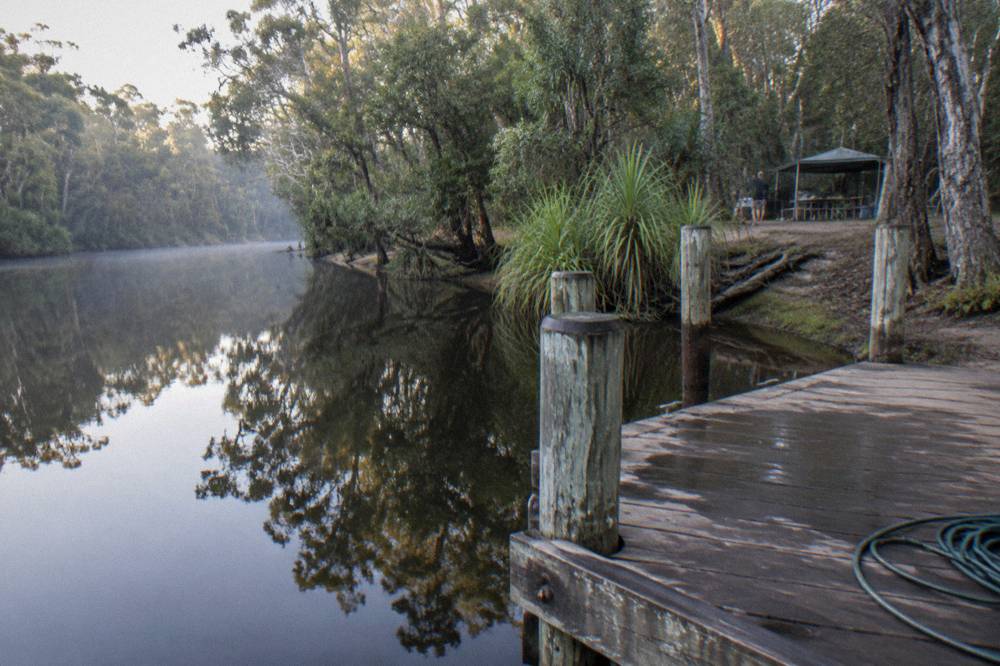
Harrys deserves a special mention for campers who want facilities without a long paddle. It is reachable by high-clearance 4WD via Harrys Hut Road, which itself needs no vehicle access permit, as well as by water. The historic hut on the site is a relic of the mid-1900s timber-getting operation that once winched logs across the river. The trade-off is popularity: because it is the easiest site to reach, it books out first on weekends.
What Rules Apply Once You Are On The River?
A six-knot, no-wash speed limit applies upstream from the Kinaba Information Centre, motorised vessels are permitted only as far as campsite 3, and only electric or non-motorised craft may travel beyond it. Open fires are prohibited at all Upper Noosa River campsites, and there is a no-landing zone between Fig Tree Point and Harrys Hut.
The speed and wash rules exist to protect the riverbanks from erosion, and penalties apply. In practice this means the water above Kinaba is a slow zone shared by tour boats, canoes and kayaks, and the water above campsite 3 is paddle-only, which is exactly why the upper river feels so still and reflective. Commercial tour boats operate daily from Noosa and Tewantin and drop in at Kinaba, so even paddle-only stretches see occasional motor traffic below campsite 3.
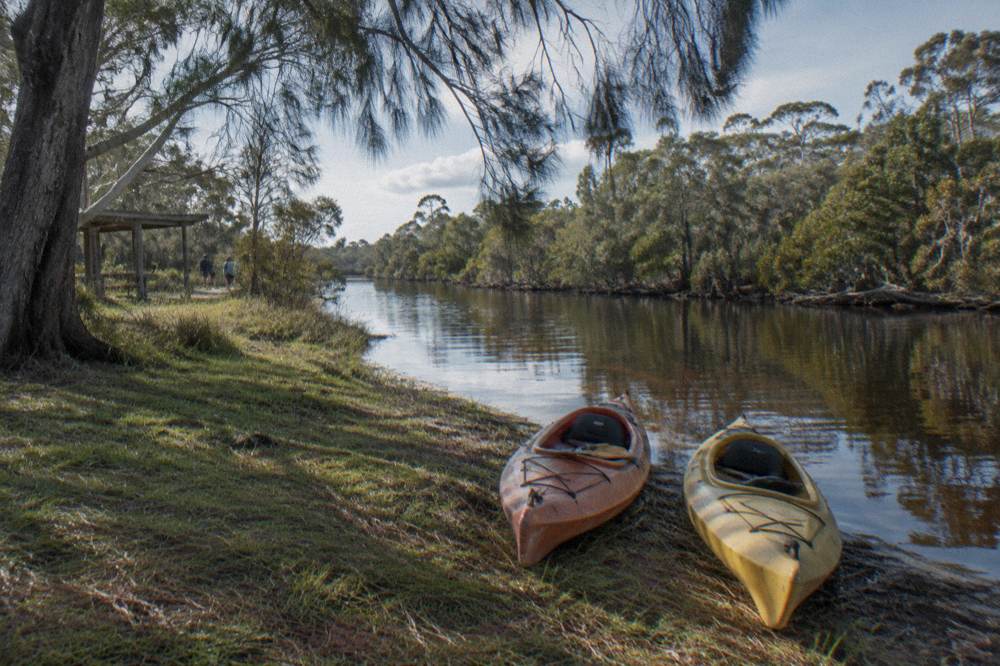
The fire rule is absolute: fires are prohibited at all Upper Noosa River camp sites, along with the Freshwater and Teewah Beach camping areas. Cooking is allowed only on approved self-contained gas or manufactured-fuel appliances, and braziers are not permitted. Plan your stove accordingly, and treat the untreated water at Fig Tree Point and Harrys before drinking it. All Maritime Safety Queensland regulations apply on the water, so lifejackets and lights rules follow state law, not park discretion.
| Rule | What it means on the water |
|---|---|
| Six-knot, no-wash limit | Slow to a crawl upstream of Kinaba; penalties apply |
| Motorised vessels | Permitted only to campsite 3; electric or paddle craft beyond |
| No-landing zone | Do not land between Fig Tree Point and Harrys Hut |
| Fires | Prohibited at all river campsites; gas or fuel stoves only |
| Toilets | Portable toilet recommended at campsites 4 to 15 |
| Rubbish | Carry everything out |
For paddlers planning the route in detail, the distances and times between every launch point, landmark and campsite are laid out in the Noosa Everglades map and route guide. One timing note from the park service is worth repeating: plan to cross Lake Cootharaba early in the morning, when conditions are likely to be calm and travel is easiest. The lake is the most exposed water on the whole trip, and an afternoon breeze can turn the crossing into a slog.
Can You See The River Without Camping At All?
Yes, and most visitors do. None of the nine bookable tours on this site includes an overnight stay: every listing is a day trip, from a 2.5 hour afternoon cruise to a 7.5 hour kayak day. The self-guided kayak listings and the cruise-and-canoe day cover the same water as the first leg of a camping trip, with no tent, no permit and no stove to carry.
The self-guided kayak day from Kanu Kapers Australia is the closest thing to a camping trip without the camp. It runs about 6 hours from the Elanda Point Canoe Launch, from $85.68 per person, rated 4.8 from 133 reviews, with groups up to 20 and no pickup, so you drive to the launch yourself. Adventure Tribe Aus runs a 7.5 hour self-guided version from $80 per person, rated 4.8 from 16 reviews, a thin sample so far. Both give you the paddle, the reflections and the silence, and both hand you back a bed in Noosa at night.
The guided alternative swaps independence for knowledge. The full-day guided kayak tour with Kanu Kapers runs about 6 hours from 8:30am at Elanda Point, from $148 per person, rated 4.9 from 158 reviews, with lunch, fresh fruit, baked bread and drinks included and groups capped at 16. A guide who knows where the frogs call and where the waterbirds feed adds a layer a map cannot, and the included lunch removes the stove question entirely. The listing states no free cancellation, so check the booking page's terms before committing.
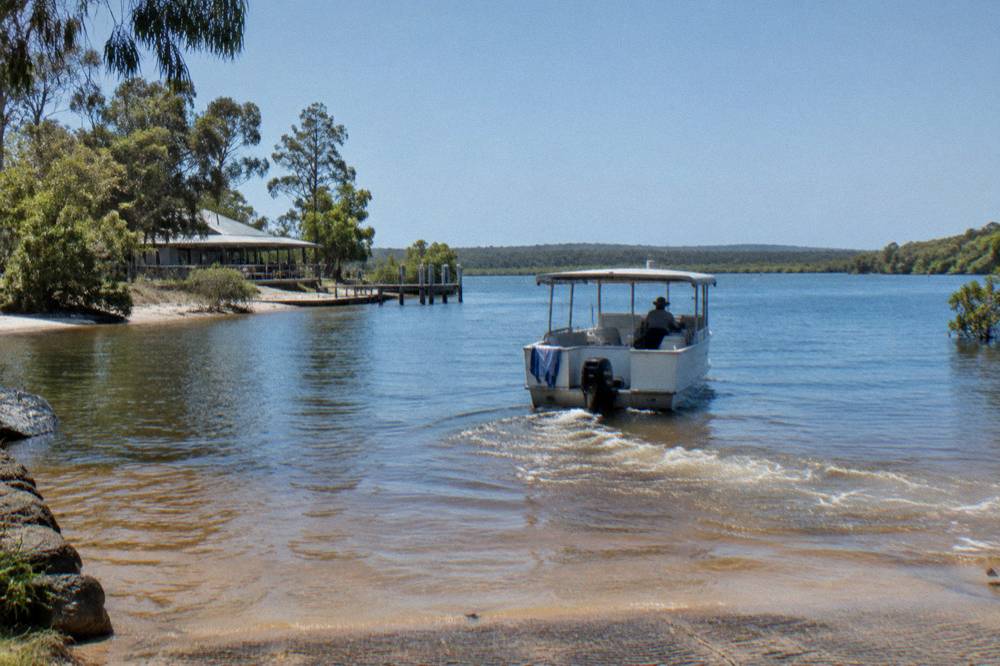
If you want the canoe experience with a barbecue at the end, the cruise-and-canoe day by Everglades Eco Safaris combines a boat cruise up the river with canoe time, from $119.67 per person, rated 4.6 from 379 reviews, running about 6 hours with round-trip transfers from central Noosa that can be arranged at booking. Lunch and drinks are available to purchase on site. It is the only listing on the roster that both arranges transfers and puts a paddle in your hands, which makes it a strong fit for travellers without a car.
For a fuller comparison of every day option, cruise, canoe and kayak, read the guide to choosing a Noosa Everglades tour and the Noosa Everglades cruise guide. The side-by-side comparison on the homepage of Noosa Everglades Tours lines up all nine listings by price, duration and rating in one table.
What Alerts And Closures Are In Place Right Now?
Three alerts currently affect the upper river area: a partial jetty closure at campsite 3 until 24 October 2026, a pest control program across the Cooloola Recreation Area from 31 October to 28 November 2026, and water across the Cooloola Wilderness Trail until 8 November 2026. All river campsites, Harrys Hut and Fig Tree Point remain open, per the conditions report updated 30 September 2026.
The campsite 3 closure affects the southern day-use jetty, damaged by flooding; the northern camper's jetty stays open, and campers are asked to store unused watercraft in the designated bank area above it. If your itinerary includes campsite 3, plan your landing around the northern jetty. The pest control program runs across the wider recreation area with firearms, poisons and traps possible, and closes the eastern and western firebreaks including Pettigrews and Kings Bore Roads for the full period, with Teewah Beach and Freshwater campsites closed 2 to 4 November. The upper river campsites themselves are not listed as closed, but check the alert before you travel.
The Wilderness Trail water alert matters mainly to walkers rather than paddlers, since the waterway itself is unaffected, but it is a reminder that land access in Cooloola changes with rainfall. The park service directs all visitors to download the current conditions report PDF before travel, because it carries track, tide and safety details that individual campsite pages do not repeat. The alerts are published on the park alerts pages and linked from every Cooloola camping page.
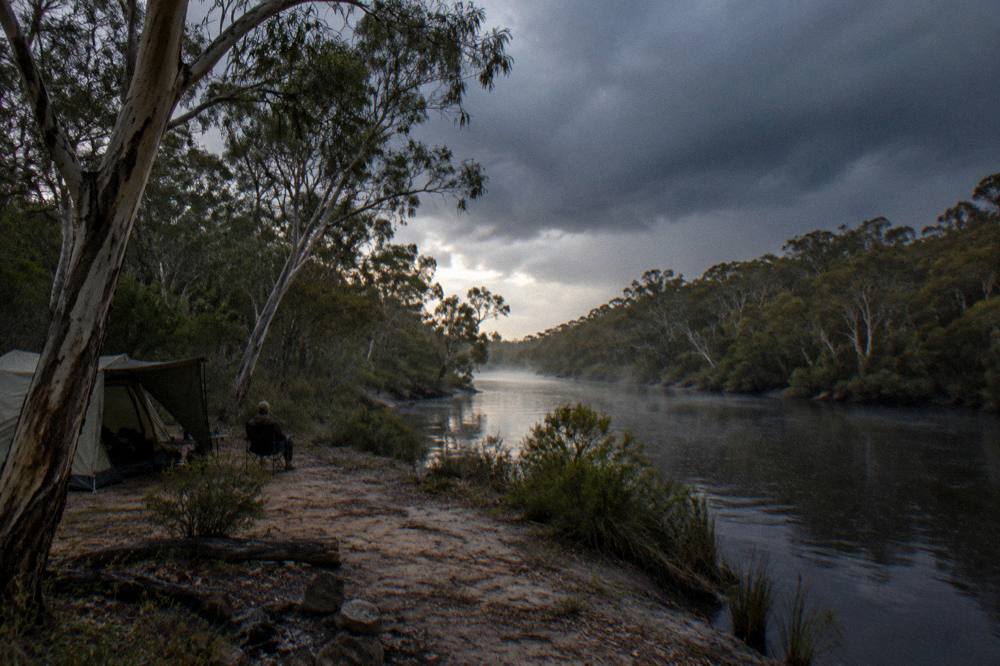
Two local events are worth folding into your timing. The Noosa Triathlon on Sunday 1 November brings crowds, road closures and accommodation pressure around Noosa Main Beach, which raises prices and lowers availability for the days either side. And the Doonella Bridge in Tewantin runs one-way eastbound until early December, which adds time for drivers routing from Noosaville toward Tewantin and the river launches, so check a mapping service before you drive.
What Should You Pack For An Overnight Paddle?
Pack for a remote, self-sufficient night: a tent, sleeping gear, a gas or fuel stove since fires are banned, a water filter or carried water since site water is untreated, a portable toilet if you are camping beyond campsite 3, insect repellent, and every piece of rubbish you generate carried back out. A permit, printed or on your phone, is the one item the trip legally cannot run without.
The stove rule catches more first-time campers than any other. Open fires are prohibited at every river campsite, so a gas or manufactured-fuel appliance is the only way to cook, and braziers are not permitted even on established fire rings. Site water at Fig Tree Point and Harrys is untreated and supply is not guaranteed, so treat everything or carry your own. The full checklist, including what to wear paddling and what to leave behind, is in the what to bring guide.
| Category | What to bring | Why |
|---|---|---|
| Permit | QPWS booking confirmation | Legally required at every site |
| Cooking | Gas or fuel stove, matches | Fires prohibited at all river sites |
| Water | Filter or carried supply | Site water untreated, supply not guaranteed |
| Toilet | Portable toilet | Recommended at campsites 4 to 15 |
| Paddling | Dry bags, lifejacket, sun protection | All gear must survive a capsize |
| Waste | Rubbish bags | Everything carried out |
Weather planning deserves a sentence of honesty. The nearest Bureau of Meteorology station with a 30-year record is Tewantin, on the Noosa River itself: October averages a 25.8 degree maximum and 112.1 mm of rain over about 8 rain days, November 26.9 degrees and 99.0 mm, and December 28.2 degrees and 147.4 mm. Those are averages, not promises, and the monthly medians run lower than the means because wet years pull the figures up. The seasonal pattern says spring is the drier, cooler window and late summer the wetter one, which matches the general advice in the best time to visit guide.
For multi-night itineraries, the practical ceiling is the stay limit: 7 nights at the numbered sites, 14 at Fig Tree Point and Harrys. Most parties do two or three nights, launching at Elanda Point, sleeping near Fig Tree Point or Harrys first, then pushing up through The Narrows to the numbered sites. Remember the motorised-craft rule when planning: anything with a petrol engine stops at campsite 3, so the uppermost 12 km of the river belong entirely to paddlers.
Common Questions About Noosa Everglades Camping
Do you need a camping permit in the Noosa Everglades?
Yes. Queensland Parks and Wildlife Service requires a camping permit booked in advance at every site on the upper Noosa River, including campsites 1 to 15, Fig Tree Point and Harrys. Fees are $7.75 per person per night or $31.00 per family per night, with children under five free.
How many nights can you stay at an Upper Noosa River campsite?
The maximum stay is 7 nights at campsites 1 to 15, and 14 nights at Fig Tree Point and Harrys camping and day-use areas. Bookings are made through the Queensland Government camping booking service before you arrive.
Can you have a campfire at the river campsites?
No. Open fires are prohibited at all Upper Noosa River campsites. Cooking is only allowed on approved self-contained gas or manufactured-fuel appliances, and braziers are not permitted.
Can you drive to a campsite on the upper Noosa River?
Mostly no. Campsites 1 to 15 and Fig Tree Point are reached by canoe, kayak or boat. Harrys is the exception, reachable by high-clearance 4WD via Harrys Hut Road, which requires no vehicle access permit, though a camping permit still applies.
Do any tours include camping?
No. All nine bookable listings on this site are day trips, from a 2.5 hour afternoon cruise to 7.5 hour kayak days. Camping is self-organised under a QPWS permit; the day tours are the way to see the river without carrying a camp.
Are the Upper Noosa River campsites open now?
Yes. The Cooloola conditions report updated 30 September 2026 lists all Noosa River campsites, Harrys Hut and Fig Tree Point as open. A partial jetty closure at campsite 3 runs until 24 October 2026, and a pest control program runs across the recreation area from 31 October to 28 November 2026, so check the park alerts before you travel.