Self-Guided Canoe And Kayak Hire On The Upper Noosa River
The cheapest way onto the upper Noosa River is your own paddle. Here is where the hire operators are, what the bookable self-guided days cost, and how far the waterway actually runs.
Short answer
Canoes, kayaks and small boats can be hired from private operators at Boreen Point and Elanda Point, per Queensland Parks and Wildlife Service. Bookable self-guided listings run from $80 to $85.68 per person for a full day, launching at the Elanda Point Canoe Launch on Lake Flat Road with no pickup. The paddle to Kinaba is 4.5 km, about 1.5 hours each way.
The dark, tannin-stained stretch of the upper Noosa River that operators call the Noosa Everglades is one of the few places on the Sunshine Coast where the cheapest option is also the most immersive. Queensland Parks and Wildlife Service (QPWS) describes the waterway plainly: the dark waters offer spectacular reflections of the twisted paperbarks and bloodwoods that line the riverbanks, and the whole 27.7 km one-way journey is rated for canoe, kayak and small boat. You do not need a tour boat to see it. You need a paddle, a launch point and an honest sense of the distances involved. If paddling the whole way sounds like more than you bargained for, the cruise versus canoe comparison weighs the options side by side.
This guide covers the self-guided side of the river: where hire operators actually sit, what the bookable self-guided listings cost and include, the official leg-by-leg distances and canoe times from QPWS, the rules that change above Kinaba, and the cruise-and-canoe option for anyone who wants a boat to carry them upstream first. The side-by-side comparison on Noosa Everglades Tours lines up every listing at a glance; this page goes deep on the do-it-yourself route.
Where Can You Hire A Canoe Or Kayak For The Noosa Everglades?
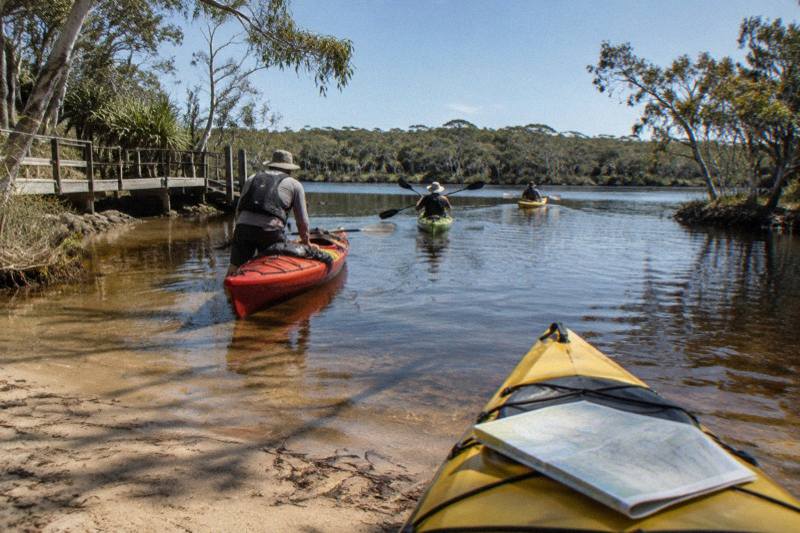
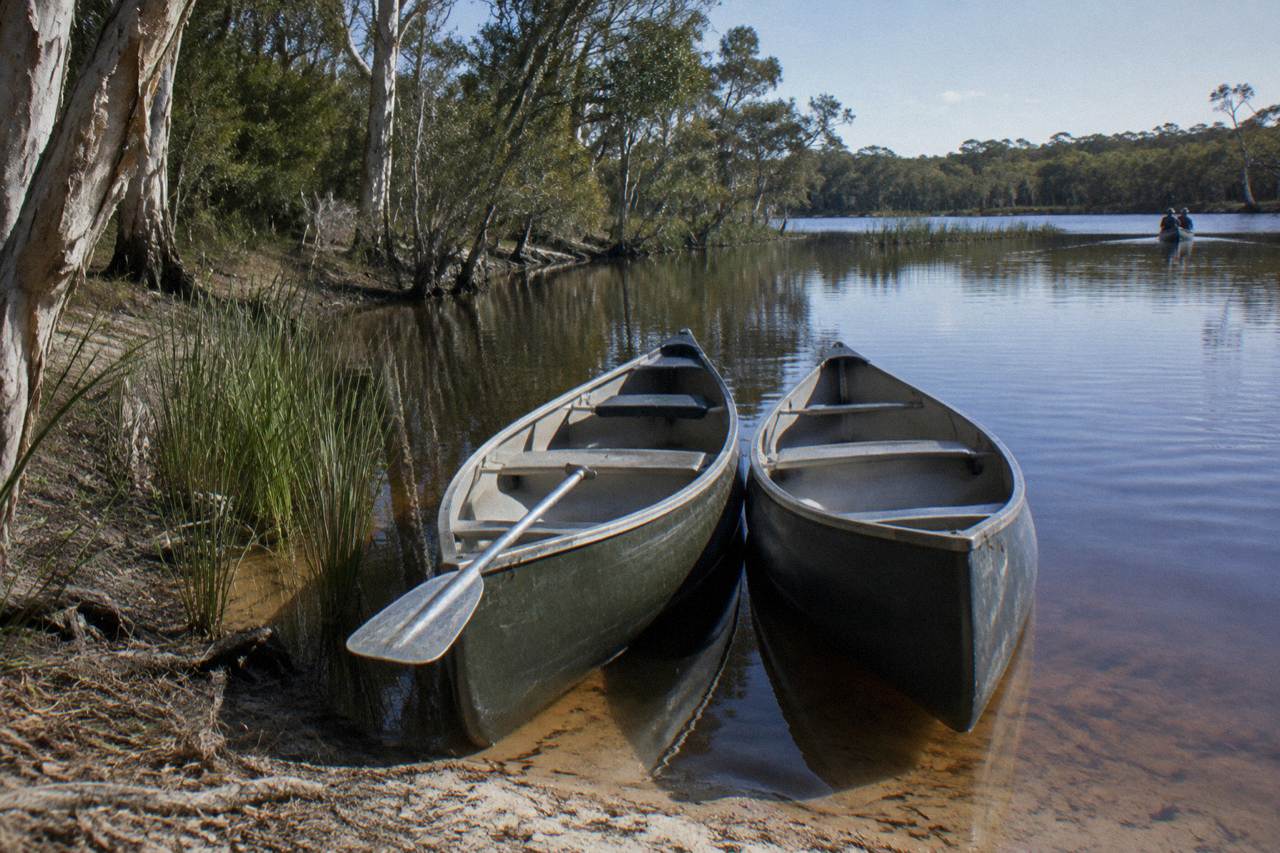
Queensland Parks and Wildlife Service states that canoes, kayaks and small boats can be hired from private operators at Boreen Point and Elanda Point, the two launch areas on the southern side of Lake Cootharaba. Both are reachable by conventional 2WD vehicles, roughly 19 km from Tewantin via McKinnon Drive and Louis Bazzo Drive, then 2 km along Lake Flat Road.
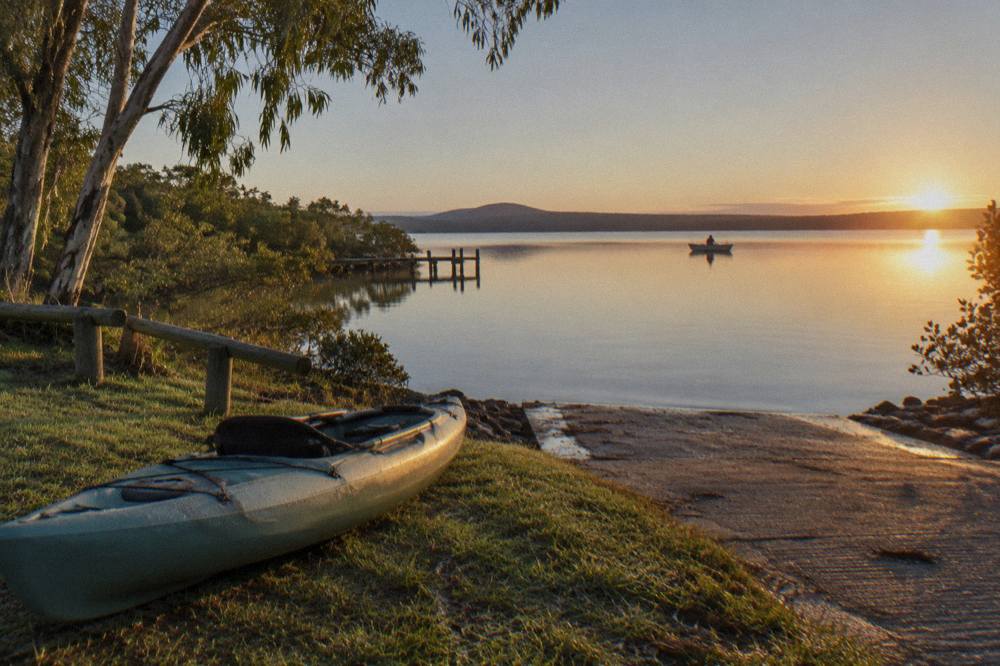
Elanda Point is the canoe and kayak launch. The QPWS directions run from Tewantin, 19 km west and north to Boreen Point, then left onto Lake Flat Road for 2 km to the Elanda Point access road, and finally 1.4 km to the Elanda Point QPWS car park. Operators at the launch use the address 204 Lake Flat Road, Boreen Point, on their listings. Boreen Point itself carries the boat ramp for small powered craft, and the two points sit on different corners of the lake, so which one you head for depends on what you are hiring: canoes and kayaks from Elanda, boats from the Boreen Point ramp.
The distinction matters more than most first-time visitors expect. Crossing Lake Cootharaba is the exposed part of any trip here, and QPWS advice is blunt about it: plan to cross the lake early in the morning when conditions are likely to be calm and travel is easiest. An afternoon wind on a large shallow lake can turn a 15-minute crossing into a wet, grinding one, and every experienced paddler on this river starts before the breeze fills in.
If you are weighing launch points against each other, the Elanda Point launch guide covers the car park, the canoe launch and the walk to the Kinaba boardwalk, and the Boreen Point guide covers the boat ramp side, the campground and the village. The waterway itself is described on the official QPWS upper Noosa River waterway page, which is also the source for every distance and paddle time in the route section below.
What Does A Self-Guided Everglades Paddle Cost?
The two bookable self-guided listings start at $80 and $85.68 per person for a full day on the water, both launching from the Elanda Point Canoe Launch on Lake Flat Road with no pickup or shuttle. The higher-priced option carries a 4.8 rating from 133 reviews; the cheaper one holds 4.8 from 16 reviews, a thin sample worth knowing about before booking.
The two listings come from two different operators, and the differences go beyond a few dollars. The self-guided kayak day from Kanu Kapers Australia runs about six hours from an 8:30am start, takes groups of up to 20, and lists no meal; its cancellation terms are not stated as free, so check the booking page before committing. The Adventure Tribe Aus self-guided day is $80 per person, runs 7.5 hours with about six of those on the water, and the listing states you can cancel ahead for a full refund. Both meet you at the launch: neither includes hotel pickup, so you drive to Lake Flat Road yourself.
| Listing | From price | Duration | Start | Rating and reviews | Group size | Meals |
|---|---|---|---|---|---|---|
| Self-guided kayak day (Kanu Kapers Australia) | $85.68 per person | About 6 hours | 8:30am | 4.8 from 133 reviews | Up to 20 | None listed |
| Self-guided kayak day (Adventure Tribe Aus) | $80 per person | 7.5 hours, about 6 kayaking | Shown on the listing | 4.8 from 16 reviews, a thin sample | Not stated | None listed |
Neither listing is a bare boat rental in the classic sense: both wrap the hire into a structured day with a defined start time and route support, which is why they sit on booking pages rather than as walk-up rates. Walk-up hire at the Elanda Point and Boreen Point operators does exist for people who arrive in person, but hours and availability are the operator's own to confirm on the day, and no verified walk-up price is published to compare here. What the bookable listings guarantee is a kayak, a launch time and a known cost before you drive out.
For anyone who wants the same water with a guide, a lunch and a smaller group, the guided versions cost more but carry more: the full-day guided kayak tour from the same Elanda Point launch is $148 per person, includes lunch, fresh fruit, baked bread and drinks, runs about six hours from 8:30am, and holds a 4.9 rating from 158 reviews. The guided option caps groups at 16. If your budget is fixed at the self-guided price, book the day that matches your preferred start and refund terms, then read the route section before you set off. Check availability on the live listing to see the current calendar and the exact cancellation wording.
Which Route Should You Paddle From Elanda Point?
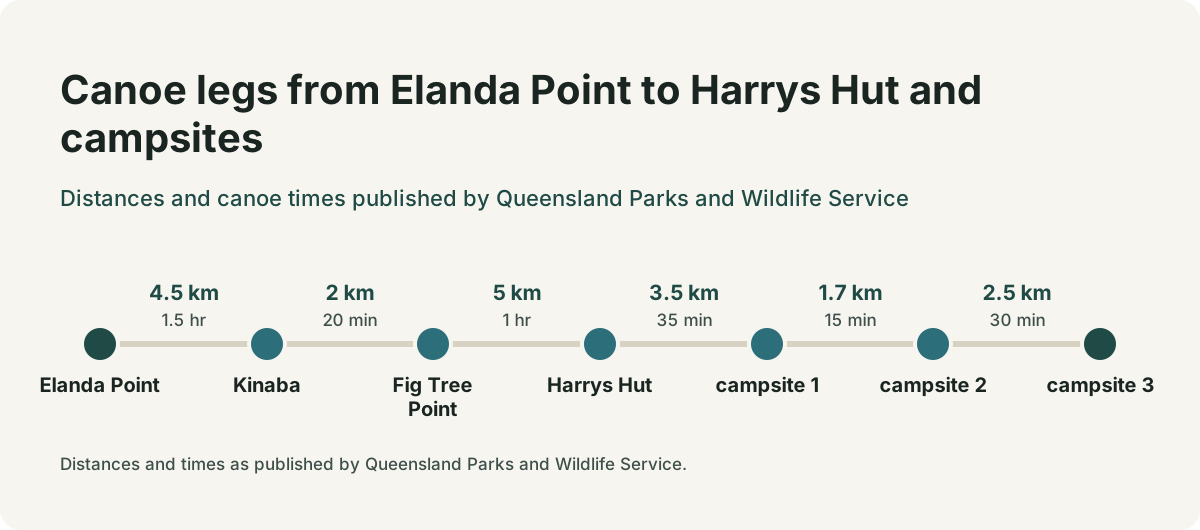
QPWS publishes exact leg distances for the upper river: Elanda Point to Kinaba is 4.5 km or about 1.5 hours by canoe, Kinaba to Fig Tree Point is 2 km or 20 minutes, and Fig Tree Point to Harrys Hut is 5 km or one hour. The authority also advises crossing Lake Cootharaba early in the morning, when conditions are likely to be calm.
The official numbers are the backbone of any self-guided plan, and they are worth writing down before you leave the car park. QPWS times these legs at canoe pace; a powered boat covers the Boreen Point to Kinaba leg in about 15 minutes at the 40-knot lake limit, which is why the cruise boats and the paddlers share the same river but not the same schedule.
| Leg | Distance | Canoe time | Boat time |
|---|---|---|---|
| Elanda Point to Kinaba | 4.5 km | 1.5 hr | n/a |
| Boreen Point to Kinaba | 7 km | n/a | 15 min, 40-knot limit on the lake |
| Kinaba to Fig Tree Point | 2 km | 20 min | 15 min |
| Fig Tree Point to Harrys Hut | 5 km | 1 hr | 30 min |
| Harrys Hut to campsite 1 | 3.5 km | 35 min | |
| Campsite 1 to campsite 2 | 1.7 km | 15 min | |
| Campsite 2 to campsite 3 | 2.5 km | 30 min | |
| Harrys Hut to campsite 3 by boat | 7.7 km | 45 min |
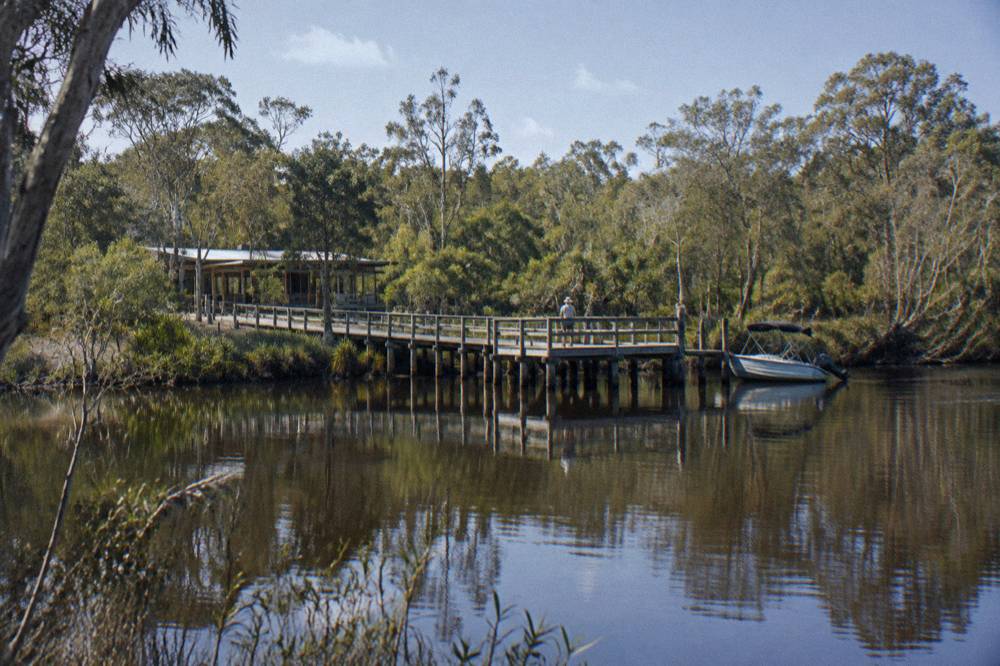
Kinaba, formally the Kinaba Information Centre, is the natural first checkpoint. It sits on its own little boardwalk island at the river entrance, has flush toilets and a lookout, and QPWS suggests looking for stingrays in the water around the building. Commercial tour boats drop in there as well, so expect to share the jetty in the middle of the day. The Kinaba Information Centre guide covers the 6.1 km one-way walk from the Elanda Point car park for anyone in your group who would rather not paddle at all.
Past Kinaba the river narrows into the stretch QPWS calls The Narrows, where the tannin-stained water reflects forest and sky for 2.5 km before widening at the Harrys camping and day-use areas. This is the section the listings photograph, and the reflections are the reason the operators' copy calls the river the River of Mirrors. The name is marketing language, not an official one; QPWS names the place the Upper Noosa River within the Cooloola Recreation Area, Great Sandy National Park.
How Hard Is The Paddle To Harrys Hut?
The full waterway is 27.7 km one way with a suggested five hours of paddling, and it is not possible to proceed upstream beyond campsite 15. A Harrys Hut round trip from Elanda Point is about 23 km of paddling, roughly five to six hours on the water at the listed canoe pace, which is a solid but achievable day for reasonably fit paddlers.
Add the legs and the arithmetic is honest: 4.5 km to Kinaba, 2 km to Fig Tree Point, 5 km to Harrys Hut, then the same distance home, plus the lake crossing to and from the launch. QPWS logs 1.5 hours for the first leg and an hour for the Fig Tree to Harrys stretch, so a one-way run to Harrys is close to three hours of steady paddling, and the return is the same again. Fit, experienced paddlers do it comfortably in a six-hour day with breaks; first-timers with kids should treat Kinaba and Fig Tree Point as the destination and save Harrys for a guided or powered trip.
The river above Kinaba is sheltered, narrow and slow, which is what makes it beginner-friendly despite the distance: there is no current to fight and, in the morning, little wind reaching the water under the paperbark canopy. The exposure is concentrated at the start and the end, on Lake Cootharaba, which is exactly why the early-start advice exists. If the lake is rough at 3pm on the way home, the last 4.5 km is the hardest part of your day.
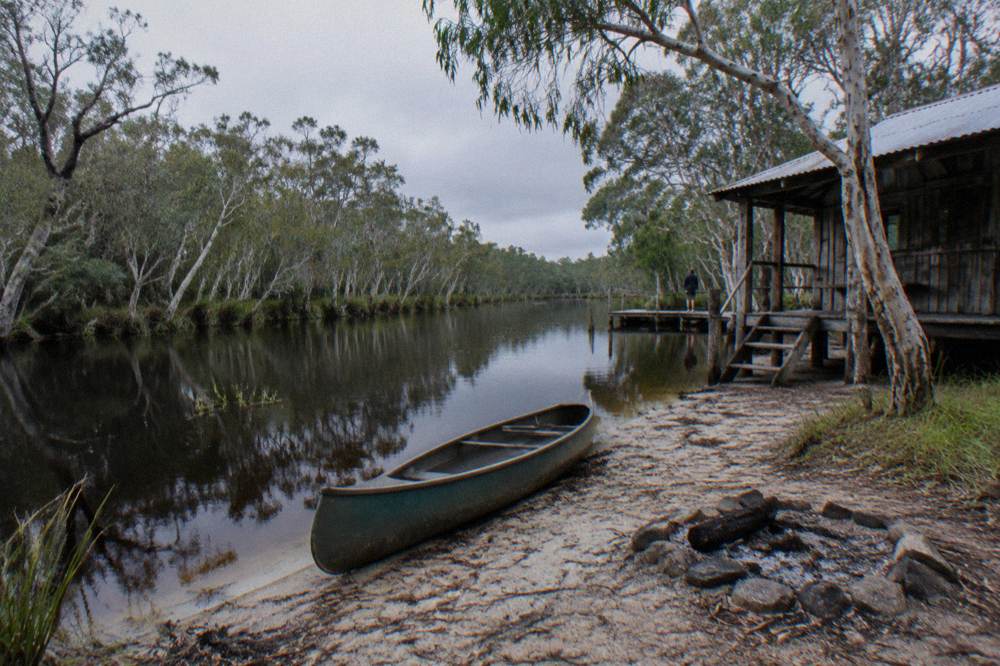
Harrys Hut itself is a worthwhile turnaround: a timber-getter's hut from the mid-1900s, part of the winch-and-crane operation that once moved logs across the river, now a day-use area with non-flush toilets, picnic tables and a water supply that QPWS advises to treat before use. The Harrys Hut guide covers the day-use area and the road access for anyone meeting a paddling group by car.
The bookable self-guided days are built around exactly this out-and-back. The Kanu Kapers self-guided listing runs about six hours from the 8:30am start, which fits the Harrys round trip with time for a lunch stop, and it takes groups of up to 20, so a family or a group of friends can share one booking. Its 4.8 rating from 133 reviews is the deepest review pool of any self-guided option on the river.
What Rules Apply Once You Are On The Water?
A six-knot, no-wash speed limit applies upstream from the Kinaba Information Centre, motorised vessels are permitted only to campsite 3, and only electric or non-motorised craft may travel beyond it. There is also a no-landing zone between Fig Tree Point and Harrys Hut. Camping anywhere along the river requires a permit booked before arrival.
The speed limit exists to protect the riverbanks from erosion, and QPWS notes that penalties apply. For a self-guided paddler this rule is mostly about the boats you share the river with: cruise traffic moves at walking pace above Kinaba, and the reflections that draw everyone here depend on that. The full set of constraints is on the QPWS Cooloola things-to-do page, and all Maritime Safety Queensland regulations apply on the waterway.
| Rule | What it means for a self-guided paddler |
|---|---|
| Six-knot, no-wash limit above Kinaba | Applies to powered boats sharing your water; paddlers are unaffected but should expect slow traffic |
| Motorised vessels only to campsite 3 | Above campsite 3 the river is paddlers and electric motors only, the quietest stretch |
| No-landing zone between Fig Tree Point and Harrys Hut | You cannot stop on the bank along this stretch; land at Fig Tree Point or Harrys instead |
| Camping permits required before arrival | Book via the official camping booking service; fees are $7.75 per person per night or $31.00 per family per night |
| Maximum stay | 7 nights at campsites 1 to 15; 14 nights at Fig Tree Point and Harrys |
| Open fires | Prohibited at all Upper Noosa River campsites; bring a gas or fuel appliance |
The camping fees took effect from 1 July 2026, and the family rate covers one or two adults plus children under 18, up to eight people, with children under five free. A self-guided canoe trip with one night at Fig Tree Point or a river campsite is the classic way to break up the 27.7 km waterway, and the upper river campsites 1 to 15 guide and the Fig Tree Point campsite guide cover the sites, capacities and booking steps in detail. Book through the official QPWS camping bookings page, not through any tour listing.
Can You Combine A Cruise With A Guided Paddle Back?
Yes. The cruise-and-canoe day runs the boat up the river and gives you a canoe for the paddle back, from $119.67 per person for about six hours with round-trip transfers from central Noosa that can be arranged at booking. It holds a 4.6 rating from 379 reviews, and lunch and drinks are available to purchase on site.
This is the middle path between a pure cruise and a pure paddle, and for many visitors it is the smartest one. The Everglades Explorer canoe day from Everglades Eco Safaris lists about 6 hours, against about 4.5 hours for the cruise-only Explorer listing from the same operator family, and each listing carries its own duration. The canoe version lets the boat do the upstream work in the morning, hands you a canoe around Harrys Hut, and leaves you to drift back down with the current, which is a far easier day than paddling both directions.
The transfers matter for anyone without a car. Round-trip transfers from central Noosa can be arranged on the canoe day, confirmed at booking, which no pure self-guided listing offers. The cruise-only Explorer at $117 per person, 4.6 from 279 reviews, includes morning refreshments with lunch to buy at the on-site bar and bistro, and asks you to check the live page for its departure point. The Explorer canoe and BBQ lunch day is the one that pairs the boat with the paddle.
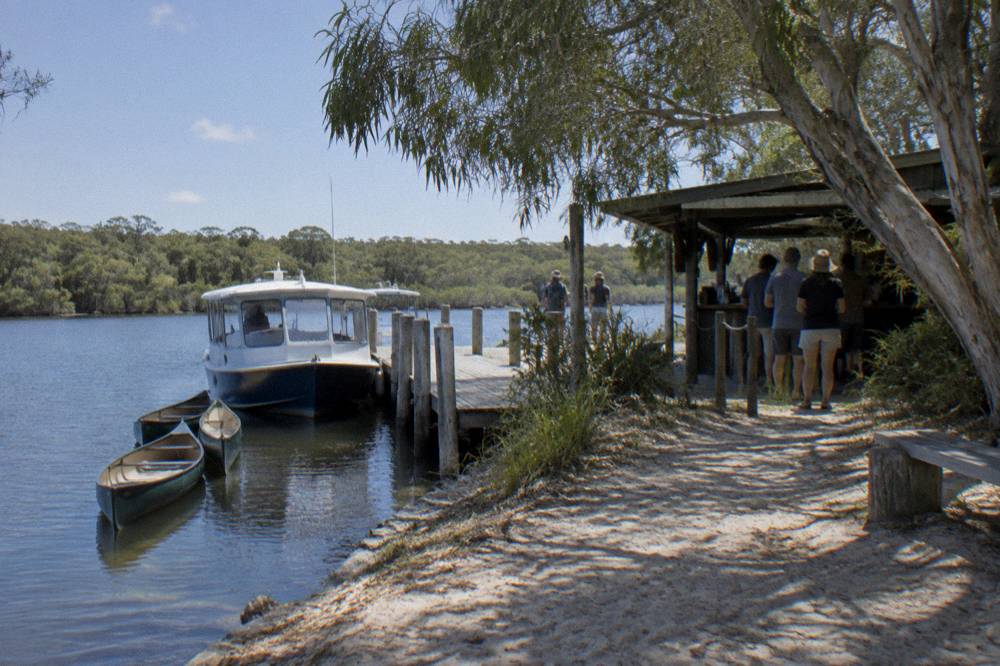
If a guided paddle is what you want rather than a cruise hybrid, the sustainable guided kayak day from Adventure Tribe Aus runs 7.5 hours from $137 per person with morning tea, lunch, coffee and local organic food included, and free cancellation. Its 4.8 rating comes from 9 reviews, a thin sample, so weigh the inclusions rather than the score. The full-day guided kayak from Kanu Kapers at $148 per person, 4.9 from 158 reviews, is the deeper-reviewed guided option, with lunch included and groups capped at 16.
What Should You Bring, And When Should You Start?
Start early. QPWS advises crossing Lake Cootharaba in the early morning when conditions are likely to be calm, and every bookable kayak day on this river begins at 8:30am. Bring sun protection, drinking water, insect repellent and a dry bag; council water quality advice says avoid swimming in discoloured water or shortly after heavy rain.
The climate record for the nearest station, Tewantin, shows why the early start is not just folklore. October averages a 25.8-degree daytime maximum and 112.1 mm of rain across about eight rain days; November runs 26.9 and December 28.2, so from mid-spring onward the middle of the day is hot on open water and the lake crossing is best done before the wind and the heat build together. September is the driest month in the 30-year record at 57.8 mm on average, and March the wettest at 236.4 mm, though averages here are pulled up by occasional wet years rather than describing a typical month. The full table is on the Bureau of Meteorology Tewantin climate averages.
| Item or decision | Why it matters on this waterway |
|---|---|
| Early morning start | Lake Cootharaba is calmest before the wind fills in; QPWS advises crossing early |
| Drinking water and snacks | No reliable water supply on the river; Harrys day-use water should be treated before use |
| Sun protection | Long stretches of open lake and a full day outside, often under a high UV index |
| Insect repellent | No location-specific official insect advice exists for the upper river; general repellent preparation is the safe default |
| Dry bag and phone in a case | The tannin water is dark but wet; reflections photograph best from a stable craft at low speed |
| Tide and conditions check | Download the current Cooloola conditions report before travel; it was updated 30 September 2026 |
Noosa Shire Council monitors recreational water quality at the Boreen Point and Elanda Point sites and advises avoiding swimming near drains, in discoloured or unpleasant-smelling water, or shortly after heavy rain, which is sensible guidance for a river day of any kind. On the wildlife question, no official statement was found on the Parks and Wildlife pages for Cooloola or on Noosa Council's rivers and creeks pages regarding crocodiles in this part of the river; the honest answer is that no official statement exists either way, so plan around ordinary caution rather than reassurance.
One local wrinkle worth knowing if you are driving out from Noosa: the Boreen Point N4 amenities block on Boreen Parade is closed for roof replacement from 19 to 24 October 2026, with alternatives about 500 m away at the N3 and N5 facilities. Small detail, but it is the kind that shapes a morning at the launch.
Common Questions About Self-Guided Canoe Hire In The Noosa Everglades
Can you kayak in the Noosa Everglades?
Yes. QPWS rates the upper Noosa River waterway for canoe, kayak and small boat, and hire is available from private operators at Boreen Point and Elanda Point. Bookable self-guided kayak days run from $80 to $85.68 per person, launching at the Elanda Point Canoe Launch.
How much does a Noosa Everglades tour cost?
Bookable listings run from $69 per person for the 2.5-hour afternoon cruise up to $527 per person for the private hinterland day. Self-guided kayak days sit at the low end, from $80 to $85.68, and guided kayak days from $137 to $148 with lunch included.
Do you need a camping permit in the Noosa Everglades?
Yes, camping permits are required before arrival at all sites and fees apply: $7.75 per person per night or $31.00 per family per night from 1 July 2026. Maximum stay is 7 nights at campsites 1 to 15 and 14 nights at Fig Tree Point and Harrys.
How much time do you need to see the Noosa Everglades?
A half-day cruise covers the highlights in about 2.5 hours. A self-guided paddle to Kinaba and back is roughly three hours on the water; the full Harrys Hut round trip is about 23 km, five to six hours of paddling, and the bookable kayak days run six hours or more.
Is the Noosa Everglades worth it?
The reflections in The Narrows and the paperbark-lined upper river are genuinely unusual for the Sunshine Coast, and the most-reviewed cruise listing holds 4.5 from 1,093 reviews. Whether it is worth it depends less on the river than on matching the format to your fitness: cruise, cruise-and-canoe or full paddle.