Harrys Hut In The Noosa Everglades: History, Access And Tour Options
Harrys Hut is the mid-1900s timber-getter's hut on the upper Noosa River, reachable by canoe, boat or a high-clearance 4WD on Harrys Hut Road. Here is what it is, how far it is from Kinaba and Fig Tree Point, and the tours that visit it.
Short answer
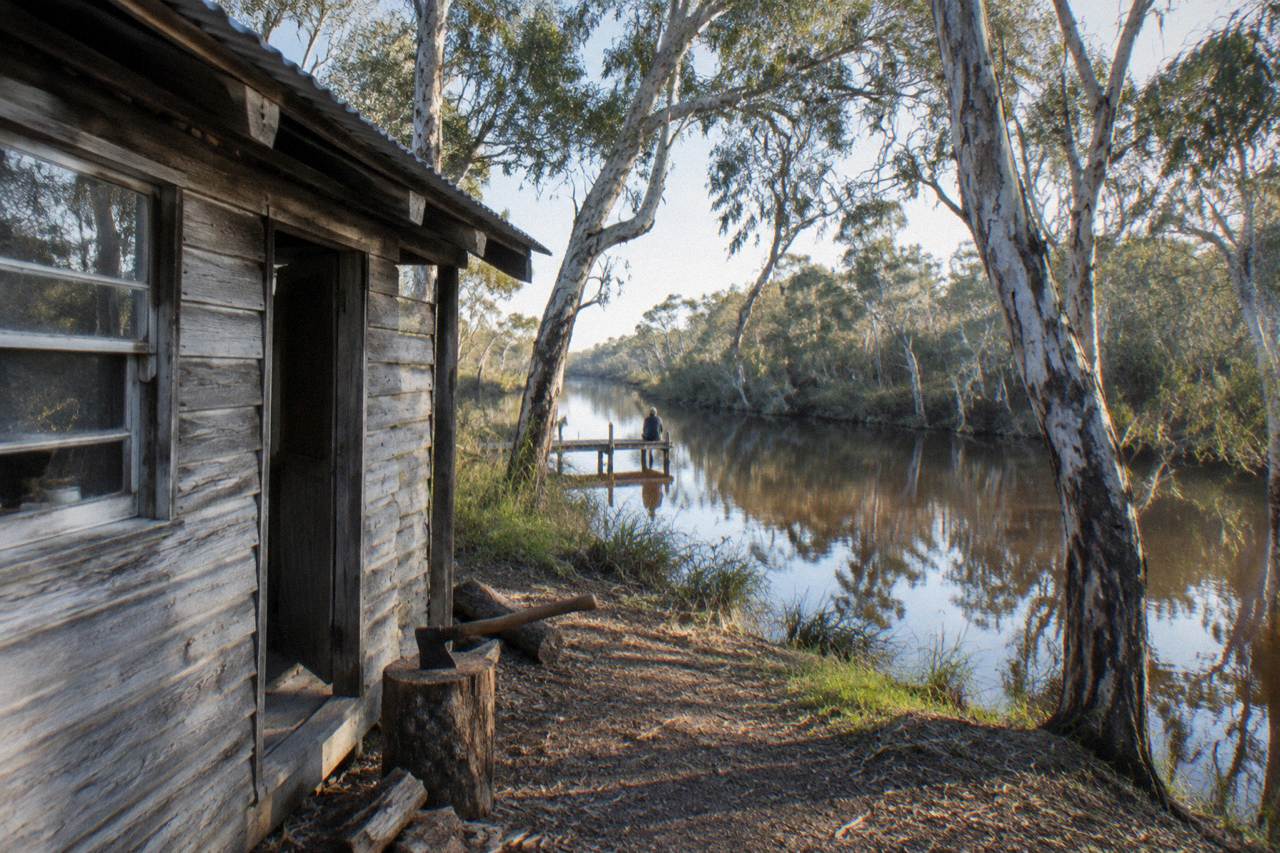
Harrys Hut is a historic timber-getter's hut from the mid-1900s, part of the winch-and-crane operation that moved logs across the Noosa River. It sits 5 km upstream of Fig Tree Point, about 1 hour by canoe or 30 minutes by boat from Fig Tree Point, with a day-use area, camping and a 14-night stay limit.
What Is Harrys Hut And Why Does It Matter?
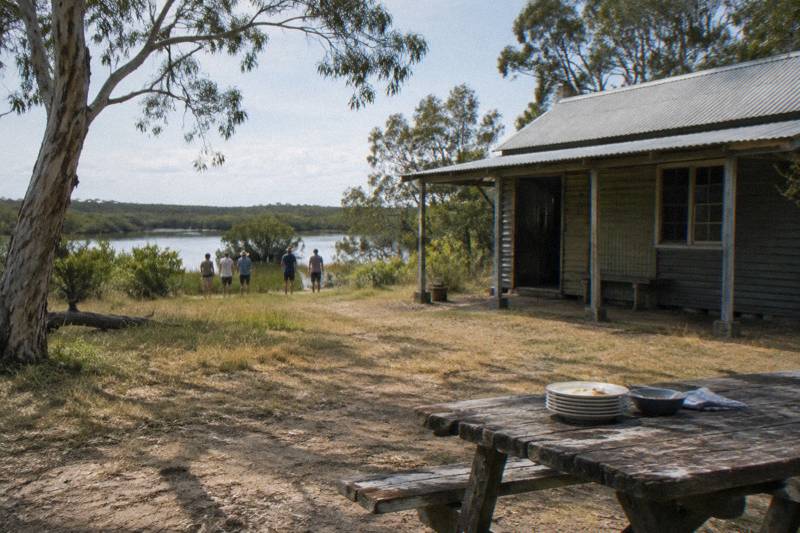
Harrys Hut is a timber-getter's hut from the mid-1900s, one of the last physical traces of the winch-and-crane operation that once transported logs across the Noosa River, and today it anchors the Harrys camping and day-use area deep inside the Cooloola Recreation Area. Queensland Parks and Wildlife Service describes it as part of the historic logging infrastructure of the upper river, and the hut now gives its name to the whole precinct around it.
The upper Noosa River that surrounds the hut is what the tour operators call the Noosa Everglades, a name QPWS itself does not use. The parks service calls this stretch the Upper Noosa River waterway inside the Cooloola Recreation Area, part of Great Sandy National Park, and it uses "The Narrows" for the 2.5 km section where the tannin-stained water reflects forest and sky. The reflections, the twisted paperbarks and the bloodwoods on the banks are what draw most visitors, and the hut sits right in the middle of that country.
Logging shaped this river for decades. Logs cut in the Cooloola forests were winched across the river near where the hut stands, loaded and floated downstream. The hut is a modest timber structure, not a museum, but it is one of the few built things on a river that is otherwise all forest, water and birdlife. QPWS keeps it as a heritage feature and the day-use area around it as the main stopping point between Fig Tree Point and the upstream campsites.
The parks service sums up the setting plainly: the scenic waterways of the Upper Noosa River and its tributaries form part of the Noosa River catchment, with two-thirds of that catchment protected inside the national park, and the dark tannin-stained waters offering spectacular reflections of the paperbarks and bloodwoods that line the banks. Harrys is where a lot of visitors first stop and take that in. For the full story of the reflective stretch that operators market as the Noosa Everglades River of Mirrors, the water offers spectacular reflections.
Wildlife is a genuine part of the visit. Cooloola Recreation Area as a whole carries more than 350 bird, 75 mammal, 21 frog and 80 reptile species, and frog choruses along the upper river and lake systems are loud at dusk. Waterbirds work the shallows near the jetties. Do not feed wildlife, and treat any drinking water before use.
How Far Is Harrys Hut From Kinaba, Fig Tree Point And The Campsites?
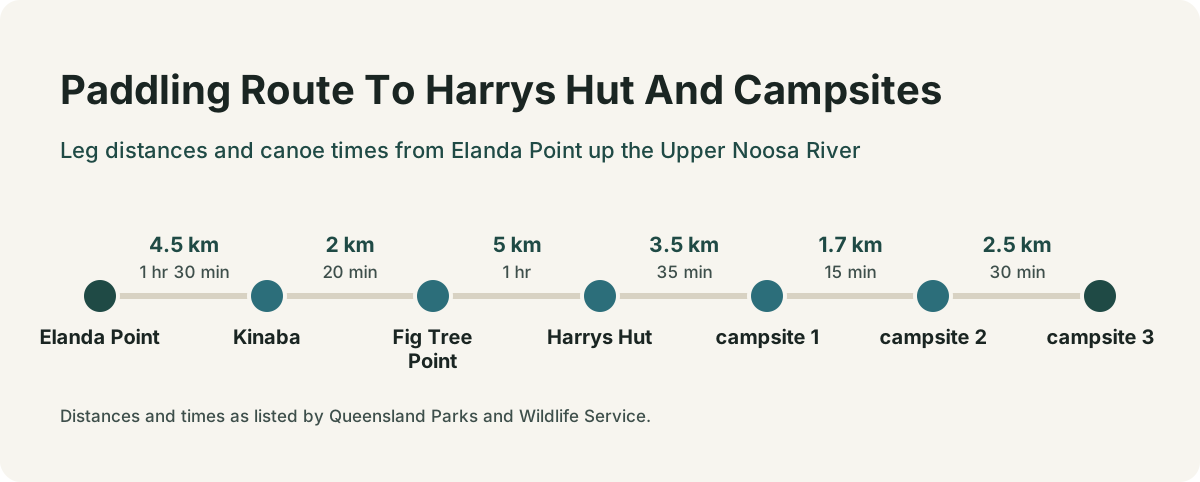
From Kinaba Information Centre, Harrys camping area is about 1 hour 20 minutes by canoe. From Fig Tree Point it is 5 km, roughly 1 hour paddling or 30 minutes by boat. Harrys Hut to campsite 1 is 3.5 km or 35 minutes by canoe, and Harrys Hut to campsite 3 is 7.7 km or about 45 minutes by boat. The whole waterway is 27.7 km one way, with 5 hours of suggested paddling time.
Those figures come from the QPWS Upper Noosa River waterway page, which lists every leg of the journey by canoe and boat. The table below pulls the legs that matter for anyone planning a day trip or an overnight paddle to Harrys.
| Leg | Distance | By canoe | By boat |
|---|---|---|---|
| Elanda Point to Kinaba | 4.5 km | 1 hr 30 min | n/a |
| Boreen Point to Kinaba | 7 km | n/a | 15 min |
| Kinaba to Fig Tree Point | 2 km | 20 min | 15 min |
| Fig Tree Point to Harrys Hut | 5 km | 1 hr | 30 min |
| Harrys Hut to campsite 1 | 3.5 km | 35 min | |
| Campsite 1 to campsite 2 | 1.7 km | 15 min | |
| Campsite 2 to campsite 3 | 2.5 km | 30 min | |
| Harrys Hut to campsite 3 | 7.7 km | 45 min |
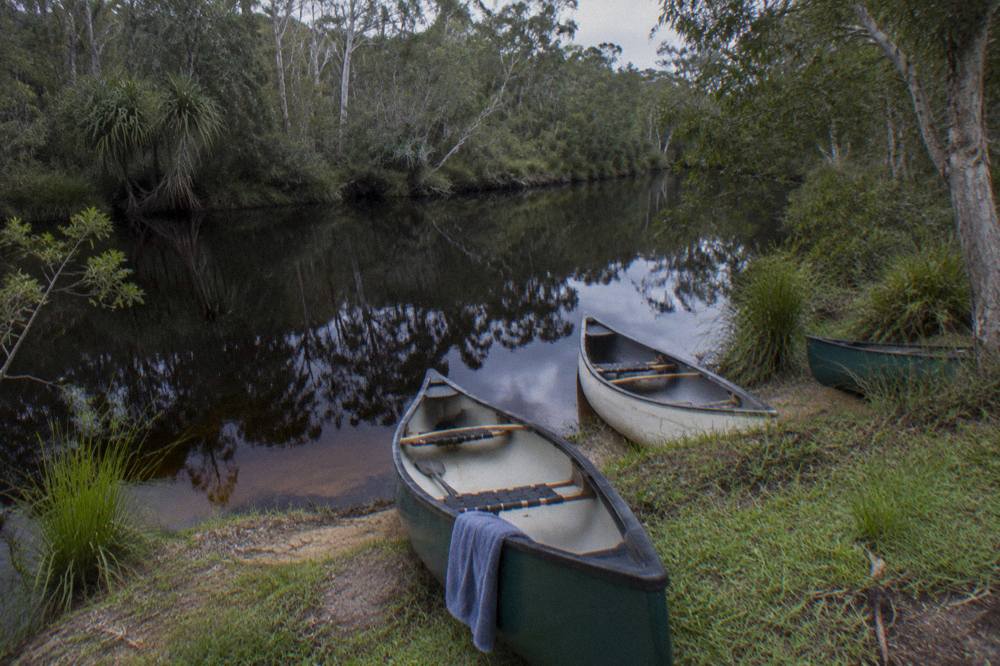
Read the table with the wind and your own pace in mind. The 5-hour paddling figure for the full waterway is a suggested time for fit paddlers in calm conditions, and Lake Cootharaba, which every trip from Elanda or Boreen Point must cross, can chop up quickly in the afternoon. QPWS advises planning to cross the lake early in the morning when conditions are likely to be calm and travel is easiest. It is not possible to proceed upstream beyond campsite 15, so Harrys is a midpoint, not a base for going further by water than the river allows.
The distances also explain why the commercial tours time out the way they do. A boat from Boreen Point reaches Kinaba in about 15 minutes, and from there the six-knot speed limit upstream slows everything down, which is deliberate: it protects the banks from erosion and keeps the mirror stretches quiet. Canoe-based day trips budget most of their hours for the Fig Tree Point to Harrys stretch because that is the scenic core.
For paddlers weighing a self-driven trip against a guided one, the Noosa Everglades kayak tour options break down the guided and self-guided listings, and the self-guided canoe hire guide covers going it alone. If you would rather have someone else handle the boat, the gear and the logistics, these are the three strongest listings for reaching the Harrys stretch.
The trio above spans the three realistic ways to do the river in a day: a cruise-and-canoe combination, a fully guided kayak day, and a longer boat cruise. All three reach the water around Harrys, and the differences are mostly about how much of the day you spend paddling versus riding.
Can You Drive To Harrys Hut?
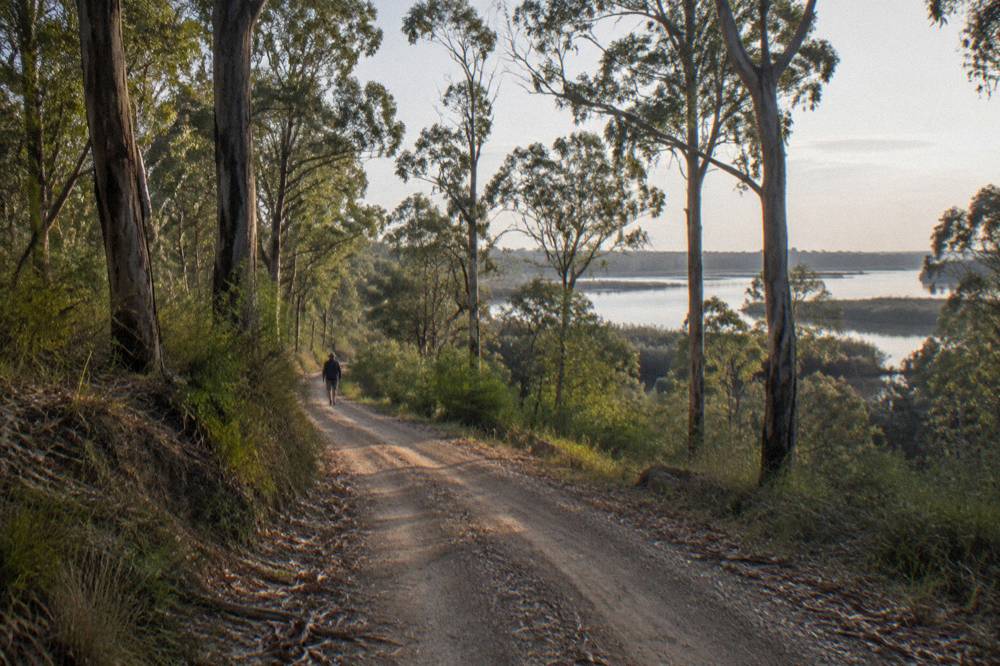
Yes, but only with a high-clearance 4WD on Harrys Hut Road, which QPWS recommends for that track. No vehicle access permit is required for Harrys Hut Road itself or Cooloola Way, though permits do apply to beaches and some other tracks in the Cooloola Recreation Area. Most tour visitors instead arrive by water, since both Boreen Point and Elanda Point launching areas are reachable by conventional 2WD vehicles.
The road route matters mainly to campers with gear and to locals. From Tewantin, the standard driving directions run 19 km west and north via McKinnon Drive and Louis Bazzo Drive to Boreen Point, then left onto Lake Flat Road and 2 km to the Elanda Point access road, then 1.4 km to the Elanda Point QPWS car park. From Brisbane the drive to Tewantin is 135 km north on the Bruce Highway or Sunshine Motorway, or from Gympie 58 km south and east. These are the QPWS-published figures; for door-to-door timing from your accommodation, check a mapping service.
One 2026 wrinkle for drivers coming from the south: Doonella Bridge in Tewantin is one-way eastbound only, Tewantin to Noosaville, until early December 2026, with westbound traffic detoured via Eumundi-Noosa Road and Beckmans Road. If you are routing through Tewantin toward Lake Flat Road, expect the detour to add time. The Noosa Council notice is the place to confirm before you drive.
For everyone else, the water is the road. Tour boats operate daily from Noosa and Tewantin, and canoes, kayaks and small boats can be hired from private operators at Boreen Point and Elanda Point, per the QPWS waterway page. The address the operators use for the Elanda Point canoe launch is 204 Lake Flat Road, Boreen Point. Public transport exists as far as Tewantin on TransLink routes 627 and 628, but there is no scheduled service to Boreen Point, so a same-day visit by bus alone is not realistic.
If driving is not on the cards at all, the cruise-and-canoe day is the most direct route to the Harrys stretch, and round-trip transfers from central Noosa can be arranged and confirmed at booking. Check availability if that suits your plans.
What Tours Visit Harrys Hut And The Upper Noosa River?
Three families of tours reach the Harrys stretch: afternoon cruises from Boreen Point, cruise-and-canoe days that combine a boat ride with canoe time, and full kayak days that paddle the river from Elanda Point. Prices run from $69 per person for the 2.5-hour afternoon cruise to $148 for the full-day guided kayak with lunch, and every listing has its own cancellation terms and inclusions.
The comparison below uses each listing's own figures, and the two Explorer-family listings genuinely differ: the cruise-only listing runs 4.5 hours, while the canoe-combination listing runs about 6 hours. Each listing keeps its own figure, so do not average them.
| Listing | Decision name | From price | Rating | Duration | Meals |
|---|---|---|---|---|---|
| Afternoon Cruise through the Noosa Everglades | 2.5-Hour Afternoon Cruise | $69 per person | 4.5 from 1,093 reviews | 2.5 hours | Sparkling wine, beer or juice included |
| Serenity Cruise to Australia's Everglades | Afternoon Tea Cruise | $70.10 per person | 4.5 from 472 reviews | About 2 hours 30 minutes | Sparkling wine and beer included |
| Everglades Explorer Cruise | 4.5-Hour Cruise, Lunch Extra | $117 per person | 4.6 from 279 reviews | 4.5 hours, 9am to 1.30pm | Morning refreshments, lunch to buy |
| Everglades Explorer canoe day | 6-Hour Canoe Trip, BBQ Lunch Extra | $119.67 per person | 4.6 from 379 reviews | About 6 hours | Lunch and drinks to purchase on site |
| Full-Day Guided Noosa Everglades Kayak Tour | Full-Day Guided Kayak, Lunch Included | $148 per person | 4.9 from 158 reviews | About 6 hours, 8:30am start | Lunch, fruit, bread, drinks included |
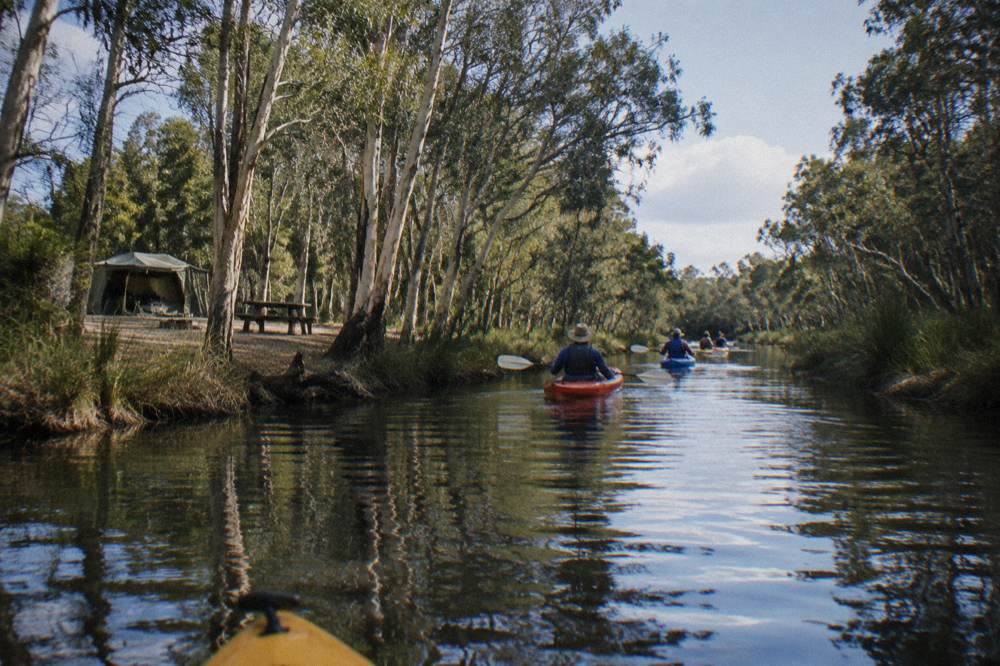
The cruise-and-canoe day is the one that most directly maps onto the Harrys experience: a boat carries you up the river, and you take canoes out on the quiet stretches. It lists free cancellation up to 24 hours, lunch and drinks available to purchase on site, and round-trip transfers from central Noosa that can be arranged at booking. The operator is Everglades Eco Safaris, whose vessel carries 36 people. If you'd rather pair the river with dry land, the Noosa Everglades 4WD and boat eco safari guide covers the same operator's full-day option.
The guided kayak day is the deepest-water option in the sense of time on the river: about 6 hours starting 8:30am, lunch, fresh fruit, baked bread and drinks included, groups capped at 16, run by Kanu Kapers Australia. It meets at Elanda Point Canoe Launch on Lake Flat Road, which the listing describes as 25 minutes north of Noosa, with no pickup. Its 4.9 rating comes from 158 reviews, a solid pool. No free cancellation is stated on that listing, so check the booking page before committing.
The self-guided kayak option suits confident paddlers who want the same water without a guide: about 6 hours from 8:30am, from $85.68 per person, groups up to 20, no meal listed, meeting at Elanda Point with no pickup. It carries a 4.8 rating from 133 reviews. There is also a 7.5-hour guided kayak day from Adventure Tribe Aus at $137 with morning tea, lunch and coffee from local organic food, free cancellation, though its 4.8 rating rests on only 9 reviews, a thin sample worth knowing about. The same operator's 7.5-hour self-guided version runs from $80 per person, 4.8 from 16 reviews, also a thin sample.
Which family fits you depends on one honest question: how much of the day do you want to spend paddling? The afternoon cruises give you the river and a glass of something cold in 2.5 hours with no effort. The canoe day splits the difference. The kayak days are the full commitment, and the guided version is the one that earns its lunch.
Can You Camp Or Picnic At Harrys?
Yes. Harrys has a camping and day-use area with non-flush toilets, picnic tables and a jetty, and camping permits must be booked before arrival. The maximum stay is 14 nights, open fires are prohibited, and drinking water is provided at the day-use area but must be treated before use. Current fees are $7.75 per person per night or $31.00 per family per night.
The day-use side is simple and free of charge: tables, toilets, water to treat, and a hut to look at. QPWS notes the water supply is not guaranteed, so carry your own as backup. The camping side needs a permit booked in advance through the Queensland camping booking service, and the fees below are the ones that apply from 1 July 2026.
| Item | Rule or fee |
|---|---|
| Camping permit | Required before camping at all sites, fees apply |
| Per person per night | $7.75 |
| Family per night | $31.00 (one or two adults plus children under 18, up to 8 people) |
| Children under 5 | Free |
| Student rate | $4.25 per person per night for approved educational groups |
| Maximum stay at Harrys | 14 nights |
| Maximum stay at campsites 1 to 15 | 7 nights |
| Open fires | Prohibited; gas or fuel appliances only |
| Portable toilets | Recommended when camping away from facilities |
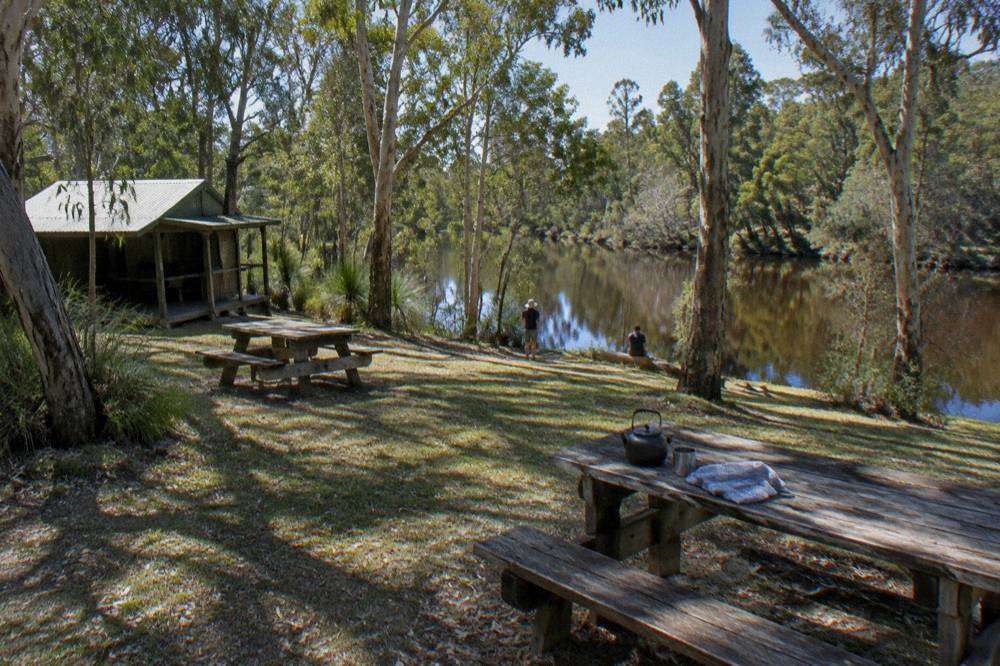
Harrys is one of only two road-accessible camping areas on the upper river, and the 14-night limit is double the 7 nights allowed at the paddle-in campsites 1 to 15 upstream. That makes it the practical base for longer trips. The upper river campsites 1 to 15 guide covers the paddle-in sites, and the Fig Tree Point campsite guide covers the first landing downstream, which caps at 24 people in up to 3 groups.
If you are pairing a night at Harrys with a tour rather than a self-organised paddle, the afternoon cruise is the low-effort way to see the river on the same trip: from $69 per person, 2.5 hours, departing Boreen Point, a glass of sparkling wine, beer or juice included, free cancellation up to 24 hours.
What Are The Rules On The Water Around Harrys?
A six-knot, no-wash speed limit applies upstream from the Kinaba Information Centre, motorised vessels are permitted only as far as campsite 3, and electric or non-motorised vessels are allowed beyond. There is a no-landing zone between Fig Tree Point and Harrys Hut, and all Maritime Safety Queensland regulations apply on the river.
These rules shape every tour on the water. The six-knot limit is why the boat legs in the distance table take the time they do, and why the river stays quiet enough for the reflections that give the operators their "River of Mirrors" marketing line. QPWS is explicit that the limit protects the riverbanks from erosion and that penalties apply for wash.
The no-landing zone between Fig Tree Point and Harrys is the one that catches paddlers out. You may float the whole stretch, which is the most scenic part of the river, but you may not pull your canoe or kayak onto the bank inside it. Land at Fig Tree Point or continue to Harrys. The zone exists to protect the fragile bank vegetation that makes the stretch look the way it does.
Motorised boats stop at campsite 3, 7.7 km upstream of Harrys by water. Beyond that point only electric motors and muscle power are permitted, which keeps the uppermost river, campsites 4 to 15, genuinely quiet. If your picture of the Everglades is silence and bird calls rather than engine noise, the country above campsite 3 is where that lives, and only paddlers and the electric-powered few get there.
When Is The Best Time To Visit Harrys Hut?
Spring and early summer are the most reliable window: September averages 57.8 mm of rain over 5.8 rain days at the nearest Bureau of Meteorology station, October 112.1 mm over 8.0 days, and the driest month on record at Tewantin is September. Morning crossings of Lake Cootharaba are calmest, and QPWS advises planning the lake leg early in the day regardless of season.
The climate figures come from the Tewantin station, number 040908, the nearest Bureau of Meteorology site to the river with 30 years of record. The table below gives the months that matter for a Harrys trip.
| Month | Mean max | Mean min | Mean rain | Rain days |
|---|---|---|---|---|
| Sep | 24.4 | 14.6 | 57.8 mm | 5.8 |
| Oct | 25.8 | 17.1 | 112.1 mm | 8.0 |
| Nov | 26.9 | 18.9 | 99.0 mm | 7.9 |
| Dec | 28.2 | 20.8 | 147.4 mm | 9.8 |
| Jan | 28.7 | 22.0 | 149.8 mm | 10.7 |
| Mar | 27.7 | 21.0 | 236.4 mm | 14.2 |
Two cautions on reading it. The means are pulled up by wet years, so the median rainfall in every month is lower than the mean; treat these as averages, not typical outcomes. And March is the wettest month in the whole table at 236.4 mm, with February close behind, so late summer paddling plans should carry the most weather slack.
Current alerts matter as much as the averages. The southern day-use jetty at campsite 3 is closed until 24 October 2026, with the northern camper's jetty open. A pest control program runs across the Cooloola Recreation Area from 31 October to 28 November 2026, mainly affecting the Teewah Beach and Freshwater areas rather than the upper river. Water sits across sections of the Cooloola Wilderness Trail until 8 November 2026. The QPWS conditions report, updated 30 September 2026, is the document to download before any trip.
For a self-guided paddle in the good window, the 7.5-hour self-guided kayak day from Adventure Tribe Aus runs from $80 per person, 6 of those hours on the water, with a full refund if you cancel ahead; its 4.8 rating is from 16 reviews, a small pool.
Whichever month you pick, the shape of the day is the same: cross the lake early, be on the Fig Tree to Harrys stretch by mid-morning while the water is still glass, and let the afternoon take care of itself. The side-by-side comparison on Noosa Everglades Tours puts the current prices and durations of every listing next to each other, which is the fastest way to match a tour to your window.
Common Questions About Harrys Hut
How long does it take to paddle to Harrys Hut?
About 1 hour 20 minutes by canoe from Kinaba Information Centre, or 1 hour from Fig Tree Point, which is 5 km upstream of Harrys. Add 1 hour 30 minutes to reach Kinaba from Elanda Point, so a full paddle from the car park to Harrys is roughly three hours each way.
Can you drive to Harrys Hut in a regular car?
No. Harrys Hut Road requires a high-clearance 4WD per QPWS advice. No vehicle access permit is needed for Harrys Hut Road or Cooloola Way themselves, but permits apply to Cooloola beaches and some other tracks.
Can you camp at Harrys Hut?
Yes, with a permit booked in advance. The maximum stay is 14 nights, fires are prohibited, and fees are $7.75 per person per night or $31.00 per family per night from 1 July 2026.
Is there drinking water at Harrys day-use area?
Drinking water is provided at the Harrys day-use area, but QPWS advises treating all water before use, and the supply is not guaranteed. Carry your own as backup.
Why can you not land between Fig Tree Point and Harrys Hut?
A no-landing zone applies along that stretch to protect the fragile riverbank vegetation. You can paddle the whole section, but you must land at Fig Tree Point or continue to Harrys.
Do motorised boats go past Harrys Hut?
Motorised vessels are permitted only up to campsite 3, which is upstream of Harrys by water. Beyond campsite 3, only electric motors and non-motorised vessels are allowed.