Noosa National Park: The Coastal Half Of A Noosa River Trip
Noosa National Park is the headland and beach half of a Noosa visit. The Noosa Everglades, the tannin-stained upper river, sit in a separate section of Great Sandy National Park 30 minutes inland. Here is what each one offers and how to fit both into one trip.
Short answer
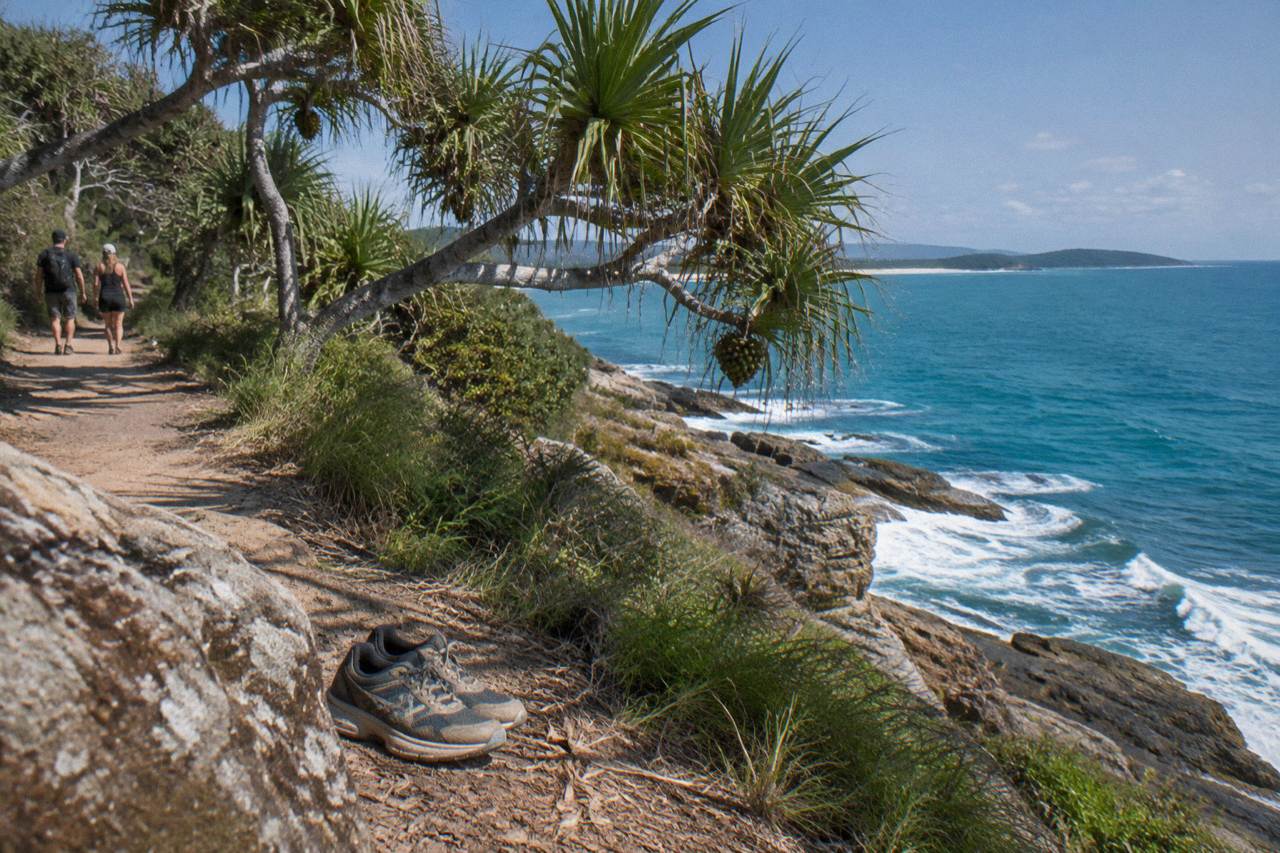
Noosa National Park protects 10.8 km of coastline including the Grade 4 Coastal Walk, about 4 hours return, with free day entry and no booking required. Koalas and threatened species live in its woodlands. The Noosa Everglades are in the Cooloola Recreation Area, a different part of Great Sandy National Park reached from Boreen Point.
Noosa National Park is the reason many people come to Noosa at all: a headland of sandstone cliffs, pockets of rainforest and open woodland, wrapped around one of the most walked stretches of coast in Queensland. The Noosa Everglades Tours site exists for the other half of the region, the tannin-dark upper Noosa River that sits inland behind the lakes, and the two are constantly confused with each other. They are different sections of the same vast Great Sandy National Park, reached from different sides of Noosa, and a well-planned trip can do both.
This guide covers what the national park itself contains, how the Coastal Walk actually feels in time and difficulty, which animals you have a realistic chance of seeing, and where the park ends and the Cooloola Recreation Area begins. It closes with the practical numbers: entry, weather by month, current alerts that touch a Noosa visit, and how to bolt a river cruise or kayak day onto a coastal morning.
What Is Noosa National Park And Where Does It Sit?
Noosa National Park is a coastal reserve protecting the headland between Noosa Heads and Sunshine Beach, on the Sunshine Coast. Day entry is free, and walkers need no booking, making it one of the most accessible stretches of protected coastline in the region. It is managed by Queensland Parks and Wildlife Service alongside the much larger Cooloola Recreation Area to the north, and the two together form Great Sandy National Park. The Noosa Everglades, the dark-water section of the upper Noosa River that tours run into, are inside the Cooloola section, not inside Noosa National Park itself. That distinction is the single most common mix-up in Noosa trip planning, and it matters because the two areas are reached from entirely different launch points. If you've heard that only two everglades exist on Earth and wondered whether that's true, the full story behind the only two everglades claim explains where the other one sits and how to reach it.
The park's own pages describe open woodlands and heath that provide habitat for koalas and other threatened species. Entry for day use is free, with no general admission fee and no booking required, which puts it among the most accessible national park experiences on the coast. Hastings Street, the restaurant and shopping precinct visitors associate with Noosa, sits effectively at the park's doorstep, so a morning on the Coastal Walk and lunch on Hastings Street is the default Noosa day.
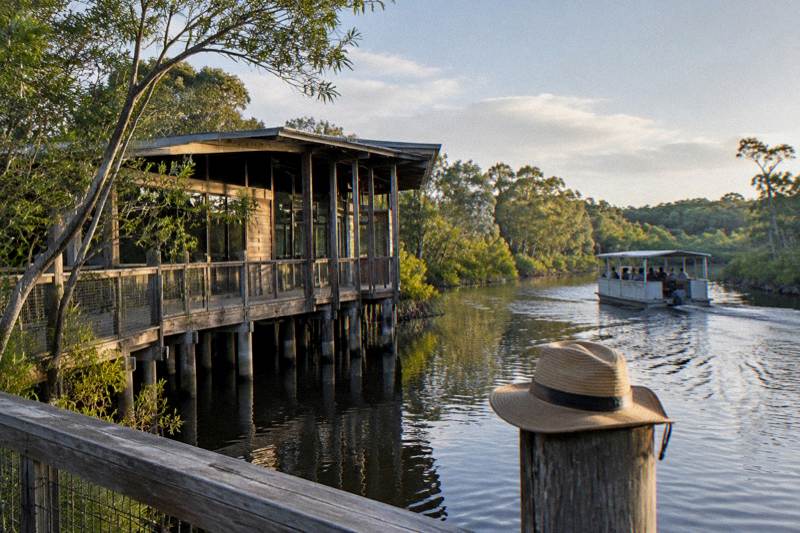
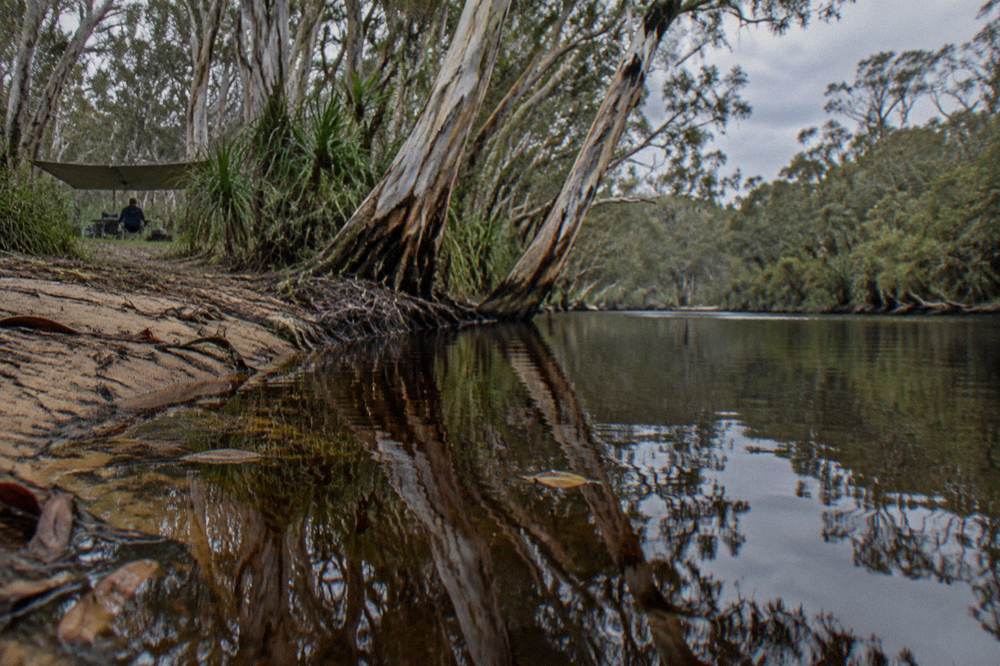
The geography is simple once you see it. Noosa National Park hugs the ocean. The Cooloola Recreation Area, holding the upper Noosa River, Lake Cootharaba and the campsites the everglades tours run to, starts north of Tewantin and is reached via Lake Flat Road to Boreen Point and Elanda Point. Queensland Parks and Wildlife Service describes the scenic waterways of the Upper Noosa River as part of the Noosa River catchment, with two-thirds of that catchment protected inside the national park, and the dark tannin-stained waters offering spectacular reflections of the twisted paperbarks and bloodwoods along the banks.
For more on the waterway side, read the guide to the Noosa Everglades cruise options, which covers the boat trips in detail.
How Long Is The Noosa Coastal Walk And How Hard Is It?
The Noosa National Park Coastal Walk runs 10.8 km return and is graded Grade 4, making it a moderately challenging track rather than a simple stroll. Queensland Parks and Wildlife Service suggests allowing about 4 hours to complete the full walk. Entry is free for the day and no booking is required, so you can simply arrive, set off along the coast, and take the walk at your own pace. Grade 4 in the Australian walking-track standard means formed tracks with some steep sections, uneven surfaces and occasional obstacles: solid footwear rather than thongs, though the first stretch from Hastings Street to the lookout at Hell's Gates is far gentler and is walked by families with small children every day of the week.
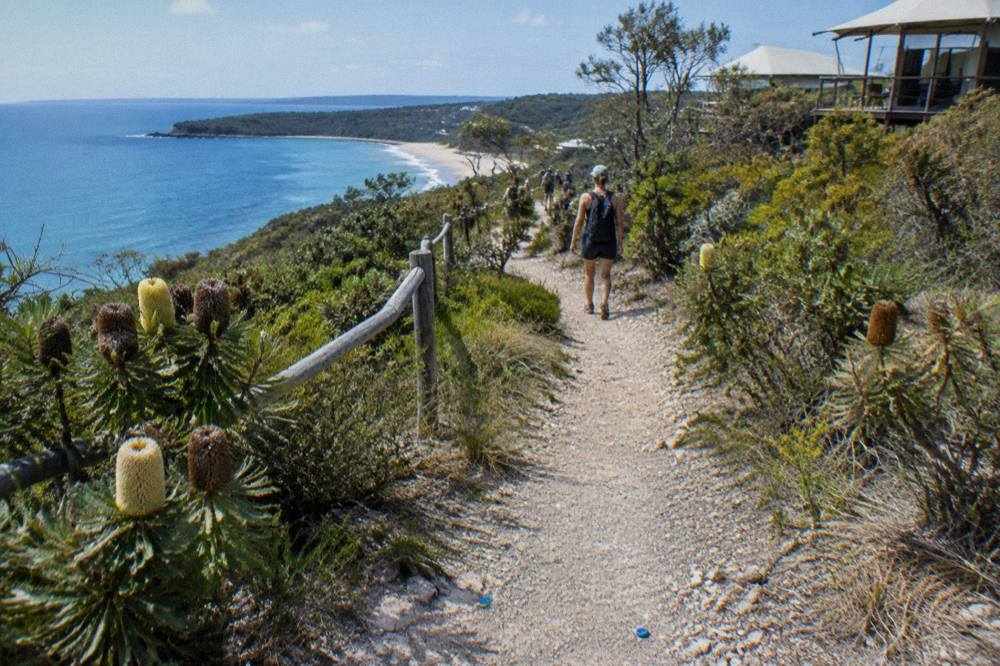
The walk runs from the park entrance at the end of Park Road, Noosa Heads, around the headland past Little Cove, Granite Bay, Tea Tree Bay and Hell's Gates, then on toward Alexandria Bay and Sunshine Beach. Most people walk a section and turn back. The Hell's Gates lookout and return, a fraction of the full distance, delivers the cliff and ocean views in well under two hours, while the full 10.8 km to Sunshine Beach and back is a genuine half-day commitment in summer heat. Dolphins are seen from the headland regularly, and humpback whales pass close to shore during their migration months, which is why the clifftop benches fill up in late winter and spring.
Two practical notes from the official Coastal Walk page: the track is exposed in sections, so water and sun protection matter more than fitness does, and the southern end connects into Sunshine Beach streets if you would rather finish there and bus or rideshare back than retrace your steps. Check the track conditions before you go the same way river visitors check the waterway, because sections can close after storms.
If your Noosa plan is coastline in the morning and dark water in the afternoon, these three river options are the ones that pair naturally with an early walk:
The afternoon cruise is the pairing that works best: it departs Boreen Point in the afternoon, runs 2.5 hours, and includes a glass of sparkling wine, beer or juice, with free cancellation up to 24 hours before. The full-day guided kayak and the 4.5-hour Explorer cruise are morning-weighted, so they suit a plan that flips the order: river first, headland at sunset.
Which Wildlife Can You See In Noosa National Park?
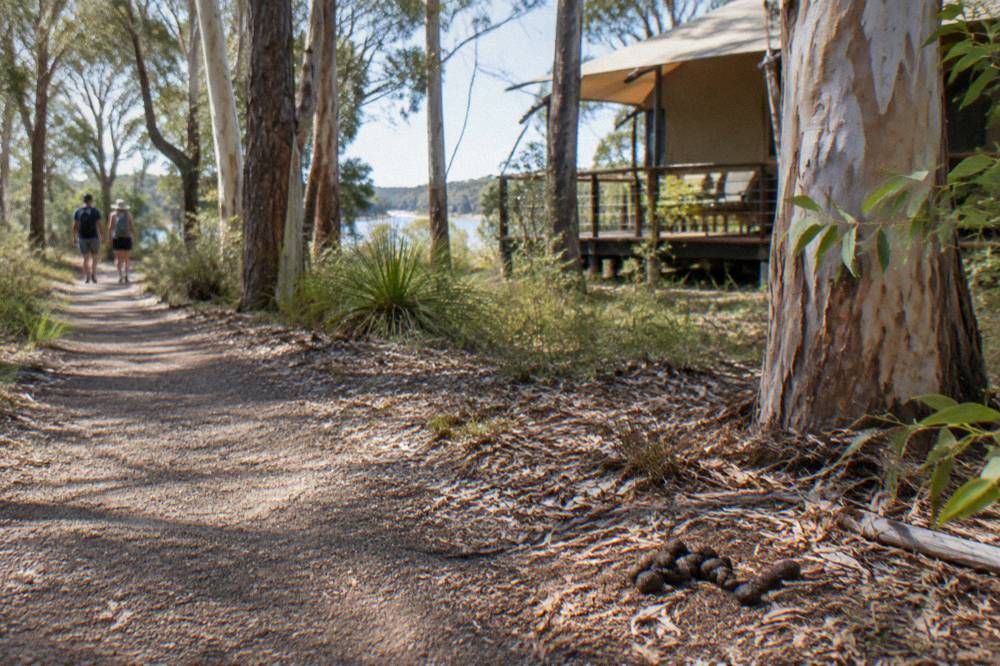
Noosa National Park is home to koalas among other threatened species, with its open woodlands and heath providing the habitat, and the wider Cooloola Recreation Area records more than 350 bird, 75 mammal, 21 frog and 80 reptile species across its forests, heathlands and waterways. The koala population around the Noosa headland is well known locally, and daytime sightings in the taller eucalypts near the park entrance and along the Tanglewood track are reported often enough that local tourism pages run sighting maps. Birdlife is the stronger draw on the water side: Queensland Parks and Wildlife Service notes choruses of frog calls along the upper Noosa River and lake systems, and the Cooloola area shelters rare or threatened residents such as the Cooloola acid frogs and the ground parrot, plus one of the few remaining coastal emu populations in Queensland.
What each half of the park system is good for differs sharply. The headland delivers ocean megafauna: dolphins year-round from the clifftops, whales in season, and seabirds working the swell lines. The upper river delivers the mirror-still waterbird hours. The Fig Tree Point area, reached only by canoe, boat or on foot, is where cormorants, wood ducks, egrets, spoonbills and darters appear in the early morning or late afternoon, per the official campsite page. Stingrays are seen in the waters around the Kinaba Information Centre building, which the commercial boat tours on the upper river also drop into.
Koala spotting has an etiquette that matters. Do not feed wildlife, per the park's About guidance, and keep distance from any koala low in a tree or on the ground, since dogs are the other major pressure on the headland population and stressed animals move. The official park information is the right source for current species notes rather than social media sighting pages, which routinely mislabel possums and spread locations of sensitive nests.
Noosa National Park Or The Everglades: Which One Do You Need?
You need both if you have two or more days, because they are different sections of Great Sandy National Park delivering different things: Noosa National Park gives ocean, cliffs and koalas with free entry, while the Everglades give tannin-dark water, paperbark reflections and canoe camping reached from Boreen Point. If you have one day, the choice comes down to weather and appetite: calm clear conditions favor the headland walk and whale or dolphin watching, while overcast or still days produce the best mirror reflections on the upper river, which is where the "River of Mirrors" name comes from in operator descriptions.
| Noosa National Park | Noosa Everglades (Cooloola) | |
|---|---|---|
| Where it is | Headland at Noosa Heads, walkable from Hastings Street | Upper Noosa River, north of Tewantin, launched from Boreen Point or Elanda Point |
| Signature experience | 10.8 km Coastal Walk, about 4 hours, Grade 4 | Boat cruise or kayak into The Narrows reflective stretch |
| Entry | Free day entry, no booking | Free to launch; tours and camping permits are paid |
| Wildlife | Koalas, dolphins, whales in season | Waterbirds, frogs, stingrays at Kinaba |
| Time needed | Half a day | 2.5 to 7.5 hours depending on the tour |
| Best paired with | Hastings Street lunch | A night camping at Fig Tree Point or Harrys |
The mistake to avoid is assuming the Everglades are a short detour from the headland. They are not. The launch points sit behind Lake Cootharaba, and Queensland Parks and Wildlife Service advises planning to cross the lake early in the morning when conditions are likely to be calm, which is exactly why the kayak tours start at 8:30am and the cruise operators time their departures around the wind. A Noosa trip that tries to do the Coastal Walk and a morning kayak on the same day will rush both.
The full-day guided kayak tour is the deepest of the standard river options: about 6 hours from an 8:30am start at Elanda Point Canoe Launch, lunch, fresh fruit, baked bread and drinks included, groups up to 16, rated 4.9 from 158 reviews, from $148 per person. It suits visitors who have already walked the headland on a previous day and want the immersion version of the river.
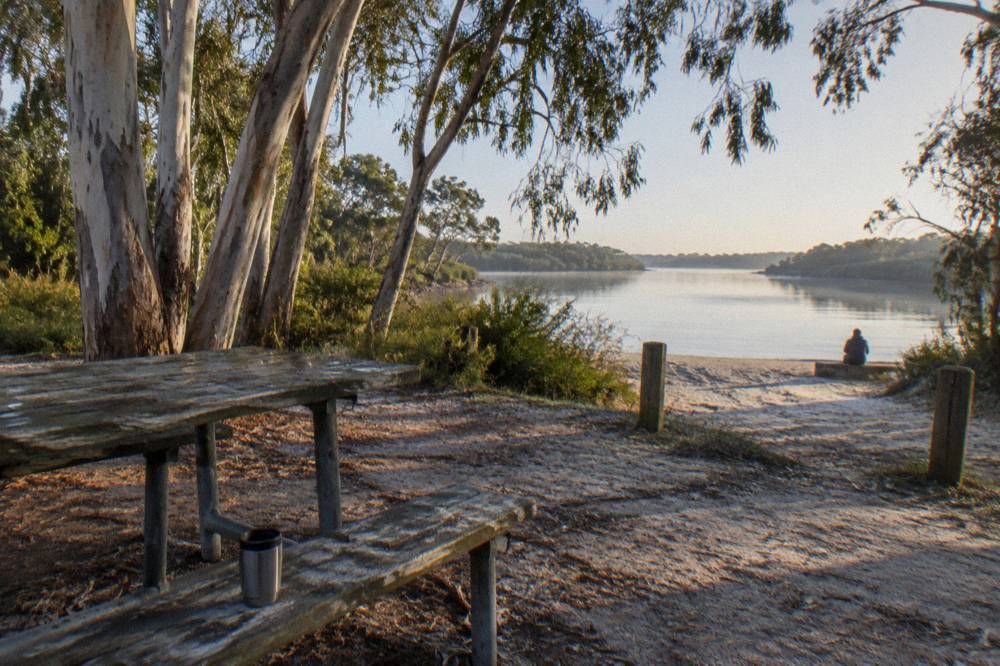
For campers, the upper river holds a chain of 15 paddle-in campsites plus Fig Tree Point and Harrys, with permits required before camping at all sites. The Everglades camping guide covers fees, which run $7.75 per person per night or $31.00 per family per night, the 7-night limit at campsites 1 to 15, the 14-night limit at Fig Tree Point and Harrys, and the fire prohibition that applies across every upper river site.
What Does A Noosa National Park Visit Cost?
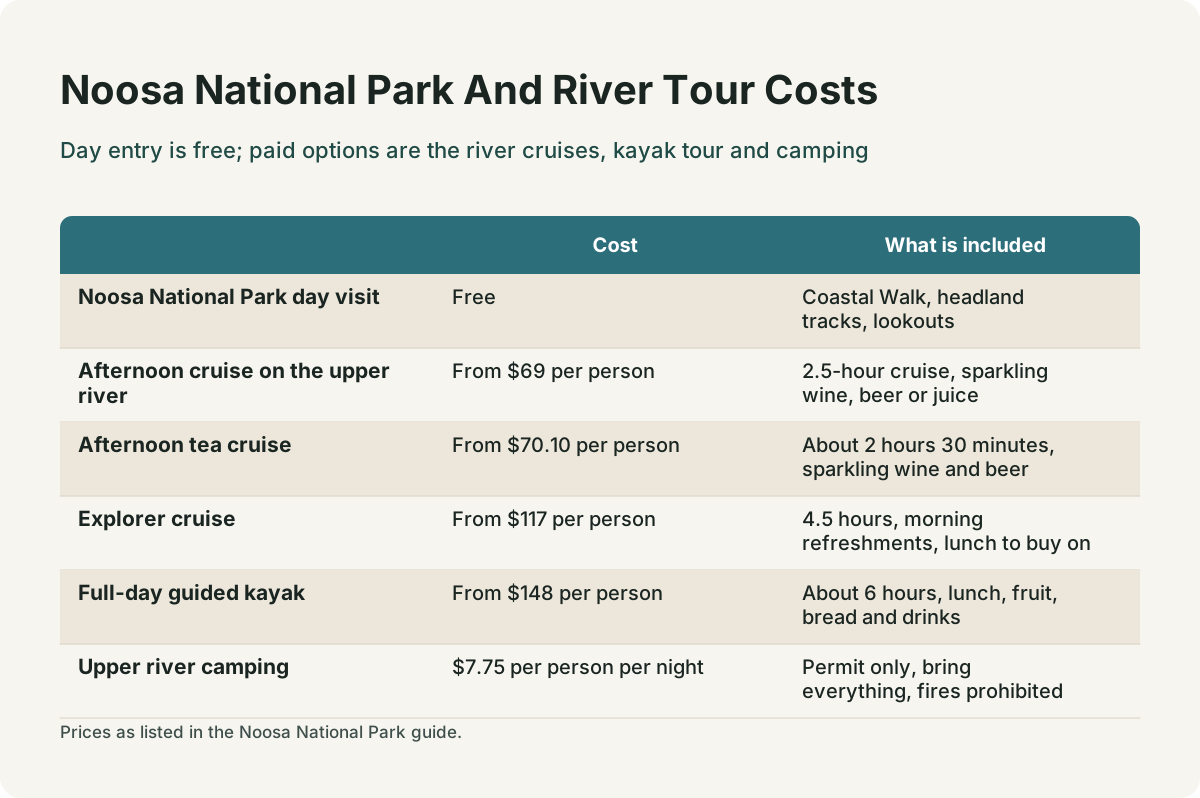
Walking in Noosa National Park costs nothing: day entry is free with no admission fee and no booking required, so the only real costs are transport, food, and anything you add from the paid side of the region, the river tours and camping permits. The river is where the money goes. Cruise listings run from $69 to $70.10 per person for the two afternoon options, $117 for the 4.5-hour Explorer cruise, and $148 for the full-day guided kayak, while camping on the upper river adds the QPWS permit fees above.
| Experience | Cost | What is included |
|---|---|---|
| Noosa National Park day visit | Free | Coastal Walk, headland tracks, lookouts |
| Afternoon cruise on the upper river | From $69 per person | 2.5-hour cruise, a glass of sparkling wine, beer or juice |
| Afternoon tea cruise | From $70.10 per person | About 2 hours 30 minutes, sparkling wine and beer |
| Explorer cruise | From $117 per person | 4.5 hours, morning refreshments, lunch to buy on site |
| Full-day guided kayak | From $148 per person | About 6 hours, lunch, fruit, bread and drinks |
| Upper river camping | $7.75 per person per night | Permit only, bring everything, fires prohibited |
Two budget notes. First, the free half of the region is genuinely free, which makes Noosa unusual among headline destinations: the single most famous walk on the Sunshine Coast costs nothing but shoe leather (see Tour Costs). Second, the paid half varies more by format than by quality: the two afternoon cruises differ by a dollar and ten cents between listings, so the choice between them is really about departure point, vessel and cancellation terms rather than price. The afternoon tea cruise asks 48 hours notice for cancellation, while the featured afternoon cruise allows free cancellation up to 24 hours before.
The Explorer cruise sits in the middle of the ladder: from $117 per person, 4.5 hours running 9am to 1.30pm, morning refreshments included with lunch to buy at the on-site bar and bistro, rated 4.6 from 279 reviews. It is the option for visitors who want more than the afternoon cruise covers but do not want to paddle.
How Do You Combine The Park With The Upper Noosa River?
The clean combination is the Coastal Walk on one day and a river tour on the next, or the headland in the morning followed by the 2.5-hour afternoon cruise from Boreen Point, which is the only standard tour format built for an afternoon start. The geography rewards that order. The walk is best in morning cool, the lake crossing is calmest early but the cruise boats handle afternoon conditions, and the drive from Noosa Heads to Boreen Point is a straightforward run via Tewantin that you should time with a mapping service rather than any published figure.
One routing fact is worth knowing before you drive it. Doonella Bridge in Tewantin operates one-way eastbound only, Tewantin to Noosaville, until early December 2026, with westbound traffic detoured via Eumundi-Noosa Road and Beckmans Road. That is a Noosa Shire Council works project, and it adds time and complexity for drivers routing through Tewantin toward Lake Flat Road and Boreen Point from the south. Anyone staying in Noosaville or Noosa Heads and heading to an afternoon cruise should check a mapping service on the day.
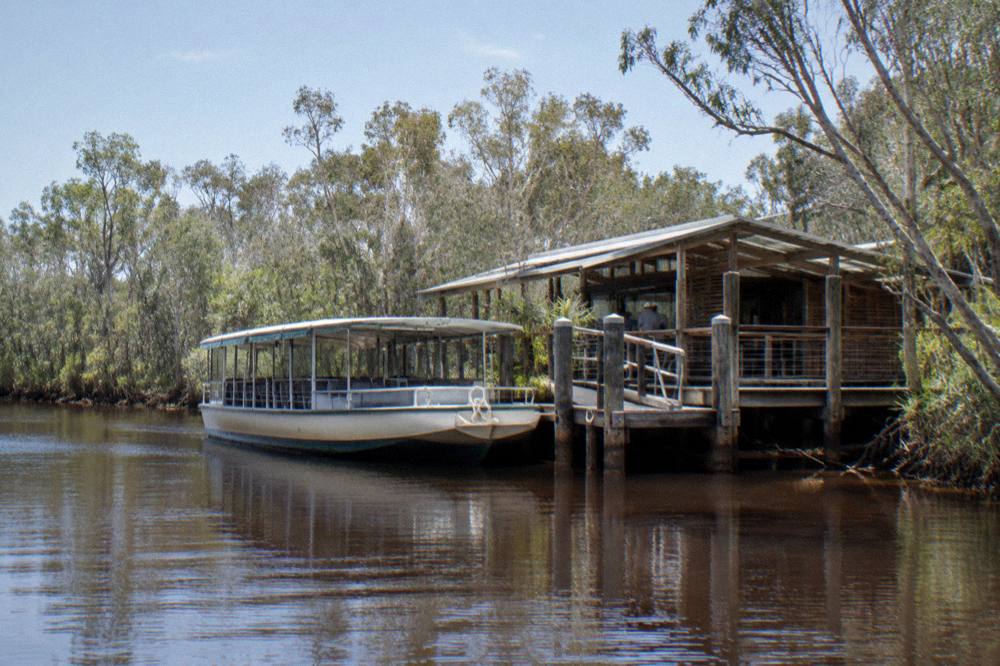
The afternoon cruise itself: 2.5 hours on the upper Noosa River, coach transfer from selected Noosa stops included, free cancellation up to 24 hours, a drink included on board. It is the most-reviewed river listing at 4.5 from 1,093 reviews, from $69 per person, and it is the natural companion to a Noosa National Park morning because its timetable assumes you spent the morning elsewhere. You can Check availability alongside the full afternoon cruise rundown on its tour page.
For a fuller picture of the region's two halves, the things to do in Noosa guide sequences the headland, the river, the hinterland and the North Shore into one itinerary.
When Is The Best Time To Visit Noosa National Park?
The best months for Noosa National Park are the dry shoulder season, with September averaging 57.8 mm of rain over 5.8 rain days and October 112.1 mm over 8.0 days at the nearest Bureau of Meteorology station, Tewantin, while the March mean of 236.4 mm across 14.2 rain days marks the wet end of the year. Those figures come from 30 years of record at Tewantin RSL Park, station 040908, the closest station to Noosa with published normals. The headland walk is exposed, so summer walks want an early start: January and February average a 28.7 and 28.6 degree mean maximum.
| Month | Mean max C | Mean min C | Mean rain mm | Rain days |
|---|---|---|---|---|
| Jan | 28.7 | 22.0 | 149.8 | 10.7 |
| Mar | 27.7 | 21.0 | 236.4 | 14.2 |
| Jun | 21.7 | 12.5 | 112.7 | 8.7 |
| Sep | 24.4 | 14.6 | 57.8 | 5.8 |
| Oct | 25.8 | 17.1 | 112.1 | 8.0 |
| Dec | 28.2 | 20.8 | 147.4 | 9.8 |
September is the driest month in the table and March the wettest, read straight from the averages, though the median rainfall sits below the mean in every month because a few flood years pull the averages up. For whale watching from the headland, late winter and spring are the migration window. For the river, spring and early summer deliver the still, high-water conditions that make the reflections in The Narrows so photographed, and the same months carry the wildflower and bird activity the Cooloola pages describe.
Seasonal pressure points are worth planning around. The Noosa Triathlon runs on Sunday 1 November 2026 with festival events from late October, starting at Noosa Main Beach, which means crowds, road closures and heavy accommodation demand right through the window when the river is at its best. Queensland spring school holidays ran 19 September to 5 October 2026, so the first week of October is the quiet shoulder to aim for if your dates are flexible.
What Should You Know Before You Go?
The two things to check before a Noosa trip are the Cooloola conditions report, updated 30 September 2026, and the current park alerts, which include a partial jetty closure at Upper Noosa River Campsite 3 until 24 October 2026 and a pest control program across the Cooloola Recreation Area from 31 October to 28 November 2026. None of these close the Coastal Walk or the standard tour routes, but each one touches the edges of a combined headland-and-river plan. The jetty closure at Campsite 3 affects mooring and landing for boat and kayak trips on the upper river: the southern day-use jetty is closed from flood damage, while the northern camper's jetty stays open.
Closer to the headland, the Boreen Point N4 amenities block on Boreen Parade is closed for roof replacement from 19 to 24 October 2026, daytime hours, with alternatives about 500 m away at the N3 block at the Urangan Parade boat ramp and the N5 picnic area by the caravan park. That is a facilities note rather than an access closure, but anyone spending time around the Boreen Point launch area in late October should know where the open toilets are.
The pest control program from 31 October to 28 November 2026 closes Eastern and Western Firebreaks, including Pettigrews and Kings Bore Roads, for the full period, with Teewah Beach and Freshwater campsites closed 2 to 4 November. The upper river waterway tours are not directly affected, but anyone extending a Noosa trip into beach driving or Cooloola camping in November should read the alert before booking campsites. Water sits across sections of the Cooloola Wilderness Trail until 8 November 2026, which reinforces the point that boat and kayak remain the primary way into the everglades section.
For safety on the water, no official statement was found on the Parks and Wildlife pages for Cooloola or on Noosa Council's rivers and creeks pages regarding crocodiles in this system, so prepare on general park safety guidance rather than any specific claim. Council's water quality advice is practical: avoid swimming near drains, in discoloured or murky water, or shortly after heavy rain, and remember the patrolled beaches are on the ocean side, not at Boreen Point. The Cooloola Recreation Area information and the conditions report are the two pages to load before departure day.
The short version of a perfect two-day Noosa plan: day one, the Coastal Walk in the morning, Hastings Street in the afternoon. Day two, cross to Boreen Point early, take the cruise or a kayak into the dark water, and be back for sunset on the headland. If a third day opens up, the campsites up the river are the reason to stay.
Common Questions About Noosa National Park
How long is the Noosa National Park Coastal Walk?
The Coastal Walk is 10.8 km return, graded Grade 4, and Queensland Parks and Wildlife Service suggests allowing about 4 hours for the full walk. Most visitors walk a shorter section, such as to the Hell's Gates lookout and back, which takes well under two hours.
Is Noosa National Park free to enter?
Yes. Day entry is free with no general admission fee and no booking required for walkers. The paid experiences in the region are the river tours, kayak hire and camping permits on the upper Noosa River.
Are the Noosa Everglades part of Noosa National Park?
No. The Everglades are the tannin-stained upper Noosa River inside the Cooloola Recreation Area, a different section of Great Sandy National Park reached from Boreen Point or Elanda Point, north of Tewantin. Noosa National Park is the coastal headland at Noosa Heads.
Can you see koalas in Noosa National Park?
Yes, koalas live in the park's open woodlands and heath, and the headland population is one of Queensland's best known. Sightings are most likely in the taller eucalypts near the park entrance and along the Tanglewood track. Keep distance, never feed wildlife, and never let dogs approach.
How do you combine Noosa National Park with an Everglades tour?
Walk the headland in the morning, then drive to Boreen Point for the 2.5-hour afternoon cruise, which is the one standard tour built around an afternoon start. Or split it across two days, with the full-day guided kayak or the 4.5-hour Explorer cruise on the river day.
When is the best month to visit Noosa National Park?
September and October sit in the driest part of the year at the nearest weather station, Tewantin, with September averaging 57.8 mm of rain over 5.8 rain days. Spring also overlaps the whale migration. Avoid the Noosa Triathlon weekend on 1 November 2026 if you want quiet roads.