Upper Noosa River Campsites 1 To 15: Distances, Rules And How To Book
Fifteen numbered campsites string up the tannin-dark upper Noosa River, reachable only by canoe, kayak or boat. Here is what Queensland Parks and Wildlife Service actually says about each leg, the vessel limits and the permits.
Short answer
The upper Noosa River has 15 river-access campsites reachable only by paddle craft or boat. Motorised vessels may go no further than campsite 3; campsite 15 is the furthest upstream and passage beyond it is not possible. Permits cost $7.75 per person per night and allow a maximum stay of 7 nights.
What Are The Upper Noosa River Campsites 1 To 15?
The upper Noosa River campsites 1 to 15 are a chain of small, boat-access-only camping sites spread along the tannin-stained river inside the Cooloola Recreation Area, Great Sandy National Park. Each is reached by canoe, kayak or boat rather than by road, and campsite 15 sits furthest upstream, beyond which the river cannot be paddled. Queensland Parks and Wildlife Service (QPWS) manages all fifteen under one set of park-specific conditions, and the journey itself is classified as a canoe, kayak or boat waterway of 27.7 km one way, with five hours of suggested paddling time for the full route.
The river above Lake Cootharaba is the stretch operators and listings call the Noosa Everglades, though QPWS itself names the place the Upper Noosa River within the Cooloola Recreation Area and uses "The Narrows" for the 2.5 km section where the dark water reflects forest and sky. The campsites inherit that setting: paperbarks and bloodwoods line the banks, and the water colour comes from tannins rather than sediment. Two-thirds of the Noosa River catchment is protected within the national park, which is why the campsites feel remote despite sitting roughly 19 km by road from Tewantin.
What surprises many first-time planners is that none of the fifteen sites is a drive-in campground. QPWS states that tour boats operate daily from Noosa and Tewantin, and that canoes, kayaks and small boats can be hired from private operators at Boreen Point and Elanda Point. Everything you bring in, you bring by water, and everything you take out, including rubbish, leaves the same way. The full picture of launch points and road access is covered in the guide to getting to the Everglades from Noosa and Brisbane, while this page focuses on the campsites themselves.
How Far Apart Are The Campsites And How Long Does Paddling Take?
From Harry's Hut to campsite 1 is 3.5 km or about 35 minutes by canoe, campsite 1 to 2 is 1.7 km or 15 minutes, campsite 2 to 3 is 2.5 km or 30 minutes, and campsite 13 to 15 is 3 km or 30 minutes. QPWS publishes these leg times for paddle craft, and the same table gives boat times where motorised access is allowed. The figures assume steady paddling, so a group with loaded canoes, children or a headwind should add generous buffer time to every leg.
The full distance ladder starts before the numbered sites. Elanda Point to Kinaba is 4.5 km, about 1.5 hours by canoe, and Kinaba to Fig Tree Point is another 2 km, 20 minutes by canoe or 15 minutes by boat. Fig Tree Point to Harry's Hut is 5 km, a full hour of paddling, and it is from Harry's Hut that the numbered campsites begin their run upstream. Campsite 2, the site many searches ask about, sits just 1.7 km and 15 minutes beyond campsite 1, making the first three sites the most achievable targets for a single day of paddling from the Harrys end.
| Leg | Distance | Canoe time | Boat time |
|---|---|---|---|
| Elanda Point to Kinaba | 4.5 km | 1 hr 30 min | n/a |
| Boreen Point to Kinaba | 7 km | n/a | 15 min |
| Kinaba to Fig Tree Point | 2 km | 20 min | 15 min |
| Fig Tree Point to Harry's Hut | 5 km | 1 hr | 30 min |
| Harry's Hut to campsite 1 | 3.5 km | 35 min | n/a |
| Campsite 1 to campsite 2 | 1.7 km | 15 min | n/a |
| Campsite 2 to campsite 3 | 2.5 km | 30 min | n/a |
| Campsite 13 to campsite 15 | 3 km | 30 min | n/a |
| Harry's Hut to campsite 3 (boat) | 7.7 km | n/a | 45 min |
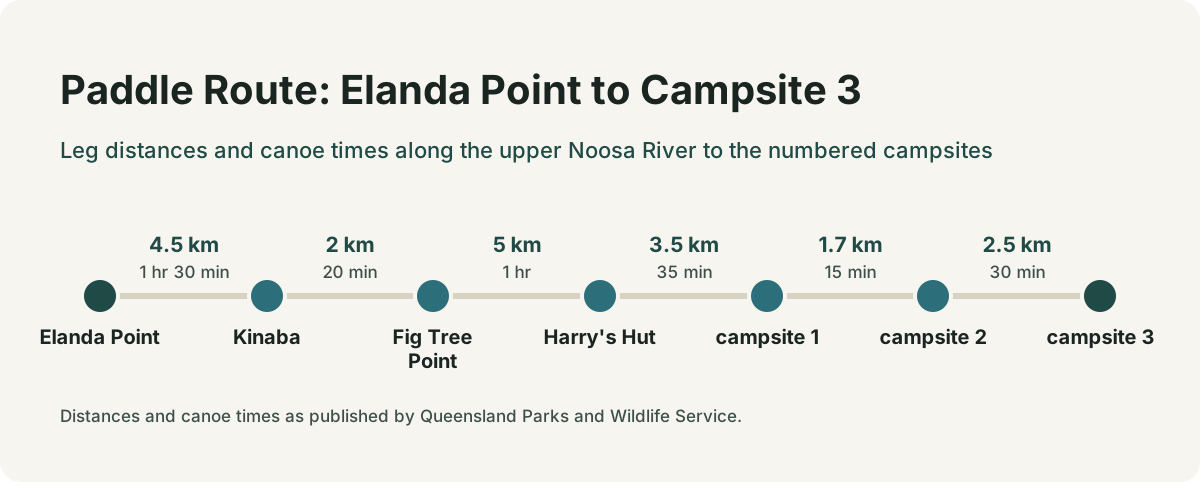
Read the table as a planning spine rather than a schedule. A paddler leaving Elanda Point mid-morning reaches Kinaba around lunchtime, and the campsites beyond Harry's Hut are then counted off in short hops. QPWS also notes it is not possible to proceed upstream beyond campsite 15, so the chain genuinely ends there and the return leg doubles every distance. Anyone weighing a guided day against hauling camping gear themselves can compare the two styles in the how to choose a Noosa Everglades tour guide.
Which Campsites Can A Motorised Boat Reach?
Motorised vessels are permitted only as far as campsite 3 on the upper Noosa River; beyond campsite 3, only electric motors and non-motorised vessels such as canoes and kayaks are allowed. A six-knot, no-wash speed limit applies upstream from the Kinaba Information Centre, and penalties apply for vessels that generate wash. That makes campsites 1 to 3 the practical options for anyone supporting a trip with a motorboat, and campsites 4 to 15 paddle-only territory.
The rule exists to protect the riverbanks from erosion, and it shapes the whole character of the upper river. Boat-based campers moor at or near campsite 3, which has jetties, and continue on foot or by hired canoe if they want to see further upstream. The QPWS boat time from Harry's Hut to campsite 3 is 45 minutes over 7.7 km, comfortably inside a morning. The Harrys Hut guide covers the historic hut and day-use area at the downstream end of the numbered chain, where motorised access is straightforward.
For campers who want the upper river without owning a boat, a guided kayak day is the common workaround. The Full-Day Guided Noosa Everglades Kayak Tour from Kanu Kapers Australia runs about six hours from 8:30am, meets at the Elanda Point Canoe Launch on Lake Flat Road, includes lunch, fresh fruit, baked bread and drinks, and takes groups of up to 16; it is rated 4.9 from 158 reviews and lists from $148 per person. The listing states no free cancellation, so check the booking page for terms before committing.
What Facilities Do The Campsites Have?
QPWS confirms only a short list of facilities for the numbered campsites: campsite 3 has a composting hybrid toilet, platform tables and jetties, while portable toilets are recommended when camping away from facilities at campsites 4 to 15. No other per-site amenities are published for the numbered chain, so plan on self-sufficiency for water, cooking and waste. QPWS asks that all rubbish be taken out.
That sparse official record matters because plenty of third-party pages imply more comfort than exists. The park service does not list drinking water, showers, powered sites or booked fireplaces at any of the fifteen numbered sites. Harrys day-use area, downstream of the chain, has non-flush toilets, picnic tables and a water supply that QPWS advises to treat before use, but that is a day-use area rather than one of the numbered campsites. Campers relying on river or rain water should treat everything, and the what to bring to the Noosa Everglades guide lists the packing consequences.
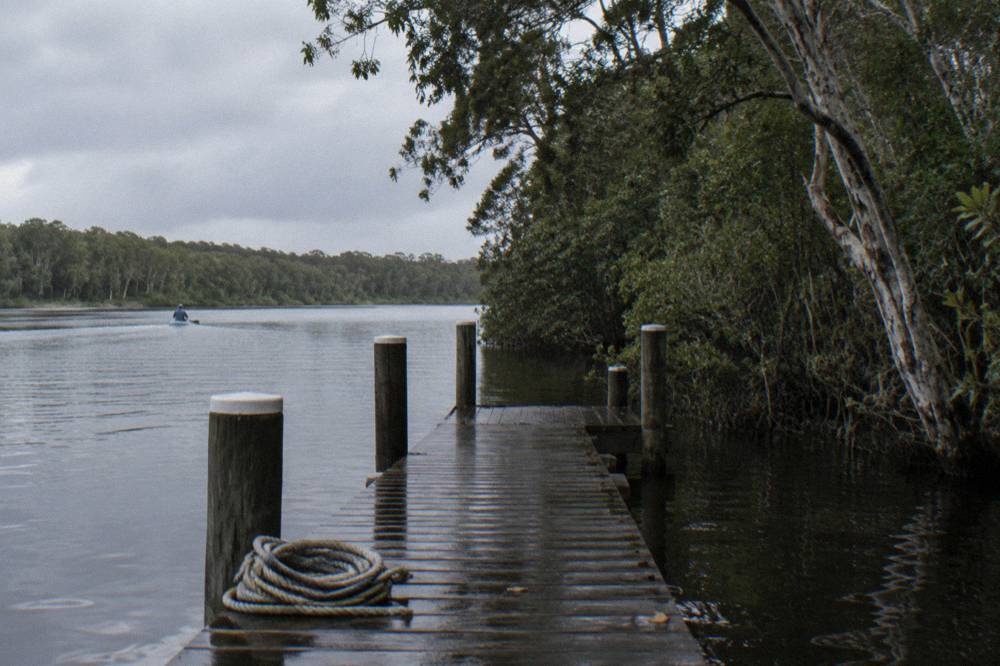
Campsite 3 is the practical hub of the chain for exactly this reason: it is the furthest point a motorised vessel may reach, it holds the jetties that make loading and unloading manageable, and it carries the only confirmed toilet among the numbered sites. The current partial closure of its southern day-use jetty, discussed later in this article, is therefore worth checking before any trip that plans to land there.
Do You Need A Permit And What Does Camping Cost?
Yes, camping permits are required before camping at all upper Noosa River sites and fees apply, booked through the Queensland camping booking service. From 1 July the fees are $7.75 per person per night or $31.00 per family per night, a family being one or two adults plus children under 18 up to eight people, with children under five free and a $4.25 student rate for approved educational groups. Maximum stay at campsites 1 to 15 is 7 nights.
The fee schedule and the booking flow live on the official QPWS camping bookings page, and permits can also be made through the Queensland Government camping service. Book before you paddle, not on arrival: there is no self-registration at the sites, and rangers do check permits along the river. School holidays and long weekends fill the lower-numbered, easier-to-reach sites first, which is another reason campsite 2 and its 15-minute hop from campsite 1 go early.
| Item | Rule or fee |
|---|---|
| Permit | Required before camping at all sites |
| Per person per night | $7.75 |
| Family per night (max 8 people) | $31.00 |
| Children under 5 | Free |
| Approved student rate | $4.25 per person per night |
| Maximum stay, campsites 1 to 15 | 7 nights |
| Maximum stay, Fig Tree Point and Harrys | 14 nights |
Compare that 7-night cap with the 14 nights allowed at Fig Tree Point and Harrys if a longer base-camp style trip appeals; the Fig Tree Point campsite guide and the broader Noosa Everglades camping guide cover those alternatives. The numbered sites suit travellers moving up the river night by night rather than staying put.
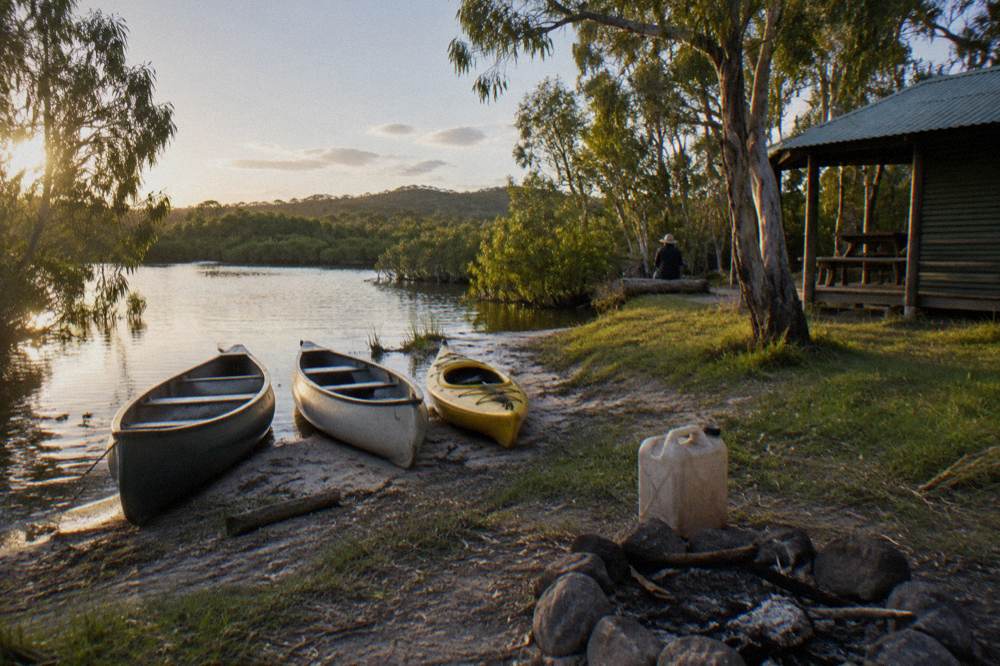
What Rules Apply On The Water And At The Campsites?
Open fires are prohibited at all upper Noosa River campsites; only approved gas or manufactured-fuel appliances are allowed for cooking and heating, and braziers are not permitted. A no-landing zone applies between Fig Tree Point and Harry's Hut, motorised vessels stop at campsite 3, and all Maritime Safety Queensland regulations apply on the water. The full conditions sit on the official park-specific conditions page.
The fire rule catches out more campers than any other. Even in winter, a campfire on the riverbank is not an option at sites 1 to 15, so a fuel stove and enough gas for the whole trip are part of the kit. The no-landing zone between Fig Tree Point and Harry's Hut matters to paddlers planning lunch stops: land at the designated areas, not along that stretch. Portable toilets are recommended for campsites 4 to 15, and QPWS asks that all rubbish be carried out, which on a multi-night trip means packing sealed bags.
On the water, the six-knot limit upstream of Kinaba is the headline rule for anyone with a motor, along with the no-wash requirement. For paddlers, the practical rules are about distance and daylight: the leg table above shows how quickly a delayed start turns into an arrival after dark, and the tannin river is not a place to navigate by headlamp with a loaded canoe.
What Alerts And Closures Affect The Campsites Right Now?
Three current items touch the upper Noosa River campsites: the southern day-use jetty at campsite 3 is closed until 24 October 2026 with the northern camper's jetty remaining open, a pest control program runs across the Cooloola Recreation Area from 31 October to 28 November 2026, and the Cooloola conditions report was updated 30 September 2026 showing all Noosa River campsites open. Check the alerts again close to your departure date.
The jetty closure at campsite 3 follows flood damage and is the one alert that directly changes a camping plan, since the site is the motorised limit and the chain's main landing point. The park alert for campsite 3 asks campers to store unused watercraft in the designated bank area above the jetty. The pest control program is a whole-of-recreation-area operation; the river campsites themselves are not listed as closing for it, but ranger activity is possible in late October and November.
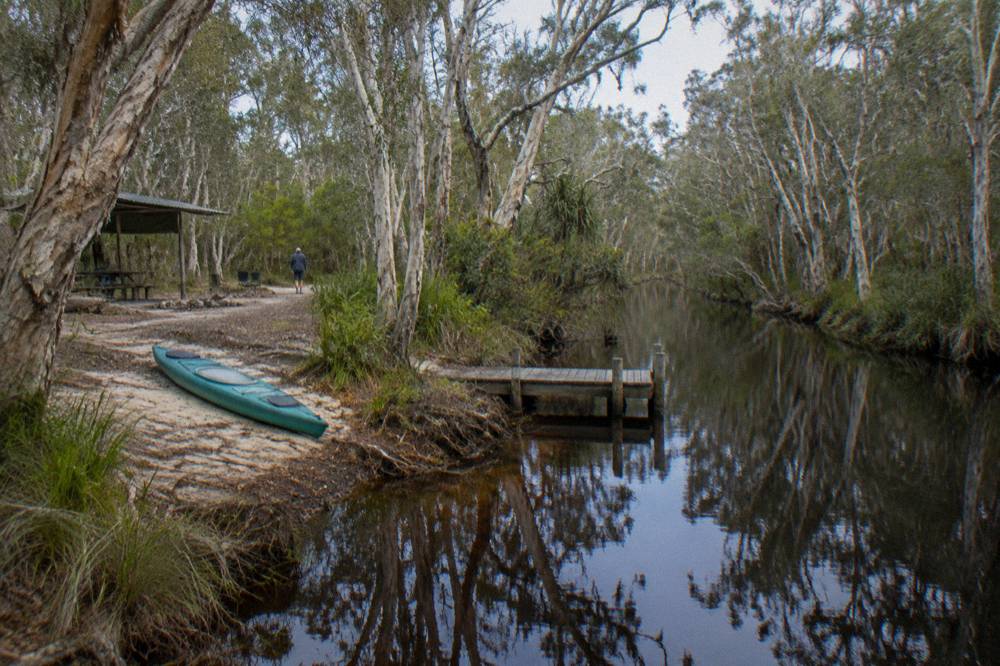
The conditions report is the document to download before any trip. It carries track, water and safety detail for the whole Cooloola Recreation Area, and the current version confirms the river campsites, Harrys Hut and Fig Tree Point are open with no additional closures noted for the river area. A separate alert notes water across the Cooloola Wilderness Trail, active to 8 November 2026, which affects land-based walking routes rather than the waterway campsites.
Can You Paddle The First Stretch Without Camping At All?
Yes, the stretch from Elanda Point through Kinaba and The Narrows is a well-established day paddle, and several bookable kayak listings cover it in six to seven and a half hours without any overnight permit. The self-guided options start from $80 to $85.68 per person and launch from the Elanda Point Canoe Launch, meeting the same water the campsites serve. Camping is one way to see the river, not the only way.
The Noosa Everglades self-guided kayak day from Adventure Tribe Aus lists 7.5 hours with about 6 hours of actual kayaking, from $80 per person, rated 4.8 from a thin sample of 16 reviews, with cancel-ahead-for-full-refund terms and no meal listed. Kanu Kapers' self-guided listing covers about 6 hours from 8:30am at Elanda Point, from $85.68 per person, rated 4.8 from 133 reviews, with groups up to 20 and no free cancellation stated. Both are detailed on the self-guided kayak tour page, and the operator's live listing carries current dates.
| Day option | Operator | Duration | From price | Rating |
|---|---|---|---|---|
| Self-guided kayak day | Adventure Tribe Aus | 7.5 hours | $80 | 4.8 from 16 reviews |
| Self-guided kayak tour | Kanu Kapers Australia | about 6 hours | $85.68 | 4.8 from 133 reviews |
| Full-day guided kayak, lunch included | Kanu Kapers Australia | about 6 hours | $148 | 4.9 from 158 reviews |
| Cruise plus canoe day | Everglades Eco Safaris | about 6 hours | $119.67 | 4.6 from 379 reviews |
A middle path exists for travellers who want the boat-plus-paddle combination without camping gear: the Everglades Explorer cruise-and-canoe day from Everglades Eco Safaris runs about 6 hours, from $119.67 per person, rated 4.6 from 379 reviews, with round-trip transfers from central Noosa arrangeable at booking and lunch and drinks available to purchase on site. It reaches the river by boat first, then puts you on the water in a canoe, which is how many visitors first see the stretch between Kinaba and the campsites.
For a taste of the same water with zero paddling, the afternoon cruises from Boreen Point run 2.5 hours from $69 per person, and the Noosa Everglades cruise guide compares them. Day options of every kind sit in the side-by-side comparison on the homepage of Noosa Everglades Tours.
How Do You Plan A Trip Around Campsite 2 And The Lower-Numbered Sites?
Campsite 2 sits 1.7 km and about 15 minutes upstream of campsite 1, and 2.5 km or 30 minutes below campsite 3, which makes the first three sites the shortest practical overnight circuit from Harrys Hut. Paddle from Elanda Point to Kinaba, on to Fig Tree Point and Harrys, then count off the numbered legs to your booked site, and reverse the whole ladder on the way home. Book the permit first, then work backwards from daylight hours.
A realistic two-day shape looks like this: day one, launch at Elanda Point early, cross to Kinaba while the lake is calm as QPWS advises, paddle the Narrows and Fig Tree Point, lunch at Harrys day-use area, then take the 35 and 15 minute legs to campsites 1 and 2, arriving with afternoon to spare. Day two, either continue to campsite 3 and back, or simply retrace the 5 km to Harrys and the river home. Loaded canoes travel slower than the published times, so treat every leg as a floor, not a target.
The main decision left is craft. The self-guided kayak listings above suit confident paddlers who want flexibility; the guided full-day suits anyone who wants the river interpreted, lunch carried and a group to travel with; the cruise-and-canoe day suits anyone who wants the boat to do the distance. Whichever you pick, the permit question only arises if you sleep on the riverbank, and the alerts above are the last thing to re-read before you go.
One more note on timing: the pest control window from 31 October to 28 November 2026 and the campsite 3 jetty closure until 24 October 2026 both sit inside the spring shoulder season, so a trip planned around either date should re-check the park alerts the week before departure. With the permit booked, the craft chosen and the leg times mapped, the fifteen campsites become a straightforward ladder rather than a mystery.
Common Questions About Upper Noosa River Campsites 1 To 15
How far is campsite 2 from campsite 1 on the upper Noosa River?
Campsite 2 is 1.7 km upstream of campsite 1, about 15 minutes by canoe. Campsite 3 is a further 2.5 km or 30 minutes beyond campsite 2.
Which campsites can a motorised boat reach?
Motorised vessels are permitted only to campsite 3. Beyond campsite 3, only electric motors and non-motorised vessels such as canoes and kayaks are allowed.
Do you need a camping permit for the upper Noosa River campsites?
Yes. Camping permits are required before camping at all sites and fees apply, booked through the Queensland camping booking service. From 1 July the fee is $7.75 per person per night or $31.00 per family per night.
How many nights can you stay at campsites 1 to 15?
The maximum stay is 7 nights at upper Noosa River campsites 1 to 15. Fig Tree Point and Harrys allow 14 nights.
Can you have a campfire at the upper Noosa River campsites?
No. Open fires are prohibited at all upper Noosa River campsites. Only approved gas or manufactured-fuel appliances are allowed, and braziers are not permitted.
Can you paddle past campsite 15?
No. QPWS states it is not possible to proceed upstream beyond upper Noosa River campsite 15, which is the furthest site on the chain.