Are There Crocs In The Noosa Everglades?
What official sources say and do not say about crocodiles in the Noosa Everglades, the upper Noosa River, Lake Cootharaba and Cooloola, plus the wildlife you can actually expect.
Are There Crocs In The Noosa Everglades?
No official statement was found confirming crocodiles in the Noosa River, the upper Noosa River, Lake Cootharaba or the Cooloola Recreation Area. Queensland Parks and Wildlife Service pages for Cooloola (visiting safely, the FAQ and the upper Noosa River waterway page) and Noosa Council's rivers and creeks pages were checked, and none confirms crocodiles here. That is a statement about the record, not a guarantee about the water. For a closer look at swimming conditions on Lake Cootharaba, our guide to water safety and amenities at Boreen Point covers what the council and patrol sources actually say.
That distinction matters. What a visitor can actually rely on is the official record, and the official record on this question is silent.
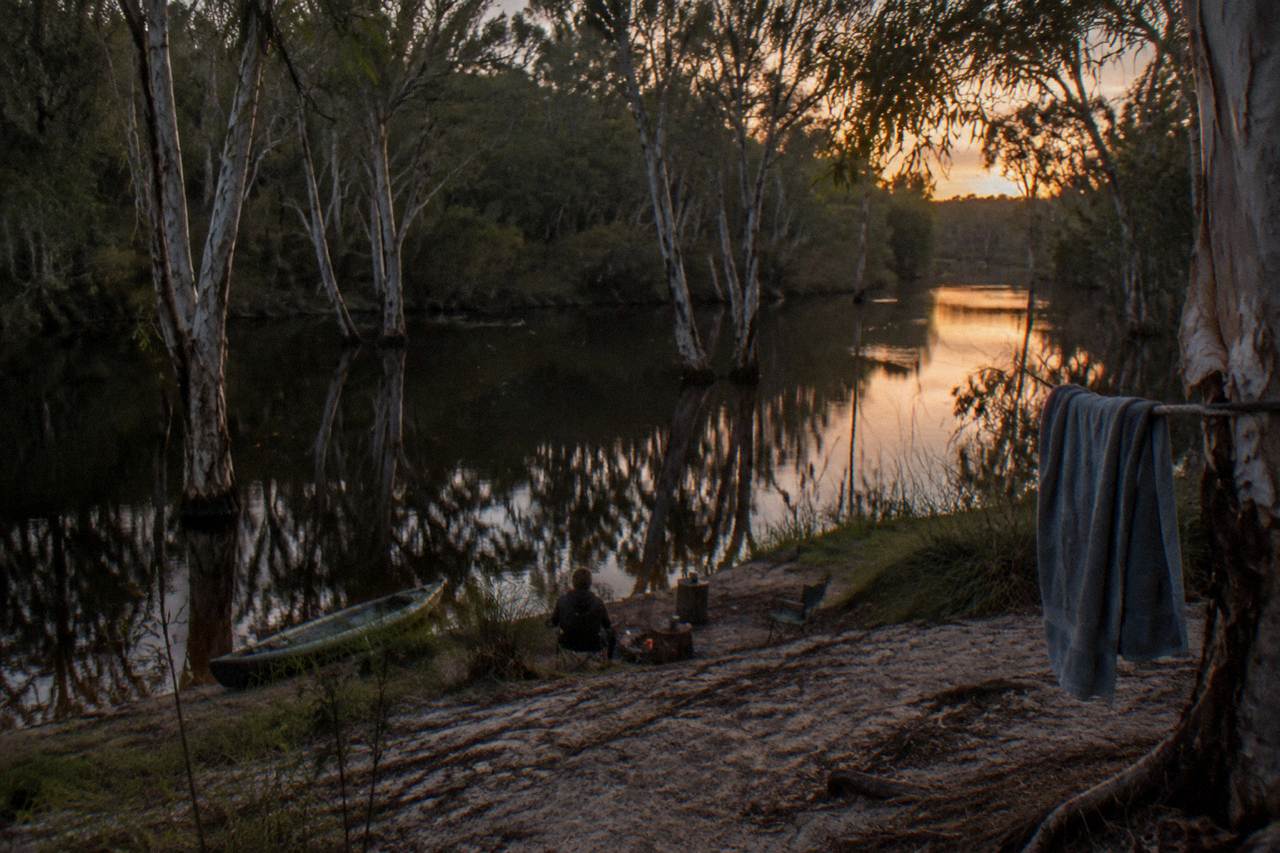
The silence is itself informative. Queensland's park and wildlife agencies publish extensively about Cooloola, the recreation area that contains the upper Noosa River. Their pages cover vessel rules, camping permits, alerts for flood-damaged jetties and pest control programs. If estuarine crocodiles were a documented management issue on this stretch of river, that would normally appear in the visiting safely guidance or the alerts list. It does not. Either way, the river's calm at dusk is part of its appeal, and the Noosa Everglades sunset tours we recommend show that late light at its best.
This site, Noosa Everglades Tours, publishes the comparison between the river's boat and kayak products, and the crocodile question comes up constantly from families weighing a paddle day against a cruise day. The answer below walks through what was checked, what the park service does say lives in these waters, and how to plan around the parts of the question no official page settles.
For most visitors the practical takeaway is simple: the river's real, documented characteristics, tannin-dark water, mirror reflections, abundant birdlife, are what shape a day out here, not a reptile risk no agency records. The tours below are the two formats and the most-reviewed cruise on the river.
What The Official Sources Actually Say
The checked official pages say nothing about crocodiles in this river system. QPWS's Cooloola pages cover safety, waterway rules and alerts without any crocodile statement, and Noosa Council's rivers and creeks pages do not confirm crocodiles either. No page was found that names a crocodile range reaching the Noosa River, so none is restated here.
That last clause is deliberate. Some travel blogs answer this question by describing where crocodiles generally live in Australia and then reasoning that Noosa sits south of that. This article does not do that, because no official page checked here states a range boundary, and a boundary drawn by a blog is still a guess. No official statement was found on the Parks and Wildlife pages for Cooloola (visiting safely, FAQ, upper Noosa River waterway) or on Noosa Council's rivers and creeks pages.
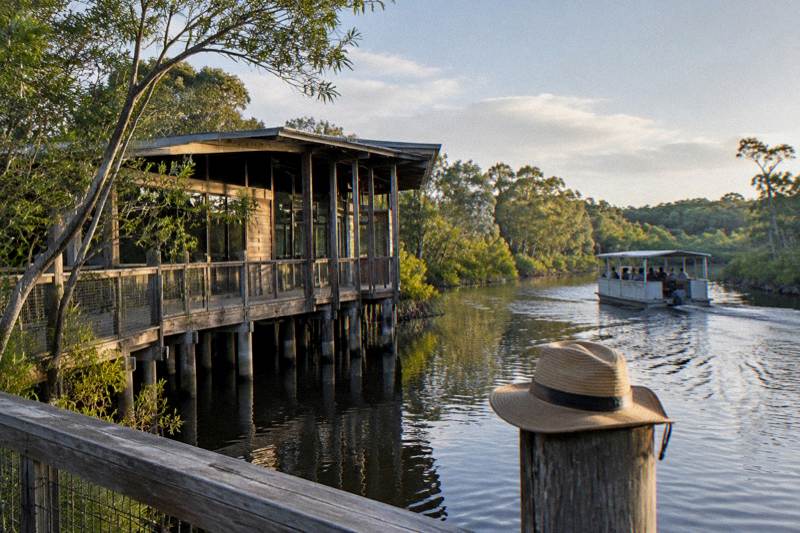
The waterway page itself is worth reading for what it does contain. It describes the upper Noosa River as a scenic waterway where the dark tannin-stained waters offer spectacular reflections of the twisted paperbarks and bloodwoods lining the banks, and it sets out the paddling journey, 27.7km one way with about five hours of suggested paddling time, ending at campsite 15 where upstream travel stops. It notes that tour boats operate daily from Noosa and Tewantin, and that canoes, kayaks and small boats can be hired from private operators at Boreen Point and Elanda Point. Crocodiles appear nowhere in it.
| Official page checked | What it covers | Crocodile statement found |
|---|---|---|
| Cooloola visiting safely guidance | Park hazards, safety advice for the recreation area | None found |
| Cooloola FAQ | Common visitor questions for the area | None found |
| Upper Noosa River waterway page | The 27.7km paddling journey, vessel rules, tannin water | None found |
| Noosa Council rivers and creeks pages | River management, anchoring rules, waterway oversight | None found |
The practical reading for a visitor: the question you should be asking officials is not "are there crocs" but "what does the current conditions report say". The Cooloola conditions report was updated 30 September 2026 and lists the active alerts for the area, which in this window are a partial jetty closure at Campsite 3 running to 24 October 2026, water across the Cooloola Wilderness Trail to 8 November 2026, and a pest control program from 31 October to 28 November 2026. Those are the documented, dated management issues on this river. A reptile sighting advisory is not among them.
If a crocodile question is the thing holding you back from booking, the reassurance that actually exists is structural rather than absolute: this is a heavily toured, closely managed waterway inside a national park, with daily commercial boats and a well-worn paddling route, and the agencies that manage it publish every other hazard they manage (see Noosa National Park).
What Wildlife You Can Actually Expect On The Upper Noosa River
The documented animal life is rich and entirely unglamorous in the best way: QPWS records more than 350 bird, 75 mammal, 21 frog and 80 reptile species across the Cooloola Recreation Area. The upper river's signature residents are waterbirds, frogs that chorus along the lakes, and rare species like the Cooloola acid frog and the ground parrot.
Those species figures are whole-of-recreation-area numbers from the park service, not an inventory of the river alone. But the upper Noosa River and its lakes are the heart of that diversity. The QPWS waterway page tells visitors to listen for choruses of frog calls along the upper river and lake systems. The Fig Tree Point page names the waterbirds visitors actually see in the early morning or late afternoon: cormorants, wood ducks, egrets, spoonbills and darters. Spotting that wildlife costs nothing, and our guide to free activities around the Noosa Everglades covers where to spend a day without paying for tours.
The "reptile" part of that tally deserves a straight answer, since it is the category a crocodile would belong to. Eighty reptile species across Cooloola covers lizards, snakes, turtles and freshwater and estuarine species appropriate to a coastal sandy park. Nowhere in the park service's published material for this area is a crocodile listed among them. The About page highlights instead the rare and threatened creatures that define the place: the Cooloola acid frogs, the ground parrot, and one of the few remaining emu populations in coastal Queensland.
| Wildlife group | Documented figure or species | Where it comes from |
|---|---|---|
| Birds | More than 350 species across Cooloola | QPWS park information |
| Mammals | 75 species across the recreation area | QPWS park information |
| Frogs | 21 species, including the rare Cooloola acid frog | QPWS park information |
| Reptiles | 80 species across the recreation area | QPWS park information |
| Waterbirds at Fig Tree Point | Cormorants, wood ducks, egrets, spoonbills, darters | QPWS Fig Tree Point page |
For a visitor, this reframes the day. The wildlife experience on the upper river is early-morning glassy water, a darter drying its wings on a snag, frog chorus building toward dusk, and the possibility of an emu on the wider park tracks. A full-day guided kayak tour is the format that gets you closest to that world quietly, and the guided kayak listing holds a 4.9 rating from 158 reviews, from $148 per person, with lunch, fresh fruit, baked bread and drinks included across about six hours.
The alternative is to let a boat do the quiet approach for you. The Serenity Cruise to Australia's Everglades, an afternoon tea cruise run by Everglades Eco Safaris, carries up to 36 guests per the operator, includes sparkling wine and beer, and runs about 2 hours 30 minutes from $70.10 per person. It holds a 4.5 rating from 472 reviews. Waterbirds on the banks are the standard show from the deck.
Why The Water Looks The Way It Does
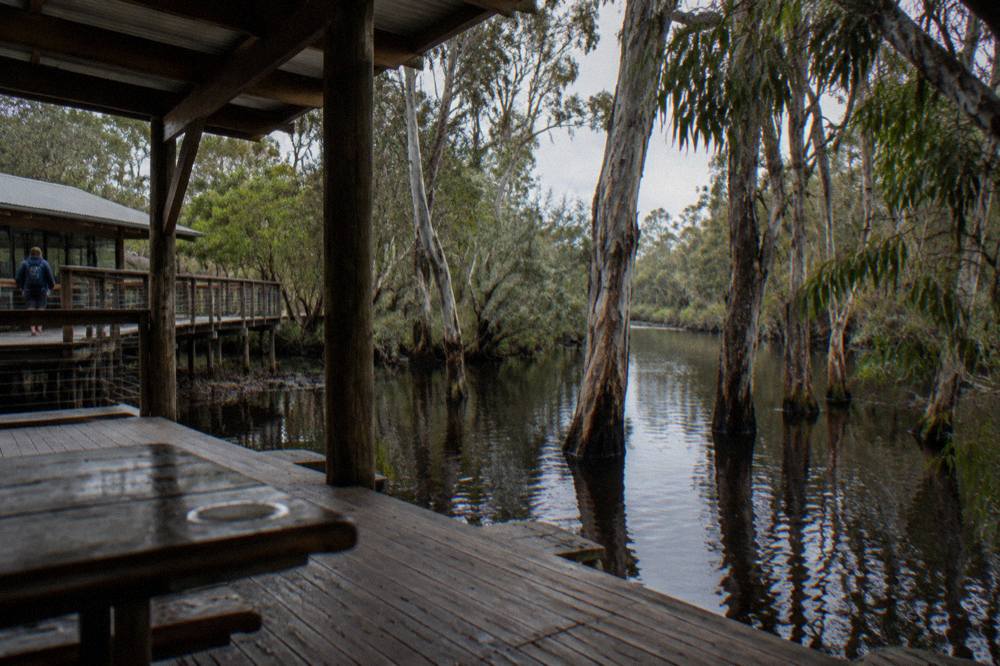
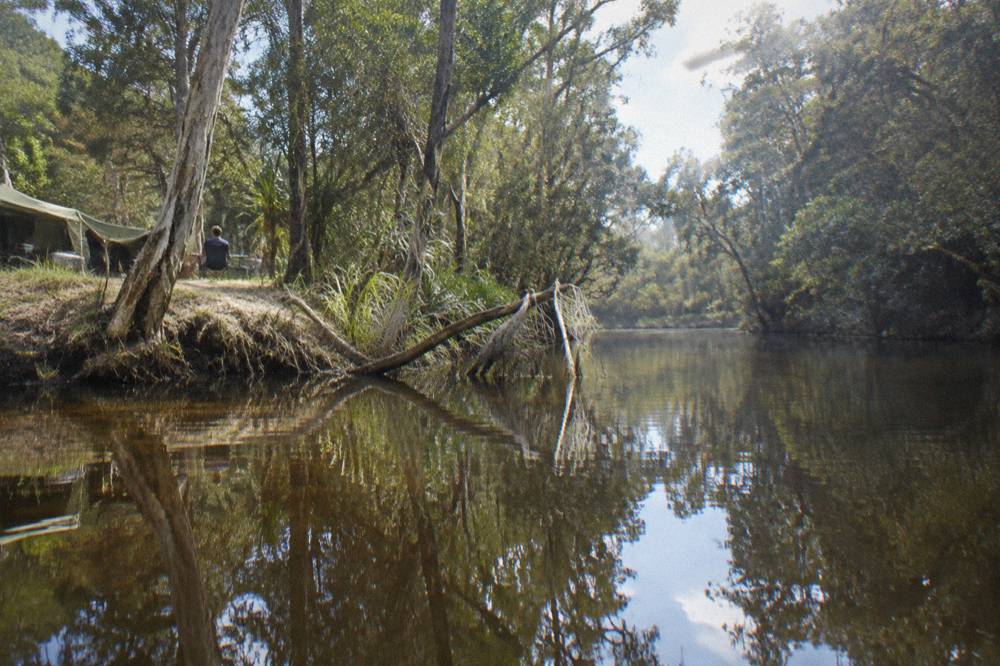
The river's dark, tea-coloured water is tannin stained, not dirty and not a sign of anything lurking. QPWS describes how the tannin-stained waters reflect the twisted paperbarks and bloodwoods along the banks, most dramatically through The Narrows, a 2.5km stretch where the water mirrors forest and sky.
The tannin comes from leaves and bark decomposing in the surrounding wetlands over long periods, the same process that colours a cup of tea. In the upper Noosa River it produces the effect the operators call the River of Mirrors, a name from tour copy rather than the park service, which simply calls the stretch The Narrows. The reflections are strongest in the early morning before wind ruffles the surface, which is one reason the park service advises crossing Lake Cootharaba early when conditions are likely to be calm.
That dark water is connected to the crocodile question in a psychological way worth naming. Visitors used to clear tropical water sometimes read tannin darkness as tropical menace, the kind of water where a crocodile might be invisible. The two things are unrelated. Tannin staining is a feature of cool-temperate coastal lowland rivers all through south-east Queensland, and the mirror effect it produces is precisely why people travel here. The water stays dark all the way up the river regardless of what lives in it.
The transition along the river is gradual and real: the waterway page notes the system shifts from fresh to brackish and saltwater near the northern end of Lake Cootharaba. So a day on the upper river moves through genuinely different environments, fresh paperbark channels, open tannin lakes, and brackish lower reaches, each with its own birdlife.
How To Plan A Safe Day On The Water Regardless
The documented safety guidance for this river is about watercraft rules and water quality, not reptiles. A six-knot, no-wash speed limit applies upstream from Kinaba, motorised vessels are permitted only to Campsite 3, and Noosa Council advises avoiding swimming near drains, in discoloured water, or shortly after heavy rain.
Those are the official rules a visitor can act on. The vessel limits protect the riverbanks from erosion, and the no-landing zone between Fig Tree Point and Harrys Hut protects the banks themselves. Council's recreational water quality monitoring covers Boreen Point and Elanda Point sites, and its practical advice, avoid swimming near drains, in murky or unpleasant-smelling water, and shortly after heavy rain, is the honest official guidance on getting in the water here. The question of swimming in the Everglades more broadly, including tannin water and patrolled beaches, is covered in full in can you swim in the Noosa Everglades.
For wildlife preparation, no official QPWS Cooloola or Queensland Health statement specific to mosquitoes, biting midges or sandflies was found on the Cooloola pages, so the preparation is general: pack repellent for dawn and dusk on any river in Queensland. The same honesty applies to snakes and ticks, no site-specific statement was found, so general park awareness applies rather than local warnings.
Choosing a tour format does most of the safety work for most visitors. A cruise puts a licensed operator, a vessel and a skipper between you and every question on this page. The most-reviewed listing on the river is the 2.5-Hour Afternoon Cruise, 4.5 from 1,093 reviews, from $69 per person, departing Boreen Point with a glass of sparkling wine, beer or juice included and free cancellation up to 24 hours. You can check the afternoon Everglades cruise listing for live times, or Check availability directly.
Paddlers who want independence can read the full Noosa Everglades kayak tour guide for the launch points, the guided versus self-guided split and what each operator includes. The short version: guided days put a trained guide on the water with you, self-guided days hand you the map and the gear, and both launch from Elanda Point.
The Honest Bottom Line For Visitors
The answer that survives scrutiny is narrow but usable: no official statement was found confirming crocodiles in the Noosa River, the upper river, Lake Cootharaba or Cooloola, on the Parks and Wildlife pages for Cooloola (visiting safely, FAQ, upper Noosa River waterway) or on Noosa Council's rivers and creeks pages. The documented wildlife here is birds, frogs, waterbirds and rare species like the acid frog.
Visitors should carry that wording, not a shortened version of it. "No official statement found" is not the same claim as "there are no crocodiles", and any page that prints the flat guarantee is promising something no agency has signed. What a visitor can weigh instead is the totality of the record: a national park waterway managed in fine detail, daily commercial tours, published alerts for every other hazard, and a species list with no crocodile in it.
It also helps to notice what actually shapes days on this river. Weather does, the park service advises early starts on Lake Cootharaba for calm conditions. Wind does, the mirror reflections that give the river its fame last only until the breeze picks up. And the season does: the BoM Tewantin averages show October at a mean maximum of 25.8 degrees and September the driest month of the year at 57.8mm on average, which is why spring is the busiest window for both cruises and paddles.
If the question was really about whether this is a safe place to bring children, the documented answer is yes in the ordinary sense that a guided tour on a managed waterway is safe: licensed operators, published routes, and an afternoon cruise that includes a drink and holds a 4.5 rating across more than a thousand reviews. The river's genuine considerations are sun, wind, and packing repellent for dusk, not a predator no record supports.
Whichever format fits, the two ends of the price range on the river are the 2.5-hour afternoon cruise from $69 and the full-day guided kayak from $148, with the afternoon tea cruise between them at $70.10. All three run with free cancellation up to 24 hours on the cruise listings, while the kayak listing asks you to check the booking page for its terms.
Common Questions About Crocodiles In The Noosa Everglades
Are There Crocs In The Noosa Everglades?
No official statement was found confirming crocodiles in the Noosa River, the upper Noosa River, Lake Cootharaba or the Cooloola Recreation Area. The Parks and Wildlife pages for Cooloola (visiting safely, FAQ, upper Noosa River waterway) and Noosa Council's rivers and creeks pages were checked, and none confirms crocodiles here. That is a statement about the official record, not a flat guarantee about the water.
What pages were checked for crocodile statements?
The Cooloola visiting safely guidance, the Cooloola FAQ, the upper Noosa River waterway page and Noosa Council's rivers and creeks pages. None contains a crocodile statement for this river system, and no official page was found that names a crocodile range reaching the Noosa River.
What wildlife actually lives in the Noosa Everglades?
QPWS records more than 350 bird, 75 mammal, 21 frog and 80 reptile species across the Cooloola Recreation Area. On the upper river, visitors commonly see waterbirds such as cormorants, wood ducks, egrets, spoonbills and darters, and hear frog choruses along the lake systems. Rare residents include the Cooloola acid frog and the ground parrot.
Why is the water in the Noosa Everglades so dark?
The water is stained dark by tannins from leaves and bark decomposing in the surrounding wetlands. QPWS describes how the tannin-stained waters reflect the twisted paperbarks and bloodwoods along the banks, most strikingly through The Narrows, a 2.5km stretch where the water mirrors forest and sky.
Is it safe to swim in the Noosa Everglades?
Noosa Council monitors recreational water quality and advises avoiding swimming near drains, in discoloured or murky water, or shortly after heavy rain. There are no patrolled swimming sites at Boreen Point or on the upper river. The full answer, including water quality and tannin water, is covered in the swimming article on this site.
Are the kayak tours on the upper Noosa River safe for beginners?
Guided kayak tours on the upper river are designed for general fitness levels rather than paddling experience, with a guide, equipment and meals included depending on the listing. The guided full-day listing runs about six hours in groups of up to 16 with lunch and drinks included. Check each listing's own terms, as cancellation policies differ between operators.