Is It Safe To Swim At Boreen Point?
Council water quality advice for Boreen Point, patrol status, current amenities works and what the official sources do and do not say about swimming in the upper Noosa River and Lake Cootharaba.
Is It Safe To Swim At Boreen Point?
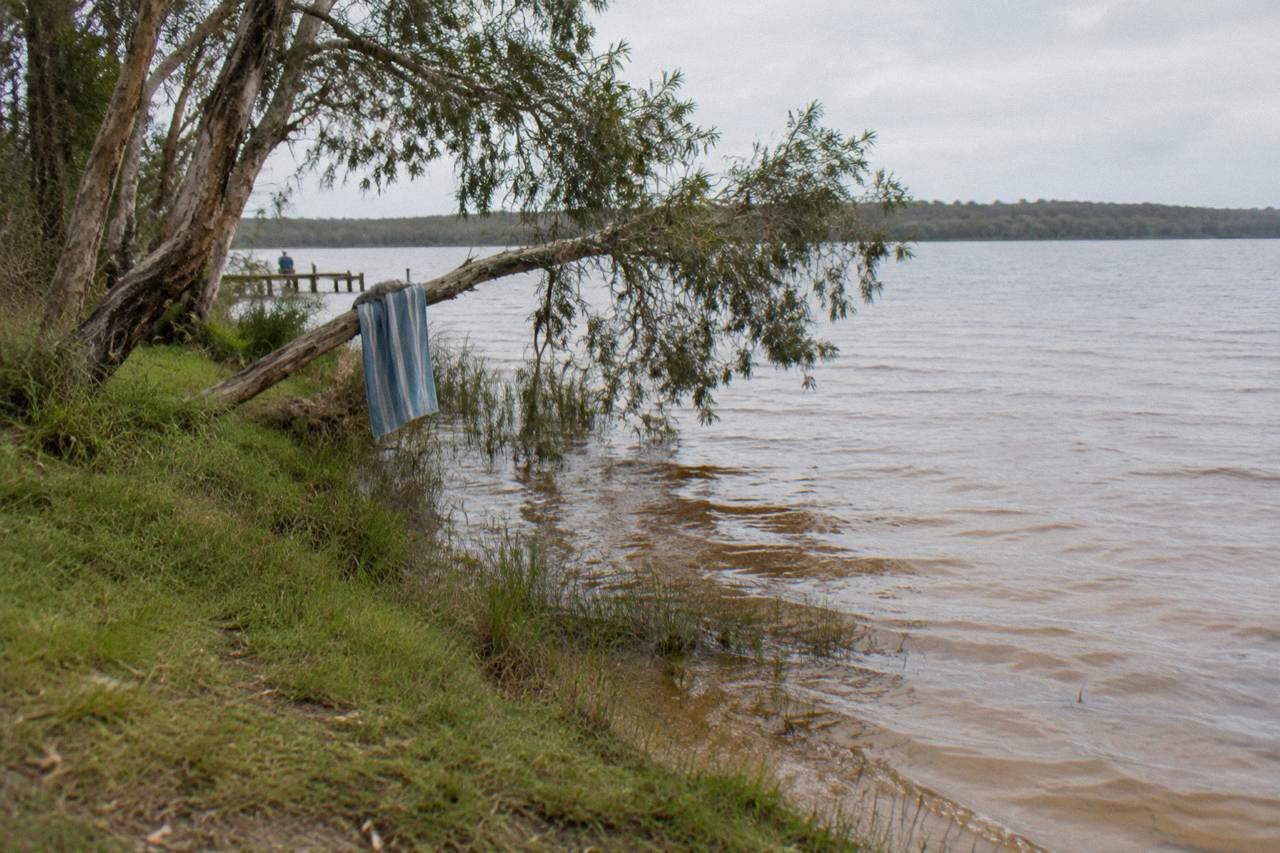
There is no simple official yes or no. Noosa Shire Council monitors recreational water quality at Boreen Point Campground and advises avoiding swimming near drains, in discoloured, murky or unpleasant smelling water, or shortly after heavy rain. Boreen Point has no lifeguard patrol. No official statement on bull sharks in the upper river or lake was found on the pages checked.
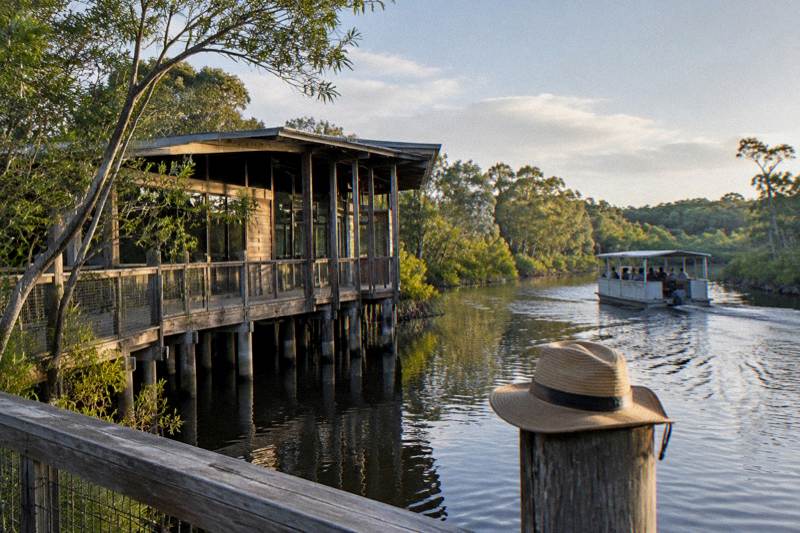
Boreen Point is the launch point for most of the upper Noosa River trips that leave from the western shore of Lake Cootharaba. The campground sits on estuarine water, the lake sits between the tidal lower river and the freshwater reaches above, and on a calm morning the surface can look glassy and inviting. Visitors reasonably ask whether they can jump in. If you'd rather skip the swimming question entirely and explore on dry land instead, our guide to free things to do around the Noosa Everglades covers Kinaba, Harrys Hut, and plenty of other no-cost spots near the lake.
The honest position is that the official record is specific about what to avoid and silent on the rest. Council names the site in its recreational water quality monitoring program, which is more than many swimming holes get, and it publishes practical trigger conditions rather than a blanket verdict. The rest of this article sets out exactly what each official source says, what it does not say, and how people who spend the day at Boreen Point tend to use the water anyway.
What Noosa Council Actually Says About Water Quality?
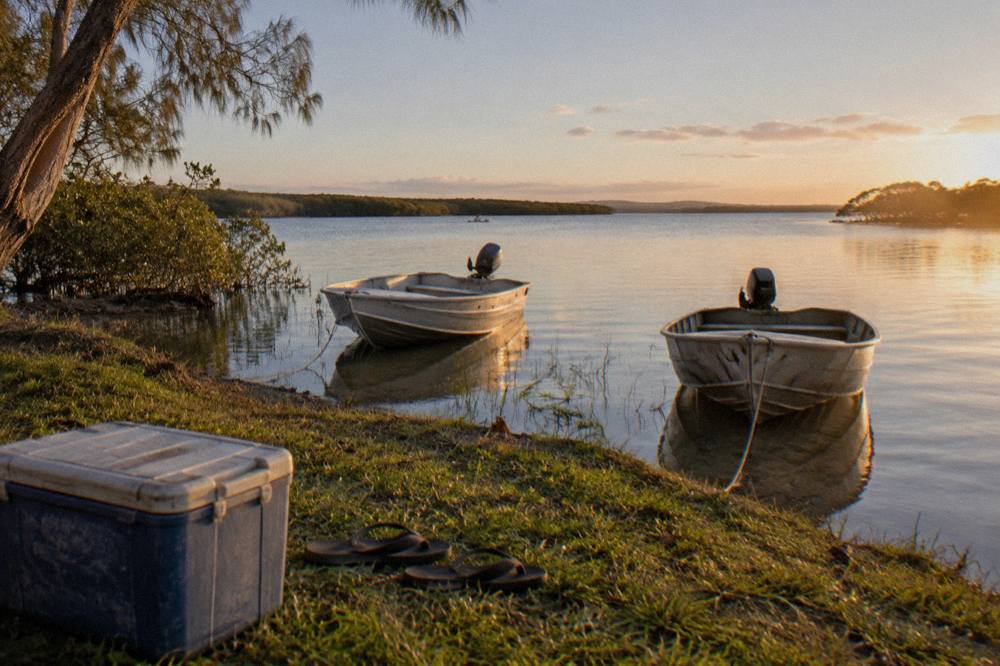
Council monitors Boreen Point Campground as an estuarine recreational water site and gives three clear avoidance rules: do not swim near drains, do not swim in discoloured, murky or unpleasant smelling water, and do not swim shortly after heavy rain. That is the whole of the official guidance for this location, and it is condition based rather than a permanent green light or red light.
The monitoring program covers three upper catchment sites that matter to Everglades visitors: Boreen Point Campground, Elanda Point Campground and Habitat Noosa, and Lake Cooroibah. The advice is published on the Council's recreational water quality monitoring page and is worth reading before any swim anywhere in the Noosa River system, not just at Boreen Point. While you're checking the water reports, the guide to where kangaroos and koalas actually turn up around Noosa draws on official habitat mapping and real guest sightings from Elanda Point.
The three rules translate simply at Boreen Point. After a big rain event, the lake and river carry runoff from the whole catchment, and Council's own wording is to wait. Near any drain outlet, keep out. If the water looks brown beyond its usual tea colour, or smells off, that is the discoloured and murky condition Council names, and the answer for that day is no. The tannin stain itself is normal: the dark colour comes from paperbark and leaf litter in the upper catchment, and the parks service describes the tannin stained waters as a feature of the river, not a pollution signal.
What Council does not publish is a weekly pass or fail grade for Boreen Point, the way Surf Life Saving bodies publish beach condition reports. So the practical skill for a visitor is reading the conditions on the day against those three rules, not looking up a score.
Is There A Lifeguard Or Patrol At Boreen Point?
No. Noosa Shire Council lists its patrolled beaches as Noosa Main Beach, Sunshine Beach, Peregian Beach, and seasonal patrols at Sunrise and North Peregian. Boreen Point and the other upper river and lake sites appear nowhere on the patrol list, so any swim there is unsupervised.
This matters more than it first sounds. The patrolled beaches on the Council list have Surf Life Saving Queensland lifeguards, flagged swimming areas, and the rescue response that comes with them. Boreen Point is a lake shore beside a campground and boat ramp, roughly 19 km by road from Tewantin, with none of that infrastructure. Families with children should treat the water the way they would any unpatrolled inland waterway: constant adult supervision, stay within depth, and no swimming alone.
The lake itself is broad and shallow, and the parks service advises people crossing Lake Cootharaba by boat or canoe to do it early in the morning when conditions are likely to be calm. That same calm of a morning is when the water looks most swimmable, which is also when the Everglades cruise boats are heading out. Swimmers and departing vessels share the same small stretch of shore near the boat ramp, so the practical advice is to keep clear of the ramp and the marked channel.
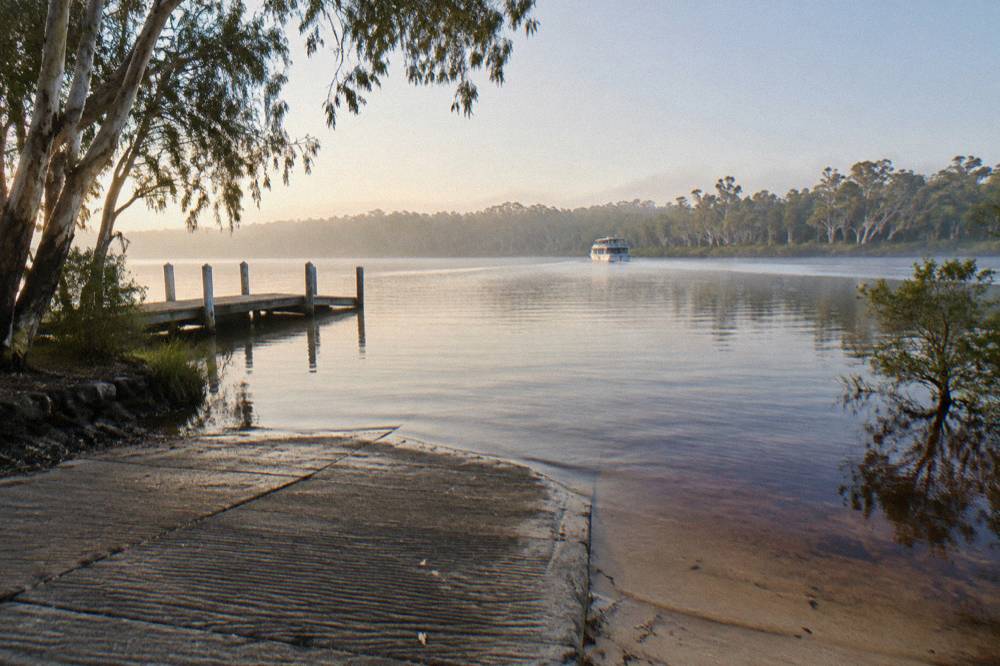
If the plan for the day is the water itself rather than the shore, the 2.5-Hour Afternoon Cruise departs Boreen Point, crosses the lake and runs up into the tannin river with a glass of sparkling wine, beer or juice included, from $69 per person with free cancellation up to 24 hours. It is the easiest way to be on the water at Boreen Point without any swimming decision at all, and the same shore is the meeting point, so it slots straight into a day at the campground. For anyone weighing the two afternoon cruise options side by side, the comparison on Noosa Everglades Tours lays out the differences in one view.
Are There Sharks Or Crocodiles In The Upper River?
No official statement confirming crocodiles in the Noosa River, Lake Cootharaba or the Cooloola Recreation Area was found on the Queensland Parks and Wildlife Service pages for Cooloola or on Noosa Council's rivers and creeks pages. No current official statement on bull sharks in the upper river or lake was found either. Historical records note sharks in the lower river estuary, but that is a different waterway.
That wording is deliberate. The checked pages were the parks service's Cooloola visiting safely page, its FAQ, and the upper Noosa River waterway page, plus Council's rivers and creeks pages. None of them addresses crocodiles for this location. The right conclusion for a visitor is not "there are definitely none", it is that no official statement was found, and the practical guidance stands on its own regardless: swim in clear conditions, avoid swimming after rain or near drains, and supervise children.
The shark picture is similar. Heritage records for the lower Noosa River estuary note sharks, including tiger sharks, historically. The upper river above the lakes is freshwater, and the transition from fresh to brackish and saltwater happens near the northern end of Lake Cootharaba, per the parks service description of the waterway. No council, fisheries or surf lifesaving statement specifically addressing bull sharks in the upper river, Lake Cootharaba or Boreen Point was found on the pages checked, so this article will not invent a reassurance or a warning that no source makes.
When Should You Not Swim At Boreen Point?
Do not swim shortly after heavy rain, do not swim near drains, and do not swim if the water is discoloured, murky or unpleasant smelling. Those are the three named conditions in the Council advice, and they cover the great majority of days when the honest answer at Boreen Point is no.
Rain is the big one for the upper catchment. The Bureau of Meteorology's Tewantin station, the nearest with a full 30 year record, shows late summer and autumn as the wettest part of the year, with February and March the wettest months on the averages table, while spring is drier and October and November each average around 8 rain days. A storm in the headwaters takes time to work its way down through Lake Cooroibah and Cootharaba, so the sensible window after a significant rain event is a day or two, matching Council's "shortly after heavy rain" wording.
| Condition on the day | Council guidance | Practical read |
|---|---|---|
| Clear calm morning, no recent rain | No named avoidance applies | Conditions most often described as calm for lake crossings |
| Discoloured or murky water beyond usual tannin | Avoid swimming | The lake's tea colour is normal, murk is not |
| Unpleasant smell | Avoid swimming | Named directly in the Council advice |
| Near a drain outlet | Avoid swimming | Keep well clear of any pipe or drain |
| Shortly after heavy rain | Avoid swimming | Wait a day or two after storms |
| No patrol present | Swim is unsupervised | Constant supervision, stay within depth |
The amenities situation is a small practical note for the coming weeks: the Boreen Point N4 amenities block on Boreen Parade, opposite the shops near the boat ramp, is closed for roof replacement works from 19 to 24 October 2026, with alternatives about 500 m away at the N3 block at the Urangan Parade boat ramp and the N5 picnic area at the caravan park. Anyone planning a swim-and-dry-off day in that window should factor in the walk.
What About Mosquitoes, Midges And Other Wildlife?
No official Queensland Parks and Wildlife Service or Queensland Health statement specific to mosquitoes, biting midges or sandflies at Cooloola or the upper Noosa River was found on the pages checked, and no official statement on snakes or ticks was found on the Cooloola visiting safely page either. General Queensland Health guidance on biting midges exists but does not address this location. For a closer look at what official sources do and don't say about these biting insects on the upper Noosa River, our guide to mosquitoes in the Noosa Everglades fills in the gaps.
That absence is not the same as an absence of insects. Estuarine and paperbark wetlands anywhere on the Australian east coast have biting insects at some times of year, and visitors to Boreen Point in the warmer months should pack repellent and light cover-ups as standard practice for any Queensland wetland, on the general principle rather than a location specific official warning. The honest framing is that the parks service pages checked do not publish seasonal insect guidance for this site.
The wildlife that is officially documented is the benign kind. The parks service records more than 350 bird, 75 mammal, 21 frog and 80 reptile species across the Cooloola Recreation Area, with frog choruses along the upper river and lake systems, and waterbirds such as cormorants, wood ducks, egrets, spoonbills and darters at Fig Tree Point in the early morning or late afternoon. Noosa Council also identifies Boreen Point land, including recent conservation purchases on Lake Flat Road, as koala habitat within wildlife corridors near the national park. None of that bears on swimming safety directly, but it is the wildlife picture a visitor actually encounters on the shore.
How Do People Actually Use The Water At Boreen Point?
Most visitors experience the water at Boreen Point from a boat, a canoe or a kayak rather than swimming. The parks service notes that tour boats operate daily from Noosa and Tewantin and that canoes, kayaks and small boats can be hired from private operators at Boreen Point and Elanda Point, so the shore is a working launch point more than a swimming beach.
That is the real answer hiding inside the safety question. The water at Boreen Point is primarily a passage: across Lake Cootharaba, past the Kinaba Information Centre where the parks service suggests looking for stingrays in the surrounding water, and up into the Narrows where the tannin reflections live. Swimming is a marginal activity here compared with the water itself being the attraction.
For travellers who want the river but not the swimming decision, the options split cleanly by style. The afternoon cruises, the featured 2.5 hour departure from Boreen Point and the Serenity cruise with afternoon tea, both put you on the water with a drink in hand, from $69 and $70.10 per person respectively. The self-guided kayak day from Elanda Point, from $85.68 per person, gives about 6 hours on the water with no meal listed and no pickup, so it suits confident paddlers who arrive with their own transport. The afternoon tea cruise carries up to 36 passengers per the operator and asks 48 hours notice for cancellation, a stricter window than the 24 hours on the featured cruise, which is worth knowing before booking either.
Should You Swim At Boreen Point Or Just Go On The Water?
On a clear, calm day with no recent rain, away from drains, an unsupervised swim at Boreen Point is something many visitors do, with the Council's three avoidance rules as the safety net. But the strongest recommendation this site can make is to treat Boreen Point as your gateway onto the water, not your swimming destination, because the river above the lake is the reason people come.
The distinction is not cautiousness for its own sake. Boreen Point is 19 km by road from Tewantin, the shore is unpatrolled, and the best of the area is upriver: the 2.5 km stretch through the Narrows where, in the parks service's own words, tannin stained waters reflect forest and sky. Operators and listings call this section the River of Mirrors, a name the parks service does not use, and it is the signature of every cruise and kayak trip that leaves this shore.
For a fuller treatment of the swimming question across the whole river system, the article on swimming in the Noosa Everglades covers the upper river, and the guide to Boreen Point itself covers the launch points, parking and campground. Anyone planning a longer day on the water should also read the guide to what to bring, since the same packing list serves swimmers, kayakers and cruise passengers alike.
Common Questions About Swimming At Boreen Point
Is It Safe To Swim At Boreen Point?
There is no blanket official verdict. Noosa Council monitors water quality at Boreen Point Campground and advises avoiding swimming near drains, in discoloured, murky or unpleasant smelling water, or shortly after heavy rain. There is no lifeguard patrol at Boreen Point.
Are there crocodiles at Boreen Point?
No official statement confirming crocodiles in the Noosa River, Lake Cootharaba or the Cooloola Recreation Area was found on the parks service pages for Cooloola or on Noosa Council's rivers and creeks pages. This article states that absence rather than a stronger claim either way.
Is Boreen Point patrolled by lifeguards?
No. Noosa Council lists patrolled beaches as Noosa Main Beach, Sunshine Beach, Peregian Beach and seasonal Sunrise and North Peregian. Boreen Point and the upper river and lake sites are not on the patrol list.
Can you swim after rain at Boreen Point?
Noosa Council's advice is to avoid swimming shortly after heavy rain, so the sensible approach is to wait a day or two after storms before swimming in the lake or river.
Why is the water brown at Boreen Point?
The dark tea colour is tannin from paperbark and leaf litter in the catchment, and the parks service describes the tannin stained waters as a natural feature. Discolouration or murk beyond that, or an unpleasant smell, is what Council's avoidance advice refers to.