Are There Mosquitoes In The Noosa Everglades?
An honest look at what official sources say about mosquitoes, midges and sandflies on the upper Noosa River, and how to prepare for a day out on the tannin water.
Are There Mosquitoes In The Noosa Everglades?
The honest answer is that no official statement was found. Queensland Parks and Wildlife Service pages for Cooloola, including the visiting safely and FAQ pages, and Queensland Health's general biting midge resources, say nothing specific about mosquitoes, biting midges or sandflies on the upper Noosa River. That absence is not a promise of safety or of danger. It simply means the official record is silent, and any visitor planning time near the tannin water should prepare as they would for any subtropical waterway: repellent, cover at dusk, and realistic expectations. Once you have packed the repellent and sorted your expectations, you can plan the trip itself around spots that cost nothing, and our guide to free things to do around the Noosa Everglades covers Kinaba, Harrys Hut, Boreen Point and the coastal walk in detail.
Pages will tell you the Everglades are "mosquito free" or, at the other extreme, that the midges are unbearable. Neither claim survives a check of the official record. The Queensland Parks and Wildlife Service maintains detailed pages for the Cooloola Recreation Area, the park that contains the upper Noosa River, and those pages cover safety, waterway rules and alerts in depth. What they do not contain, as of the latest published versions, is any location-specific statement about mosquito or biting midge activity on this river. Queensland Health publishes general guidance on biting midges, but it addresses the state as a whole rather than the Noosa River catchment. Since biting insect activity varies so much with the seasons, the month by month guide to the best time for a Noosa Everglades cruise can help you plan around it.
The practical reading of that silence matters. A subtropical river system with wetlands, paperbark lined banks and warm months is exactly the kind of environment where biting insects live, and visitors to similar Queensland waterways routinely encounter them. Treating the absence of an official warning as an all-clear would be a mistake. Treating it as proof of a plague would be an equal one. The sensible position, and the one this site takes, is to prepare for the possibility without assuming the worst.
There is also a naming point worth making before going further, because it explains some of the confusion around this question. Queensland Parks and Wildlife Service does not use the name "Noosa Everglades" at all. The official pages call this waterway the Upper Noosa River, inside the Cooloola Recreation Area of Great Sandy National Park, and they use "The Narrows" for the famous 2.5km stretch of reflecting water. The Everglades name, and the marketing line about one of only two everglades in the world, comes from operators and listings. That matters here because a search for official mosquito information about "the Noosa Everglades" will find nothing, while the same search under the river's official name finds the park pages, which are still silent on insects. The gap is real either way. For a fuller picture of the region beyond the river, our guide to what draws visitors to Noosa, from its surf reserve to Hastings Street covers the highlights worth building a trip around.
If a guided day on the water appeals, the options below cover the three main ways people see the river: a short cruise, a self-guided paddle and a full cruise-and-canoe day.
What The Official Sources Actually Say
The pages that would carry a mosquito warning for this river do not. The QPWS visiting safely and FAQ pages for Cooloola make no mention of mosquitoes, biting midges or sandflies for the upper Noosa River, and Queensland Health's biting midge resources are general state-wide advice with nothing specific to this location. Noosa Shire Council's recreational water quality monitoring covers Boreen Point and Elanda Point, but it addresses water quality for swimming, not insects. The honest summary is that the official record is silent on this question. For swimmers, that same gap in official guidance is what the guide to swimming safety at Boreen Point looks at in detail.
That is worth stating precisely, because vague reassurance is worse than a clear gap. When we compared the listings and the official pages, the pattern was consistent. The parks service is detailed about things it regulates: vessel speed limits above the Kinaba Information Centre, the no-landing zone between Fig Tree Point and Harrys Hut, camping fees and fire bans. It publishes a conditions report for the Cooloola Recreation Area, updated at the end of September 2026, covering track and waterway conditions. None of those documents, and none of the park alert pages, contains a statement about mosquito or midge activity on the upper river. You can check the current Cooloola visiting safely page yourself, and the conditions report is the document to read before any trip.
The council's role is different but related. Noosa Shire Council monitors recreational water quality at Boreen Point Campground and Elanda Point, and its standing advice is to avoid swimming near drains, in discoloured or murky water, or shortly after heavy rain. That is water advice rather than insect advice, but it points to the same habit of mind: conditions on a subtropical river change, and the official guidance is about checking current state rather than assuming a fixed one. The council's recreational water quality monitoring page sets out that advice.
What about the tours themselves? The listings for the afternoon cruise, the kayak days and the cruise-and-canoe trips describe inclusions like sparkling wine on the cruise, lunch stops and equipment on the paddle days. None of the nine listings on this site claims to provide insect repellent, and none claims the river is insect free. So the preparation is genuinely yours to make, whichever format you choose.
When Biting Insects Are Most Likely On A Subtropical River
Biting insects on warm Queensland waterways are most active at dawn and dusk, and their numbers generally track warmth and recent rain. Those are general patterns for subtropical river systems, not official claims about this river, since no official statement specific to the upper Noosa River exists. The timing of most tours works in your favour here: the afternoon cruise runs in the afternoon, and the Kanu Kapers kayak days start at 8:30am, past the dawn peak.
The climate record gives a firmer basis for planning than guesswork. The nearest Bureau of Meteorology station with long-term averages is Tewantin, on the Noosa River, with 30 years of record. Its monthly figures show how the warm, wet months stack up against the dry season, and rain days are a reasonable proxy for how often conditions favour standing water and insect breeding anywhere in the catchment.
| Month | Mean maximum (C) | Mean minimum (C) | Mean rain (mm) | Rain days (1mm or more) |
|---|---|---|---|---|
| January | 28.7 | 22.0 | 149.8 | 10.7 |
| February | 28.6 | 22.0 | 233.7 | 12.8 |
| March | 27.7 | 21.0 | 236.4 | 14.2 |
| July | 21.4 | 11.3 | 71.7 | 7.1 |
| September | 24.4 | 14.6 | 57.8 | 5.8 |
| October | 25.8 | 17.1 | 112.1 | 8.0 |
Read the table as a planning range rather than a forecast. February and March are the wet months at Tewantin, averaging 233.7mm and 236.4mm of rain respectively, with 13 to 14 rain days, and warm nights above 20 degrees. July and September are the dry, cooler end, with September the driest month in the whole record at 57.8mm. A visitor paddling in the Queensland spring school holidays or in October is choosing a drier, milder window than one visiting in late summer. The Bureau's Tewantin climate averages are the source for those figures, and the full table includes every month.
One caution on interpretation: the mean rainfall is pulled up by unusually wet years, so the typical month is somewhat drier than the mean suggests. And a dry month reduces, but never removes, the standing water that biting insects use. The tannin stained wetlands of the upper river hold water year round, which is precisely why the paperbark forest and the reflections visitors come for exist at all. Those same tannin-stained waters are exactly what create the famous mirror effect, and the guide to the Noosa Everglades River of Mirrors explains where to see it and how to get there.
How To Prepare For A Day On The Tannin Water
The preparation that makes sense is the standard subtropical kit: insect repellent applied before you board or launch, long loose clothing for the dusk hours if you are staying late, and a check of the current park conditions report before you travel. None of that is an official claim about this river, since no official statement exists. It is the same advice any experienced Queensland visitor would give for a day near warm water and wetland, and it costs very little to follow.
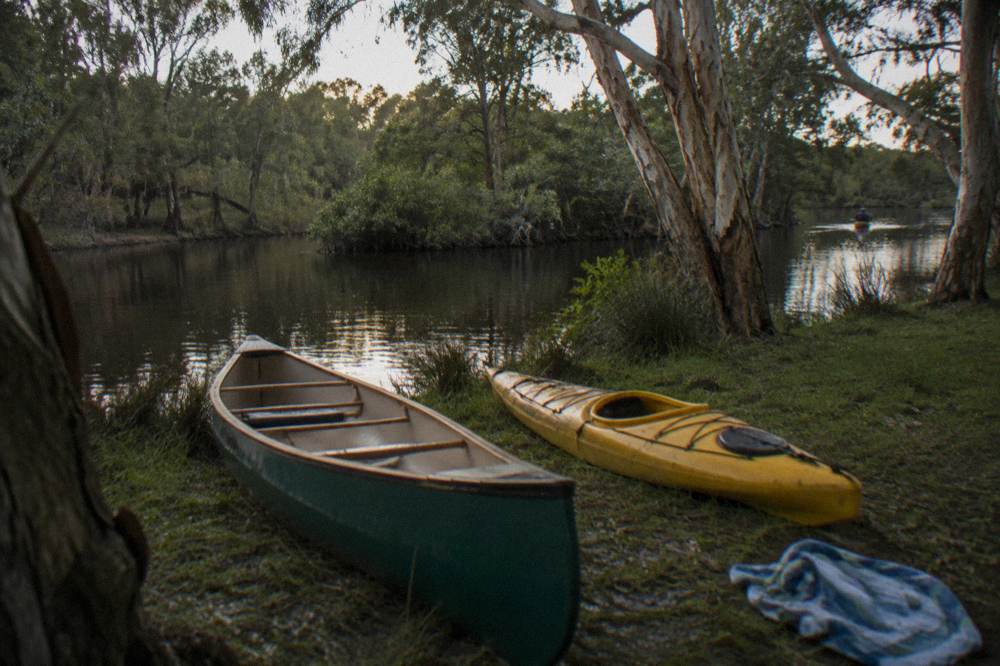
Think in terms of the day's shape. The Kanu Kapers kayak tours, both guided and self-guided, meet at the Elanda Point canoe launch at 8:30am and finish by mid afternoon, which keeps paddlers out of the dawn and dusk windows entirely. The afternoon cruise runs 2.5 hours from Boreen Point with a drink included, again inside the daylight hours. The only formats that push toward the edges of the day are the longer paddle days, and even those are daylight trips. If your plan is a tour rather than a camping night on the river, your exposure to the classic biting insect hours is naturally limited.
For anyone camping, the picture changes. Campsites along the upper river, Fig Tree Point and Harrys among them, put you on the water through the evening, and that is when preparation earns its keep. Our guide to camping in the Noosa Everglades covers the permits and site rules, and the packing advice in what to bring for the Everglades is where a repellent and covering layers belong on the list. Two practical notes from the park rules: open fires are prohibited at all upper river campsites, so a campfire smoke strategy is not available, and camping fees are $7.75 per person per night with permits required before you set out. Length of stay is capped at 7 nights for campsites 1 to 15, and 14 nights at Fig Tree Point and Harrys.
A final note on timing your visit around other practical matters: a pest control program runs in the Cooloola Recreation Area from 31 October to 28 November 2026, and a partial jetty closure at Campsite 3 runs until 24 October 2026. Neither is an insect matter for tour visitors on the water, but both are worth knowing if your trip extends to camping or land-based exploring. The conditions report is the single document that collects current alerts, and it is the first thing a careful planner reads.
Does The Insect Question Change Which Tour You Book?
Not much, and that is the useful conclusion. Since no official source flags mosquito or midge activity on the upper river as a hazard, the choice between a cruise, a guided paddle and a self-guided day should rest on the things that actually differ: duration, price, what is included and how much of the day you spend on the water. The insect question is solved by a bottle of repellent, not by picking one format over another.
The comparison is straightforward when you line up the listings. The afternoon cruise is the short option: 2.5 hours from Boreen Point, from $69 per person, rated 4.5 from 1,093 reviews, with a glass of sparkling wine, beer or juice included and free cancellation up to 24 hours. The self-guided kayak day from Elanda Point is from $85.68 per person, about 6 hours, rated 4.8 from 133 reviews, with no meal listed. The cruise-and-canoe day combines both formats: about 6 hours with round-trip transfers from central Noosa arrangeable at booking, from $119.67 per person, rated 4.6 from 379 reviews, with lunch and drinks available to buy on site.
If the worry is specifically about being stuck on the water at a bad hour, the cruise is the lowest exposure choice simply because it is the shortest day. If the worry is more general, about whether a subtropical river trip is pleasant at all, the review pools are reassuring in aggregate: thousands of guests have taken these trips and the ratings sit between 4.5 and 4.9 across the roster. The absence of an official insect warning on the river, combined with that volume of satisfied visitors, is about as honest a picture as the evidence allows.
For paddlers who want their own boat for the day, the self-guided option above is the one to weigh against the cruise. It suits visitors confident on the water who want the full 6 hours, and it is the cheapest way to get deep into the paperbark channels under your own steam.
The cruise-and-canoe day above splits the difference: a boat ride up the river with a canoe session in the middle, and transfers from central Noosa that can be arranged when you book. It is the format most first-time visitors settle on when they want both the reflections and the paddle.
Common Questions About Mosquitoes In The Noosa Everglades
Are There Mosquitoes In The Noosa Everglades?
No official statement was found. The Queensland Parks and Wildlife Service visiting safely and FAQ pages for Cooloola, and Queensland Health's general biting midge resources, say nothing specific about mosquitoes, biting midges or sandflies on the upper Noosa River. Prepare for the possibility with repellent and cover at dusk, as you would on any subtropical waterway.
Is there an official mosquito warning for the upper Noosa River?
No. No park alert, conditions report entry or health department statement specific to mosquito or midge activity on the upper Noosa River was found on the pages checked. The conditions report for the Cooloola Recreation Area covers track and waterway conditions, not insects.
When are biting insects most active?
On warm Queensland waterways generally, dawn and dusk are the peak hours, and activity tends to follow warmth and recent rain. Those are general subtropical patterns, not official claims about this river. Tour timings mostly avoid these windows, with kayak days starting at 8:30am and the afternoon cruise finishing in daylight.
Do the tours provide insect repellent?
None of the nine listings on this site claims to provide repellent, and none claims the river is insect free. Bring your own. The listings describe other inclusions, such as a drink on the afternoon cruise and lunch arrangements on the longer days.
Does the time of year matter?
It can. Tewantin's 30-year climate record shows February and March as the wet warm months, averaging 233.7mm and 236.4mm of rain respectively, while July through September are the driest and coolest. A spring visit lands in a drier window than a late summer one, though the tannin wetlands hold water year round.
Where can I check current conditions before my trip?
The Queensland Parks and Wildlife Service conditions report for the Cooloola Recreation Area is the document to read, and park alert pages carry closures such as the Campsite 3 jetty works until 24 October 2026. Noosa Shire Council's recreational water quality page covers swimming advice for Boreen Point and Elanda Point.
The river itself is the reason people come: the dark tannin water that mirrors the paperbarks, the quiet of The Narrows, the stretch the listings call the River of Mirrors. The insect question deserves an honest answer, and the honest answer is that the official record is quiet too. Pack the repellent, pick the tour that fits your day, and the rest of the planning is covered across Noosa Everglades Tours, from whether you can swim in the Everglades to the full Everglades cruise guide.