Is The Noosa Everglades Worth It?
An honest verdict on the Noosa Everglades: what the tannin-stained upper Noosa River actually delivers, what tours cost, and who should skip it.
Is The Noosa Everglades Worth It?
Yes, for most visitors the Noosa Everglades is worth it: the tannin-stained reflections on the upper Noosa River are genuinely striking, the afternoon cruise holds a 4.5 rating across 1,093 reviews, and entry-level tours start from $69 per person. The honest caveat is that this is a calm, scenic waterway, not a thrill ride, and travellers chasing adrenaline or big animal encounters will be disappointed. Before you book, check our guide to mosquitoes, midges and sandflies on the upper Noosa River so the biting insects don't catch you off guard on the water.
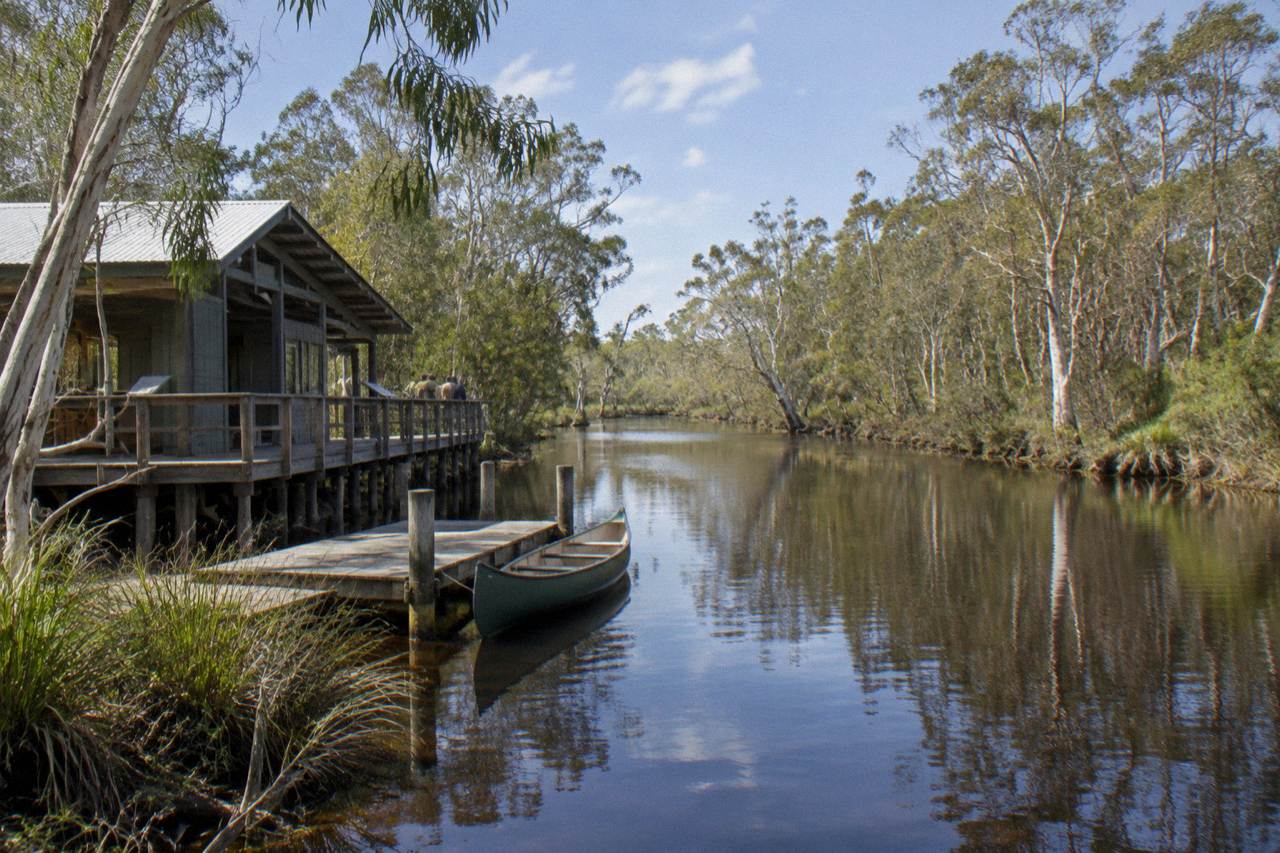
That is the short answer. The longer answer depends on what you expect from the word "Everglades", which is itself doing some heavy lifting here. Queensland Parks and Wildlife Service does not use that name at all. On its pages the place is the Upper Noosa River in the Cooloola Recreation Area, Great Sandy National Park, and the section operators photograph most is a 2.5 km stretch called The Narrows, where the waterway's dark tannin-stained water reflects the twisted paperbarks and bloodwoods lining the banks. The "Everglades" name and the "River of Mirrors" nickname come from operators and listings, not the park service, and the claim that it is "one of only two everglades in the world" is operator copy. None of that makes the scenery less real. It just means you should calibrate expectations before you book. The river is only one part of the picture, so pair it with a look at the other things Noosa is known for before you lock in your itinerary.
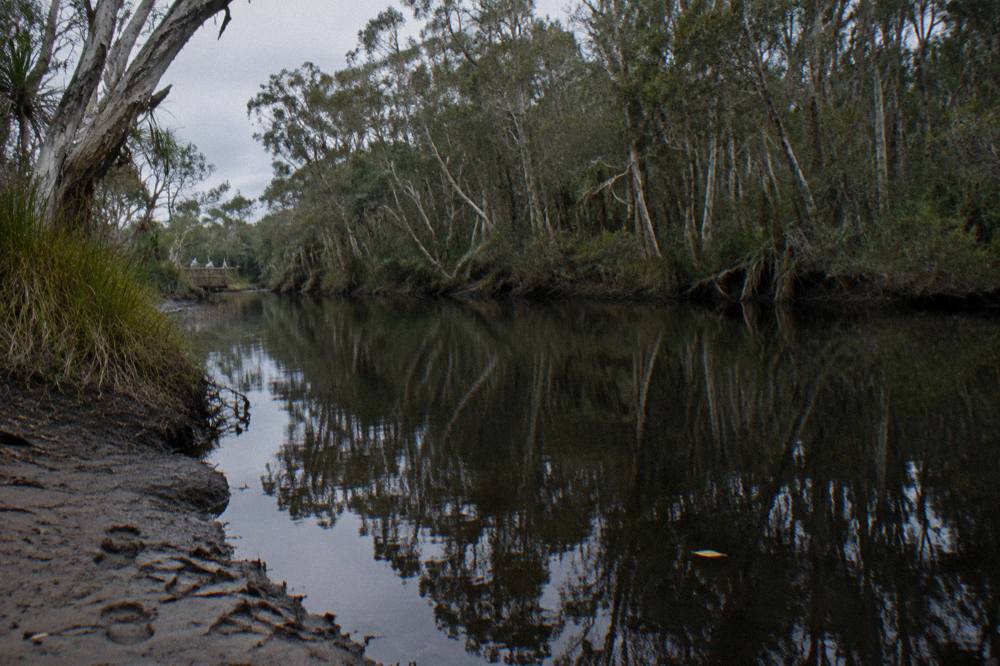
The reflections are the product. When the wind is low, the still, tea-coloured water acts like a mirror, and the paperbark forest doubles itself in a way that photographs struggle to capture. The park service describes the water as tannin-stained, stained dark by vegetation decomposing in the catchment, and notes that the wetlands provide nurseries for juvenile fish. The waterway runs 27.7 km one way, with a suggested five hours of paddling time for the full journey, and it is not possible to proceed upstream beyond Upper Noosa River campsite 15. Tour boats operate daily, and canoes and kayaks can be hired from operators at Boreen Point and Elanda Point. For more on why the water looks the way it does and how to experience it, our guide to the Noosa Everglades River of Mirrors covers the science and the best ways to see it.
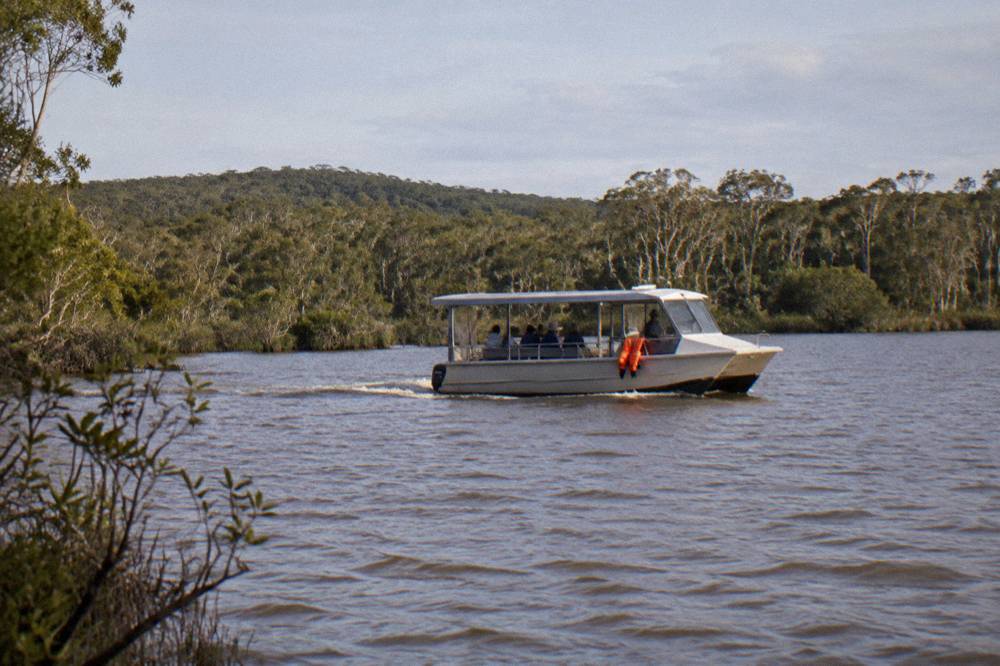
For most first-time visitors, the entry point is a short cruise, and the 2.5-Hour Afternoon Cruise is the listing with the deepest review pool: 4.5 from 1,093 reviews, from $69 per person, departing Boreen Point on the upper Noosa River with a glass of sparkling wine, beer or juice included. It includes a coach transfer from selected Noosa stops, with pickup confirmed by the provider after booking, and it offers free cancellation up to 24 hours. That is the listing we would point most people at first, and it is the featured tour on Noosa Everglades Tours for exactly that reason.
What Are You Actually Paying To See?
You are paying to see a narrow, tannin-dark river fringed by paperbark and bloodwood forest, with mirror-still reflections in The Narrows, birdlife such as cormorants, egrets and spoonbills, and a landscape two-thirds of whose catchment is protected inside a national park. There are no rapids, no big drops and no guaranteed large animal sightings. The value is in the water, the light and the quiet.
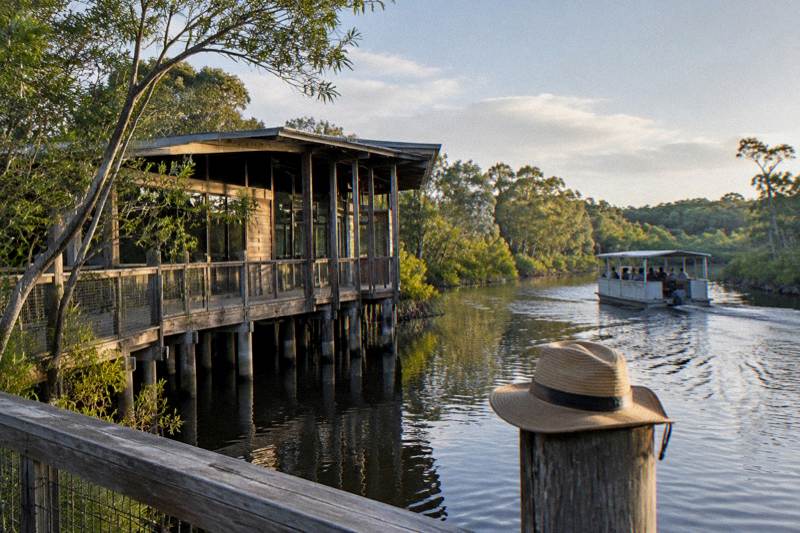
The park service's own description of the waterway is the most reliable guide to what you will get. The scenic waterways of the Upper Noosa River and its tributaries form part of the Noosa River catchment, with two-thirds of that catchment protected within the national park. The dark tannin-stained waters offer spectacular reflections of the twisted paperbarks and bloodwoods that line the riverbanks, per the Cooloola about page. At Kinaba Information Centre, a boardwalk structure on the water a short paddle from Elanda Point, visitors look for stingrays in the waters around the building, and commercial boat tours on the Upper Noosa River also drop into Kinaba.
Birdlife is the most dependable wildlife draw. The Fig Tree Point camping page lists cormorants, wood ducks, egrets, spoonbills and darters as regulars in the early morning or late afternoon. Across the whole Cooloola Recreation Area the park service records more than 350 bird, 75 mammal, 21 frog and 80 reptile species, and notes that some animals living there, such as the Cooloola acid frogs and ground parrot, are rare or threatened with extinction. Those are whole-of-park figures, not Everglades-only counts, so treat them as context rather than a promise of what you will see from a boat in two hours.
What you should not expect is a thrill ride. The river above Kinaba is so protected that a six-knot, no-wash speed limit applies upstream from the Kinaba Information Centre, with penalties for vessels that generate wash. Motorised vessels are permitted only to Campsite 3, and electric motors and non-motorised vessels are permitted beyond. The experience the rules create is a slow, quiet one. If your idea of a great day out involves speed, surf or adrenaline, the Everglades will feel flat. If you like still water, reflections and birdlife, it lands.
Who Should Skip The Noosa Everglades?
Skip the Everglades if you want adrenaline, guaranteed close-up wildlife, swimming beaches or a full day of variety: the river is calm and repetitive by design, there are no patrolled swimming spots, and no official statement was found on crocodiles or sharks for these waters either way. Visitors with limited time who dislike self-driving may also find the access logistics outweigh the payoff.
The swimming question deserves honesty. Noosa Shire Council lists patrolled beaches at Noosa Main Beach, Sunshine Beach, Peregian Beach and seasonal Sunrise and North Peregian, with no mention of patrols or lifeguards at Boreen Point or the upper river and lake sites. The council monitors recreational water quality at Boreen Point Campground, Elanda Point Campground and Lake Cooroibah, and its standing advice is to avoid swimming near drains, in discoloured or murky water, or shortly after heavy rain. On crocodiles and bull sharks, no official statement was found on the Parks and Wildlife pages for Cooloola or on Noosa Council's rivers and creeks pages, and we print nothing stronger than that. If supervised swimming is central to your day, the river is the wrong venue.
Access is the other honest filter. Both launching areas, Boreen Point and Elanda Point, are accessible by 2WD vehicles, and the drive from Tewantin is 19 km via McKinnon Drive and Louis Bazzo Drive, then 2 km along Lake Flat Road to the Elanda Point access road. But pickup varies by tour: the afternoon cruise and the Explorer cruise both include a coach or courtesy shuttle from selected Noosa stops, the hinterland day offers door-to-door pickup across the Sunshine Coast, Noosa and Hinterland, while the kayak days are make-your-own-way. Without a car, you are piecing together buses and taxis to a small lakeside village, and that friction is real. Our getting there guide covers the routes in detail.
Finally, skip it if you are hoping for the sort of wildlife spectacle the Florida Everglades name implies. There are no alligator-analogues here, no official crocodile range statement for these waters, and the marquee animals are birds, and occasionally emus, as the park holds one of the few remaining emu populations in coastal Queensland. Koalas are present in the broader area: Noosa Council identifies land around Boreen Point as koala habitat within wildlife corridors near the national park. But a koala sighting is a bonus, never a selling point.
What Does A Noosa Everglades Tour Actually Cost?
Prices run from $69 to $148 per person for the mainstream listings: the afternoon cruise from $69, the afternoon tea cruise from $70.10, the Explorer cruise from $117, the canoe and BBQ day from $119.67, and guided kayak days from $137 to $148. Self-guided kayaking starts at $80. A private hinterland day with pickup, lunch and a cruise runs from $527 per person.
Those are the listings' USD from-prices, and they are the only prices we print. Operators also sell direct in Australian dollars, and those direct prices are different figures on different pages, so compare like with like when you shop. What the from-price buys varies more than the spread suggests, because meals differ sharply between listings. The afternoon cruise includes a drink. The Explorer cruise includes morning refreshments with lunch to buy at the on-site bar and bistro. The full-day guided kayak tour includes lunch, fresh fruit, baked bread and drinks. The self-guided kayak listings list no meal at all.
| Listing | Decision name | From price | Duration | Meal position | Free cancellation |
|---|---|---|---|---|---|
| Afternoon cruise | 2.5-Hour Afternoon Cruise | $69 | 2.5 hours | Drink included | Yes, 24 hours |
| Afternoon tea cruise | Afternoon Tea Cruise | $70.10 | About 2 hours 30 minutes | Sparkling wine and beer included | Operator asks 48 hours notice |
| Explorer cruise | 4.5-Hour Cruise, Lunch Extra | $117 | 4.5 hours, 9am to 1.30pm | Refreshments included, lunch to buy | Yes, 24 hours |
| Canoe and BBQ day | 6-Hour Canoe Trip, BBQ Lunch Extra | $119.67 | About 6 hours | Lunch and drinks to purchase on site | Yes, 24 hours |
| Guided kayak day | Full-Day Guided Kayak, Lunch Included | $148 | About 6 hours, 8:30am start | Lunch, fruit, bread, drinks included | Not stated, check the booking page |
| Self-guided kayak | 6-Hour Self-Guided Kayak, No Pickup | $85.68 | About 6 hours, 8:30am start | No meal listed | Not stated, check the booking page |
Cancellation terms are the fine print worth reading. The two cruise listings on the featured roster allow free cancellation up to 24 hours, but the afternoon tea cruise's operator asks 48 hours notice, and the two Kanu Kapers kayak listings state no free cancellation, so check the booking page before you commit. If your dates are weather-dependent, that difference matters more than a few dollars on the from-price.
Cruise Or Kayak: Which Format Suits You?
Cruise if you want the reflections with zero effort in two to three hours, from $69 to $117. Kayak if you want to be on the water at water level for most of the day, from $80 to $148. The cruise suits time-poor visitors, families with small children and anyone who would rather not paddle; the kayak suits visitors who want the quietest, slowest, most immersive version of the river.
The cruise decision is mostly about duration and drink. The 2.5-hour afternoon cruise from Boreen Point, 4.5 from 1,093 reviews, is the shortest and cheapest way onto the water. The afternoon tea cruise, 4.5 from 472 reviews, is a similar shape from $70.10 with sparkling wine and beer included, run by Everglades Eco Safaris with a vessel capacity of 36 per the operator. The Explorer cruise, 4.6 from 279 reviews, stretches the day to 4.5 hours from 9am to 1.30pm with morning refreshments and lunch to buy at the on-site bar and bistro.
The kayak decision is about how close to the water you want to be. The full-day guided kayak tour with Kanu Kapers Australia, 4.9 from 158 reviews from $148, runs about six hours from an 8:30am start at Elanda Point Canoe Launch, with lunch, fresh fruit, baked bread and drinks included, in groups of up to 16. The self-guided version from the same operator, 4.8 from 133 reviews from $85.68, covers the same hours with no meal and no pickup, in groups of up to 20. Sitting low in a kayak on tannin water, with the reflections centimetres from your hands, is a different experience from viewing the same river from a cabin cruiser, and most people who paddle it say the effort was the point.
There is a middle format too: the cruise-and-canoe day. The 6-hour canoe trip listing from Everglades Eco Safaris, 4.6 from 379 reviews from $119.67, combines the boat cruise with canoe time on the river, with lunch and drinks available to purchase on site, and round-trip transfers from central Noosa can be arranged, which you confirm at booking. Note the duration quirk: this listing runs about 6 hours while the same operator's cruise-only Explorer listing shows 4.5 hours, so read each listing's own figure rather than assuming the family is uniform. Our Everglades kayak guide breaks down the paddle options in more depth.
When Is The Best Time To Go?
Go between late autumn and early spring for the calmest water and lowest rainfall: September averages 57.8 mm of rain over 5.8 rain days at Tewantin, against 236.4 mm over 14.2 days in March. Early morning is the best time of day, because the park service itself advises crossing Lake Cootharaba early when conditions are likely to be calm, and calm water is what makes the reflections work.
The climate numbers come from the Bureau of Meteorology's Tewantin station, the nearest long-record site on the Noosa River with 30 years of data. The monthly means tell a clear story: March is the wettest month at 236.4 mm on average, February close behind at 233.7 mm, while September is the driest at 57.8 mm and July next at 71.7 mm. October averages 25.8 degrees maximum and 112.1 mm of rain, November 26.9 and 99.0 mm. One nuance the raw table hides: the median rainfall is lower than the mean in every month, because the averages are pulled up by a few very wet years, so a "typical" month is drier than the mean suggests. The Bureau's full table for station 040908 is published at Tewantin climate averages.
Two scheduling wrinkles matter for the coming season. A pest control program runs across the Cooloola Recreation Area from 31 October to 28 November 2026, with the park service alert noting closures of firebreaks and roads and some camping areas; the upper river waterway tours are the least affected, but campers should read the alert before booking sites. And the southern day-use jetty at Upper Noosa River Campsite 3 is closed until 24 October 2026 after flood damage, with the northern camper's jetty remaining open. Neither blocks a day tour, but both matter if you are building a longer trip around the river. Current status sits in the Cooloola conditions report, updated by the park service.
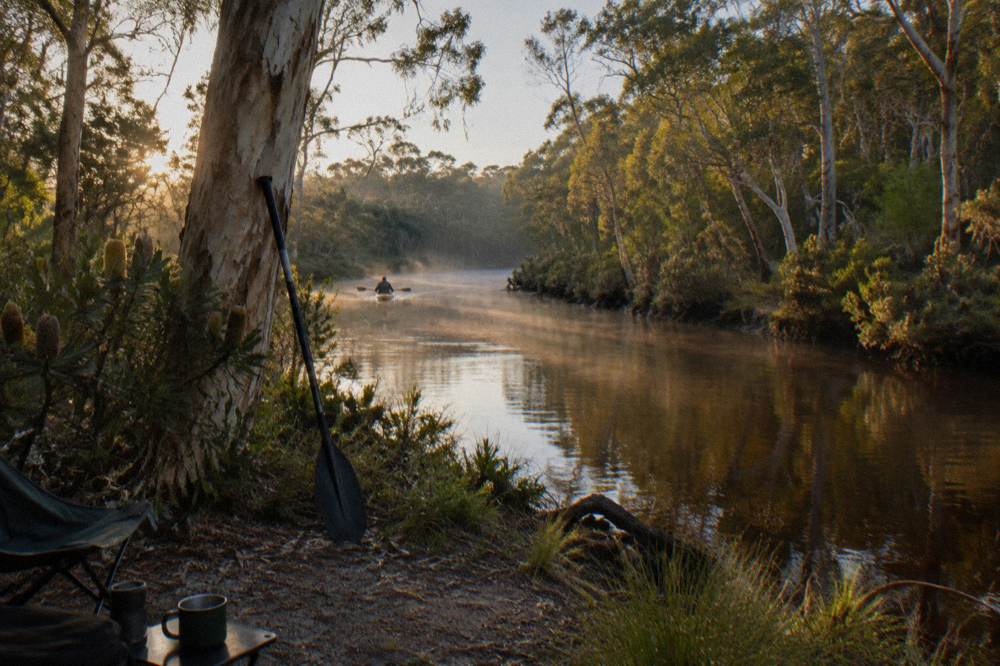
Wind is the real enemy of the experience, more than rain. The reflections that make the river famous exist only when the surface is glassy, and the lake crossing between the launch points and the river can chop up quickly on a breezy afternoon. That is why the park service suggests early starts, and why the kayak tours all begin at 8:30am. If your only free slot is a windy afternoon, lower your expectations for the mirror effect, or move the booking.
The Honest Verdict
For a visitor with a car, a half day and an appreciation for quiet water, the Noosa Everglades is worth it: the reflections are real, the ratings are strong across large review pools, and the entry price of $69 is low for a guided experience in a national park. For a visitor chasing thrills, big wildlife or swimming, it is not worth the drive. The deciding question is simple: do you like still water?
We compared the listings rather than the brochures, and the review pools hold up. The afternoon cruise carries 4.5 from 1,093 reviews, the afternoon tea cruise 4.5 from 472, the Explorer cruise 4.6 from 279, the canoe day 4.6 from 379, and the guided kayak 4.9 from 158. Those are healthy samples across every major format, and the pattern is consistent: people who chose a calm water experience were glad they did. The private hinterland day from Joel's Journeys, from $527 per person with hotel pickup, a 2.5 hour Serenity cruise, and a gourmet lunch with a drink in Pomona, is a new listing with no reviews yet, so we make no rating claim for it either way.
The strongest version of the verdict is conditional. If you are already basing in Noosa or the Sunshine Coast, the Everglades is one of the region's most distinctive half days. If you are driving from Brisbane for the day purely for this, pair it with something else, because the river alone is a quiet three hours, not a destination that fills a day. The best way to see the Everglades depends on your pace, and our how to choose guide walks the decision in full.
Common Questions About The Noosa Everglades
Is The Noosa Everglades Worth It?
For most visitors, yes. The tannin-stained reflections on the upper Noosa River are genuine and striking, the most-reviewed tour holds 4.5 from 1,093 reviews, and prices start from $69 per person. It is worth it if you enjoy calm water, birdlife and quiet scenery, and not worth it if you want adrenaline, patrolled swimming or guaranteed large animal sightings.
How long do you need to see the Noosa Everglades?
The shortest satisfying visit is the 2.5-hour afternoon cruise. The fuller formats run about 4.5 to 6 hours, and the guided kayak days run 6 to 7.5 hours. Most visitors budget a half day including the drive from Noosa, which is 19 km from Tewantin to Boreen Point.
Can you swim in the Noosa Everglades?
There are no patrolled swimming spots at Boreen Point or the upper river and lake sites; Noosa Council's patrolled beaches are elsewhere in the shire. Council monitors water quality at Boreen Point, Elanda Point and Lake Cooroibah and advises avoiding swimming near drains, in discoloured water, or shortly after heavy rain. No official statement on crocodiles or bull sharks was found for these waters either way.
What is the cheapest way to see the Noosa Everglades?
The self-guided kayak day from $80 per person is the cheapest on-water option with the most time on the river. The cheapest guided option is the afternoon cruise from $69, which includes a glass of sparkling wine, beer or juice and free cancellation up to 24 hours.
Why is the water so dark in the Noosa Everglades?
The water is stained dark by tannins from vegetation decomposing in the catchment. The park service describes the upper Noosa River's dark tannin-stained waters as offering spectacular reflections of the twisted paperbarks and bloodwoods along the banks. The dark surface is exactly what creates the mirror effect visitors come to see.
Do you need a 4WD to reach the Everglades launch points?
No. Both launching areas, Boreen Point and Elanda Point, are accessible by 2WD vehicles via McKinnon Drive, Louis Bazzo Drive and Lake Flat Road. A high-clearance 4WD is only needed for other parts of Cooloola, such as Harrys Hut Road and the beach driving areas.