Is There Any Free Camping In Noosa?
No, Noosa has no free camping. Council enforces against illegal camping and every riverside site needs a QPWS permit at $7.75 per person per night. Here are the legal options and the day-trip alternative.
Is There Any Free Camping In Noosa?
No, there is no free camping in Noosa. Noosa Council does not provide free camping spaces and actively enforces against illegal camping, with joint patrols issuing fines at beaches, parks and precincts. Every legal campsite near the Everglades sits inside the Cooloola Recreation Area and needs a paid QPWS permit, so the cheapest legal night costs $7.75 per person.
That is the honest headline, and it is worth sitting with for a moment because a lot of travel content implies otherwise. Search results for free camping around Noosa tend to surface freedom camping tips, roadside pull-ins and beach sleepovers that would all draw a fine today. The council position is not ambiguous. Its rangers run joint patrols with police and issue infringement notices at beaches, parks and precincts, and the shire has no designated free camping spaces at all. Anyone planning a Noosa trip around a free night needs a different plan.
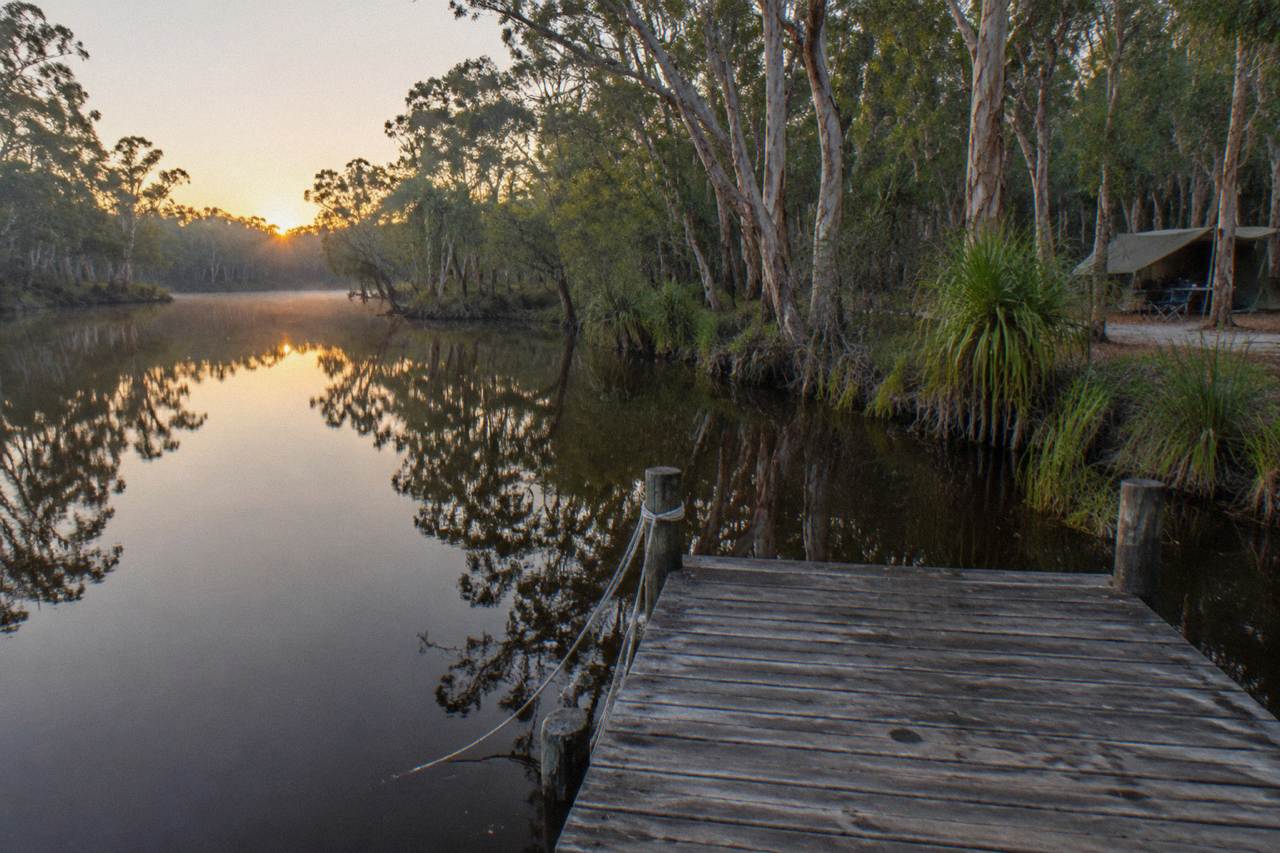
The good news is that the paid alternative is genuinely cheap by Australian camping standards, and it puts you in one of the quietest corners of the country. Queensland Parks and Wildlife Service runs the campsites along the upper Noosa River inside the Cooloola Recreation Area, part of Great Sandy National Park. A permit costs $7.75 per person per night, or $31.00 per night for a family of up to eight, and those sites sit directly on the tannin-dark water that operators call the River of Mirrors. The catch is access: every one of them is reached by paddle or boat, not by car.
There is also a third path that most visitors overlook. You do not actually need to sleep anywhere near the river to see its best stretch. Day tours, both cruises and kayak trips, cover the mirrored section of the upper river and have you back in Noosa by late afternoon, no tent, no permit and no booking window required. The comparison below gathers the three most useful day options if the camping answer kills your overnight plan.
The rest of this article walks through what a permit really costs, where you can legally pitch a tent, why the free option does not exist, and how the day-trip route compares. The numbers come from the official park booking pages and the tour listings themselves, not from secondhand roundup posts.
What Does A Camping Permit Cost On The Upper Noosa River?
A Queensland Parks and Wildlife Service camping permit costs $7.75 per person per night, or $31.00 per family per night, under the fees that took effect from 1 July 2026. A family permit covers one or two adults plus children under 18, up to eight people in total, and children under five camp free.
Those are the current published rates on the QPWS camping bookings page, and they apply to every campsite in the upper Noosa River system: the numbered campsites 1 to 15, Fig Tree Point, and Harrys. There is no free tier, no off-season waiver and no first-come-free arrangement. Approved educational groups get a reduced rate of $4.25 per person per night, which matters if you are organizing a school or university trip, but ordinary travellers pay the standard rates.
| Permit type | Cost per night | Who it covers |
|---|---|---|
| Adult or child 5 and over | $7.75 per person | Each individual camper |
| Family | $31.00 | One or two adults plus children under 18, up to 8 people total |
| Child under 5 | Free | Still requires a booking entry |
| Approved student group | $4.25 per person | Educational groups, by arrangement |
Bookings go through the Queensland camping booking service, and permits must be secured before you camp, not paid on site. In practice that means planning ahead for peak windows: the Queensland spring school holidays ran 19 September to 5 October 2026, and the Noosa Triathlon on Sunday 1 November 2026 puts pressure on accommodation and camping across the whole shire in late October and early November.
One more cost detail that surprises people: the fee is per person, per night, not per site. A couple staying two nights pays $31.00 in total at the per-person rate, which is still less than a single night in most coastal holiday parks, but it is not nothing. Families hit the family cap quickly, which is where the $31.00 rate does real work.
Where Can You Legally Camp Near Noosa?
The legal camping near Noosa is all inside the Cooloola Recreation Area: Upper Noosa River campsites 1 to 15, Fig Tree Point, and Harrys. Every site is river access, reached by canoe, kayak or boat, and every one requires a pre-booked permit. Maximum stay is 7 nights at the numbered sites and 14 nights at Fig Tree Point and Harrys.
That access rule is the part that reshapes most plans. There is no drive-in camping anywhere on the upper river. The launch points at Boreen Point and Elanda Point are both reachable by conventional 2WD vehicles, but from there the campsites are a paddle. Elanda Point to Kinaba is 4.5 km, about an hour and a half by canoe, and Kinaba to Fig Tree Point adds another 2 km. Harrys Hut sits a further 5 km upstream. The park's own guidance suggests allowing five hours of paddling time for the full 27.7 km journey, and it is not possible to proceed upstream beyond campsite 15.
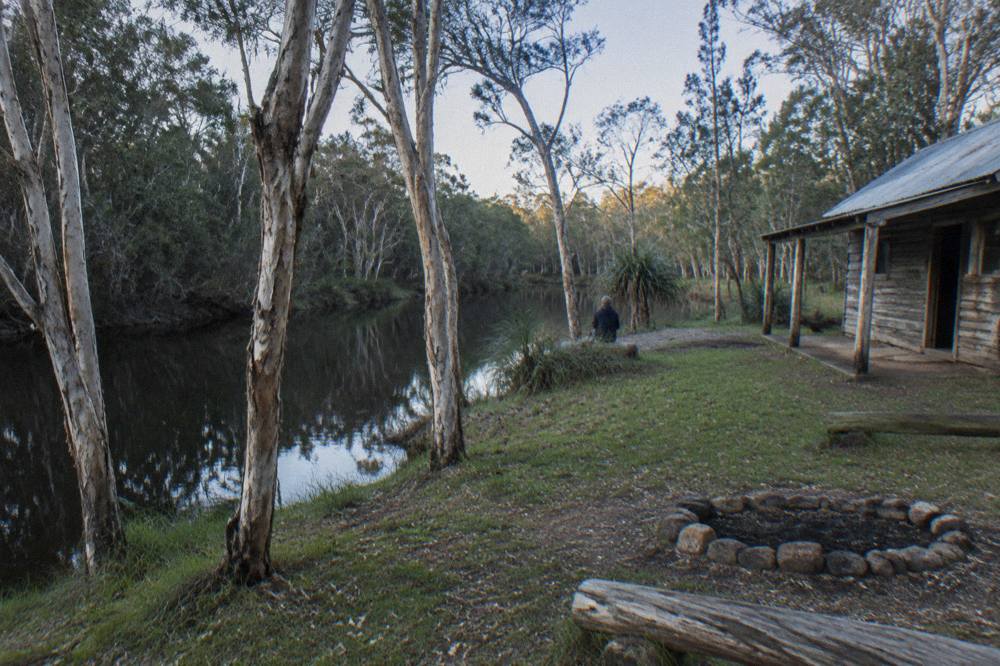
Fig Tree Point deserves a specific mention because it is the site people mean when they imagine Everglades camping. It takes up to 3 groups of 8 people, to a maximum of 24 in total, and it has toilets, picnic tables, a jetty and a canoe landing. It is canoe, kayak or walk-in access only. Our Fig Tree Point campsite guide covers it in detail, and the wider Noosa Everglades camping guide walks through the full permit and packing picture.
Two rules shape every night on the river. Open fires are prohibited at all Upper Noosa River campsites, so cooking means a fuel or gas appliance, and braziers are not permitted. And motorised vessels are only permitted as far as campsite 3; beyond that, electric motors and paddle craft only. The no-landing zone between Fig Tree Point and Harrys Hut also restricts where you can stop and stretch legs.
If you would rather see the campsites and the river without committing to a night on the ground, a paddle day-trip covers the same water. The box below is the option we would point most first-time visitors at.
Why Free Camping Is Not An Option Around Noosa
Noosa Council provides no free camping spaces and runs joint patrols with police that issue fines for illegal camping at beaches, parks and precincts. Freedom camping is banned, and the 28-day anchoring rule for vessels over 5 m closes off the option of living on the river. The only legal overnight stays are paid campgrounds and QPWS sites.
The enforcement picture has hardened over recent years, and it is the reason generic freedom-camping advice fails here. Sleeping in a vehicle by a beach, a park or a riverbank risks a fine, and the council publishes its enforcement activity openly. This is not a loophole situation where a quiet spot goes unnoticed: Noosa is a small shire with high visitor numbers, and illegal camping is one of the most reported issues it deals with.
The river itself is closed off as a workaround too. From 1 January 2026, a 28-day anchoring limit per financial year applies to vessels over 5 m across the whole Noosa River system, enforced by Maritime Safety Queensland, per the council's river management page. That rule targets long-term on-water storage rather than tourists, but it removes the idea of mooring free for a week opposite the Everglades.
It is also worth being clear about what the park is. Queensland Parks and Wildlife Service manages this stretch as the Upper Noosa River in the Cooloola Recreation Area, Great Sandy National Park, and names the mirrored section The Narrows. The names Noosa Everglades and River of Mirrors come from operators and common usage, and the famous claim of one of only two Everglades in the world is operator copy, not park service wording. None of that changes the camping rules, but it explains why official pages read differently from tour listings.
What Paid Overnight Options Exist Near The Everglades?
The paid options break into two groups: QPWS river campsites at $7.75 per person or $31.00 per family per night, and commercial campgrounds and holiday parks around Noosa, Boreen Point and the hinterland at market rates. The QPWS sites are the cheapest legal nights near the Everglades, and they put you on a river most day visitors never see.
For a trip built around the upper river, the QPWS sites are the ones to compare against each other, because they differ in more than distance. The numbered campsites range from close-in sites a short paddle from Elanda Point to campsite 15, the furthest upstream, deep in the quietest water. Fig Tree Point is the most developed, with its jetty, toilets and picnic tables. Harrys is the largest area, with a historic timber-getter's hut from the mid-1900s at its heart, non-flush toilets, picnic tables and a day-use zone.
| Campsite area | Permit cost | Max stay | Access | Fires |
|---|---|---|---|---|
| Upper Noosa River campsites 1 to 15 | $7.75 per person or $31.00 per family per night | 7 nights | Canoe, kayak or boat only | Prohibited, gas or fuel stoves only |
| Fig Tree Point | $7.75 per person or $31.00 per family per night | 14 nights | Canoe, kayak or walk-in, max 24 people | Prohibited, gas or fuel stoves only |
| Harrys camping area | $7.75 per person or $31.00 per family per night | 14 nights | By river, or Harrys Hut Road by high-clearance 4WD | Prohibited, gas or fuel stoves only |
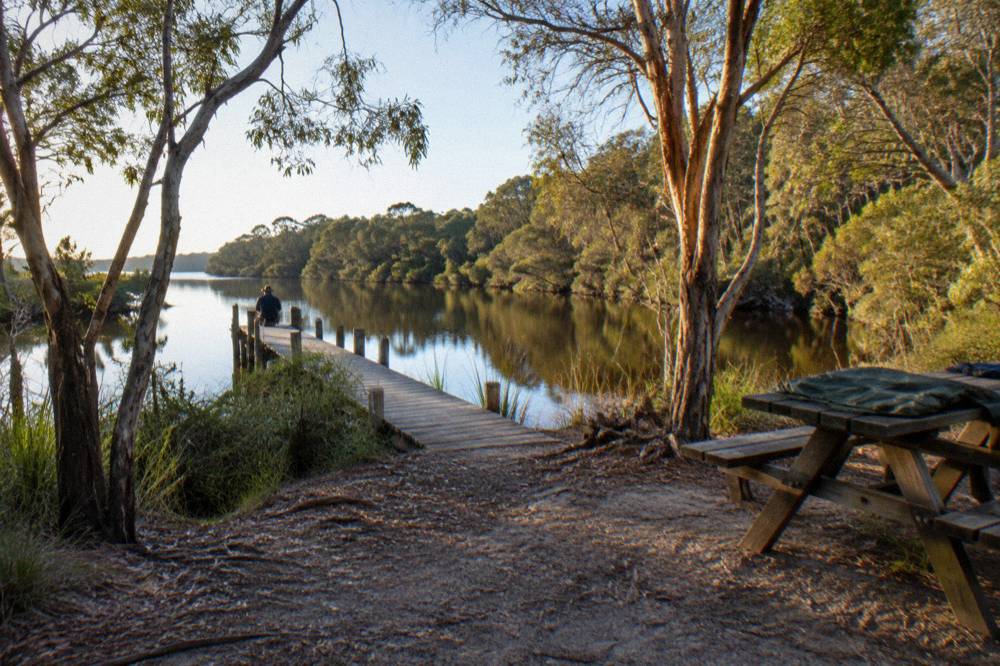
One access note that saves confusion: no vehicle access permit is required for Harrys Hut Road or Cooloola Way themselves, though permits apply elsewhere in the recreation area, and Harrys by road needs a high-clearance 4WD (see Camping Permits). Most campers arrive by water regardless, which is the whole point of these sites.
Timing matters more than most guides admit. The pest control program from 31 October to 28 November 2026 closes the Eastern and Western Firebreaks, including Pettigrews and Kings Bore Roads, for the entire period, with Teewah Beach and Freshwater campsites closed 2 to 4 November. The river campsites themselves stay open, but anyone combining a river paddle with a beach or hinterland leg should read the park alerts before locking dates. The campsite 3 jetty closure until 24 October 2026 is a smaller detail, relevant only if your itinerary uses that site.
Can You See The Everglades Without Camping Overnight?
Yes, and for most visitors a day trip is the better plan. Every tour on the river, from a 2.5 hour cruise to a full day of paddling, returns ashore by late afternoon, so no permit, no tent and no campsite booking are needed. A self-guided kayak day from Elanda Point covers the same mirrored stretch of river the campers see.
This is the route we would recommend to anyone whose interest in the Everglades is about the water, not the night under paperbarks. The Self-Guided Noosa Everglades Kayak Tour runs about 6 hours from the Elanda Point canoe launch, starting 8:30am, at from $85.68 per person, rated 4.8 from 133 reviews. It is operated by Kanu Kapers Australia, takes groups of up to 20, and includes no pickup, so you drive yourself to Lake Flat Road. That is a full day of the river for less than the cost of two nights' camping plus gear hire, and you sleep in a real bed. Check availability
A second self-guided option comes from Adventure Tribe Aus, a 7.5 hour day with about 6 hours of actual kayaking, from $80 per person. Its rating of 4.8 comes from a thin sample of 16 reviews, so read the listing rather than trusting the number alone. The listing shows the launch point and start time, no meal is included, and cancelling ahead earns a full refund.
If paddling a full day sounds like more effort than a holiday needs, the cruise-and-canoe format splits the difference. The Everglades Explorer day from Everglades Eco Safaris, listed with a BBQ lunch to buy on site, runs about 6 hours and combines the boat ride up the river with time in a canoe. It is rated 4.6 from 379 reviews, from $119.67 per person, with free cancellation up to 24 hours, and round-trip transfers from central Noosa can be arranged, confirm at booking. Note that the same operator's cruise-only Explorer listing shows 4.5 hours, so each listing carries its own duration.
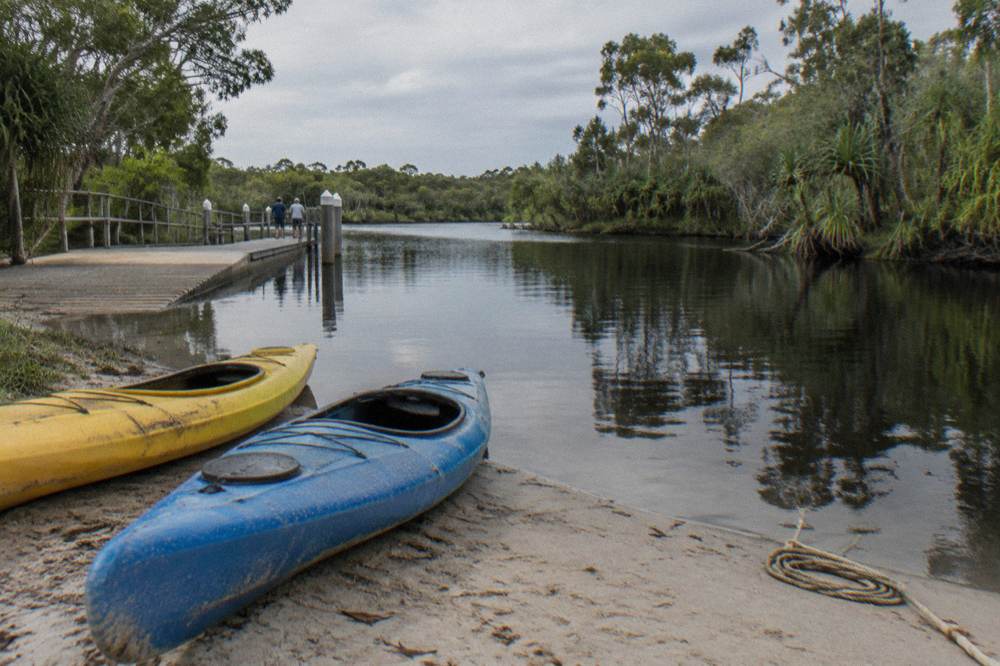
Whichever day format you pick, the practical advantage is the same: the mirrored water of The Narrows, the paperbarks and the birdlife are all on the day-trip itinerary, not reserved for campers. The side-by-side comparison on Noosa Everglades Tours lays the day options against each other, and for most travellers the honest conclusion is that the camping question answers itself. You do not need a free campsite, because you do not need a campsite at all.
Common Questions About Free Camping In Noosa
Is There Any Free Camping In Noosa?
No. Noosa Council provides no free camping spaces and enforces against illegal camping with joint patrols and fines. Every legal campsite near the Everglades is a QPWS site requiring a paid permit at $7.75 per person or $31.00 per family per night.
Do You Need A Camping Permit In The Noosa Everglades?
Yes. Camping permits are required at all sites and fees apply, booked in advance through the Queensland camping booking service. There is no free or permit-free camping anywhere on the upper Noosa River.
Can You Camp At Fig Tree Point?
Yes, with a permit. Fig Tree Point takes up to 3 groups of 8 people, 24 in total, and is reached by canoe, kayak or on foot. Maximum stay is 14 nights, and open fires are prohibited.
Can You Sleep In Your Car Or Van Around Noosa?
No. The council enforces against illegal camping at beaches, parks and precincts with joint patrols and fines, and provides no designated spaces for vehicle sleeping or freedom camping.
What Is The Cheapest Legal Night Near The Everglades?
A QPWS riverside campsite at $7.75 per person per night, or $31.00 for a family of up to eight. Children under five camp free. Every site is paddle or boat access, so you also need a canoe or kayak to reach them.
Can You See The Everglades Without Camping?
Yes. Day tours, including self-guided kayak days from $80 and cruise-and-canoe days from $119.67, cover the mirrored stretch of the upper river and return by late afternoon with no permit or campsite needed.