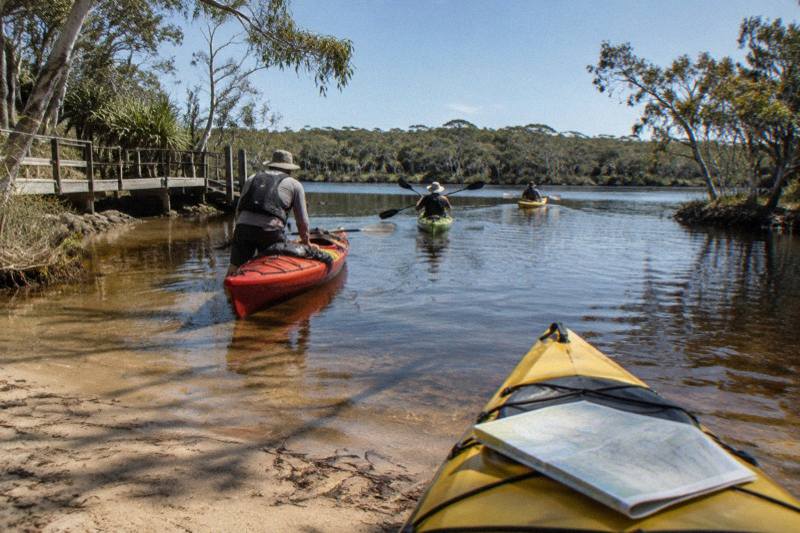
Do You Need A Camping Permit In The Noosa Everglades?
Yes, every campsite on the upper Noosa River requires a QPWS camping permit booked before you arrive. Here are the fees, stay limits, booking steps and campsite rules for campsites 1 to 15, Fig Tree Point and Harrys.
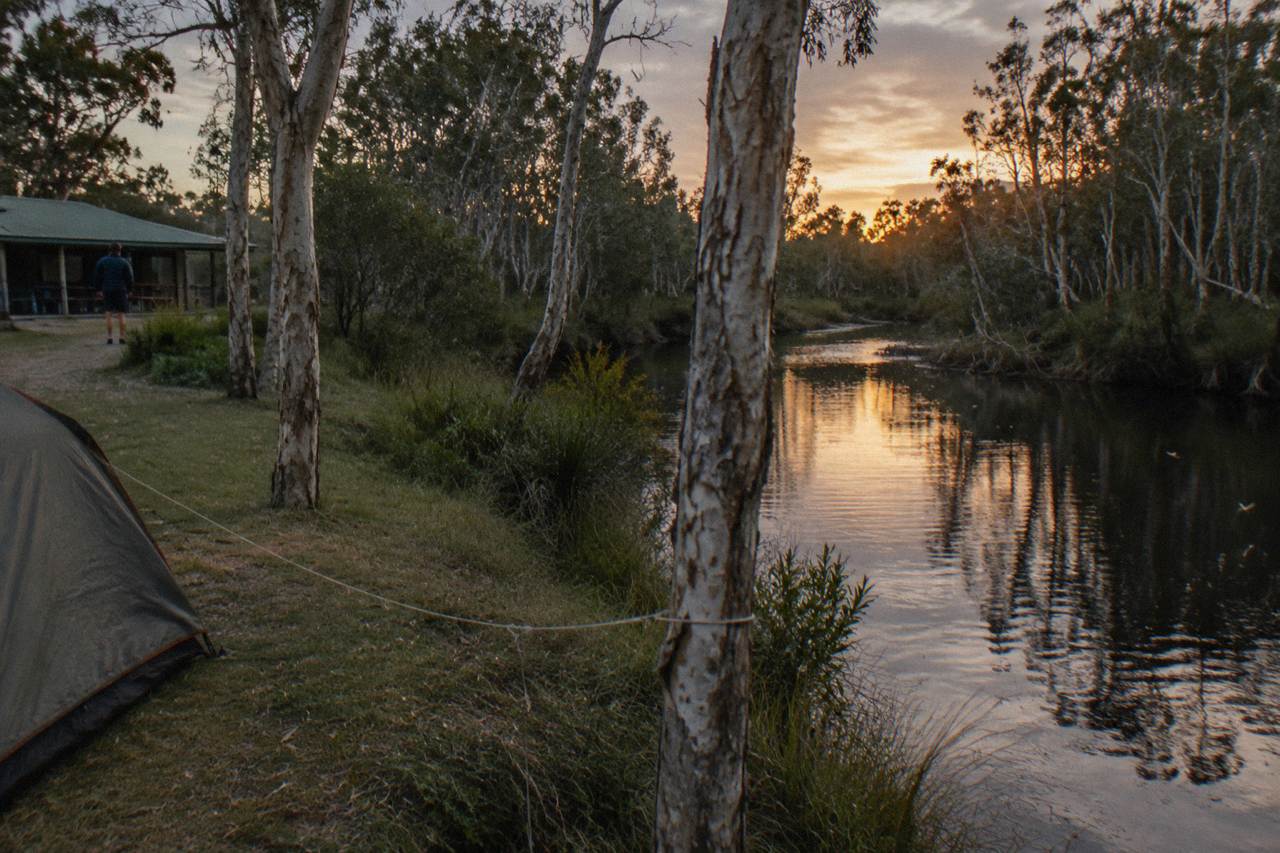
Do You Need A Camping Permit In The Noosa Everglades?
Yes. Camping permits are required before you camp at every site in the stretch the parks service manages as the Upper Noosa River in the Cooloola Recreation Area: campsites 1 to 15, Fig Tree Point and Harrys. You book through the QPWS camping service before you arrive, and fees apply, at $7.75 per person per night or $31.00 per family per night. If those fees have you wondering whether you can skip paying altogether, the answer to whether there's any free camping in Noosa is a firm no, but there are legal alternatives worth knowing about.
A note on names first, because it shapes where you look for answers. Queensland Parks and Wildlife Service does not use the phrase "Noosa Everglades" on its pages. Its material names the place the Upper Noosa River in the Cooloola Recreation Area, part of Great Sandy National Park, and uses "The Narrows" for the famous 2.5 km mirrored stretch. "Noosa Everglades" and "River of Mirrors" come from tour operators and listings, so when you search the official camping pages you will find the rules under the Upper Noosa River and Cooloola headings rather than under the Everglades label. The same naming quirk matters when you're planning to paddle, so check out how to kayak the Upper Noosa River and what the rules allow before you book anything.
The permit rule is unambiguous. The parks service states that camping permits are required before camping at all sites and that fees apply. There is no free camping anywhere in this section of the river, and Fig Tree Point, which sits at the junction of the upper river and Lake Cootharaba's northern arm, is a paid QPWS site like the rest (see Free Camping In Noosa). The broader Noosa area is no different: Noosa Council provides no free camping spaces and actively enforces against freedom camping.
One thing worth clearing up early: none of the nine bookable tours on this site is a camping trip. Every listing is a day experience, from a 2.5-hour afternoon cruise to a 7.5-hour guided kayak day. Camping on the upper river is a self-organised trip, which means the permit, the gear and the paddle between sites are all yours to arrange. Plenty of visitors combine the two, using a day tour to see the river first and a permitted night at a campsite to slow down afterward.
If you are weighing a permitted camp against a day on the water, the side-by-side comparison on the homepage of Noosa Everglades Tours lays out all nine listings by price and duration, and our full Noosa Everglades camping guide covers the overnight planning in much more depth than this permit primer.
How Much Does A QPWS Camping Permit Cost?
A permit costs $7.75 per person per night, or $31.00 per family per night, with a family defined as one or two adults plus children under 18, to a maximum of eight people. Children under five camp free. Approved educational groups pay a student rate of $4.25 per person per night. These fees took effect from 1 July 2026.
The per-person rate is the default for solo travellers and mixed groups. The family rate is the better deal the moment you have three or more people in the group, since a full family of eight pays the single $31.00 rate instead of eight individual permits. The parks service publishes the current fee schedule on its camping bookings page, and that page is the one to check before you pay, because fee reviews happen at the start of the financial year.
| Permit type | Rate | Who it covers |
|---|---|---|
| Per person per night | $7.75 | Adults and children 5 and over |
| Family per night | $31.00 | 1 to 2 adults plus children under 18, max 8 people |
| Student per night | $4.25 | Approved educational groups |
| Children under 5 | Free | No permit fee, still counted in the booking |
For comparison, that makes an upper river camp one of the cheaper nights in the Noosa region. A night's touring before you camp tells a similar story: the two afternoon cruises on this site start at $69 and $70.10 per person, so a family of four could spend more on a single afternoon on the water than on two nights at a riverside campsite. Neither replaces the other, but the budget arithmetic surprises people who assume a national park stay is the expensive half of the trip.
Booking is not the same as arriving, and rangers do check. The permit must be secured before you camp, and the booking reference should travel with you, printed or on your phone, because campsites on the upper river are reachable only by paddle or boat and a ranger will not find you at a vehicle window. More on the practical booking steps further down.
Where Can You Camp With A Permit On The Upper Noosa River?
The permitted sites fall into three groups: Upper Noosa River campsites 1 to 15, which are river-access only and cap stays at 7 nights; Fig Tree Point, reachable by canoe, kayak or boat with a 14-night maximum; and Harrys camping and day-use area, also 14 nights. Campsite 15 is the furthest upstream you can go, as the river is closed to paddling beyond it.
The 15 numbered campsites are the heart of an overnight Everglades trip. They string up the river past Harrys Hut toward the headwaters, each a small clearing with varying facilities: campsite 3 has a composting hybrid toilet, platform tables and jetties, while the higher-numbered sites thin out toward basic bush camping where the parks service recommends carrying a portable toilet. The distances are manageable for a loaded canoe. From Kinaba Information Centre it is about 20 minutes by canoe to Fig Tree Point, then an hour to Harrys, then 35 minutes to campsite 1 and roughly 15 to 30 minutes between each numbered site beyond that.
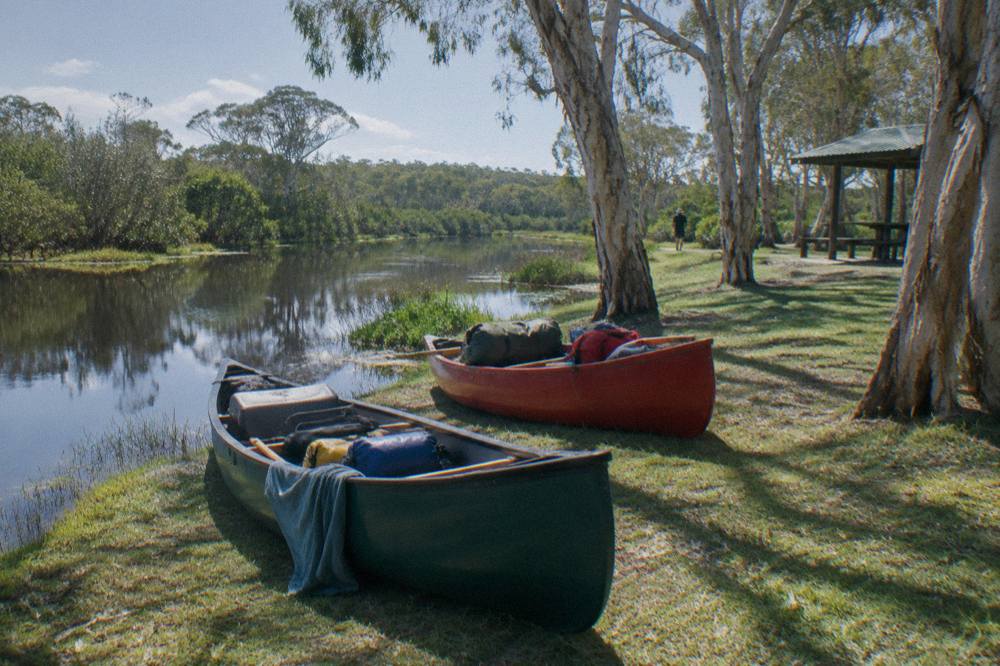
Fig Tree Point is the most constrained of the three areas. The site allows up to three groups of eight people, to a maximum of 24 people in total, and it has toilets, picnic tables, a jetty and a canoe landing. Water at the site is untreated, so treat anything you draw. Open fires are prohibited there, as they are at every upper river campsite, a rule covered in full in the campsite rules section below.
| Camping area | Access | Maximum stay | Facilities |
|---|---|---|---|
| Campsites 1 to 15 | Canoe, kayak or boat only | 7 nights | Varies by site; campsite 3 has toilet, tables, jetties |
| Fig Tree Point | Canoe, kayak or boat only | 14 nights | Toilets, picnic tables, jetty, canoe landing, max 24 people |
| Harrys camping area | Paddle, or 4WD via Harrys Hut Road | 14 nights | Non-flush toilets, picnic tables, water supply (treat before use) |
Harrys is the one site you can also reach by road, though the parks service specifies a high-clearance 4WD for Harrys Hut Road, and the historic hut itself, a timber-getter's relic from the mid-1900s, anchors a day-use area with picnic tables and a water supply that should still be treated before use. Our campsites 1 to 15 guide breaks down each numbered site, its toilet situation and its paddle time from the launch points.
If an overnight under permit sounds like more logistics than your trip can carry, a full guided day covers most of the same water. The 4.5-hour Everglades Explorer cruise, from $117 per person with a 4.6 rating from 279 reviews, runs the river in the morning with refreshments included and lunch to buy at the on-site bistro, and it pairs a cruise leg with canoe time on the mirrored section.
How Do You Book Your Camping Permit Before You Arrive?
Book online through the Queensland camping booking service at qld.gov.au/camping, choosing your campsite, your dates and your group size, then pay by card and keep the confirmation with you on the river. Permits must be in place before you camp, not bought on arrival, and there is no office at any upper river site to sort one out in person.
The booking flow is straightforward. Pick your site from the map, which shows campsites 1 to 15, Fig Tree Point and Harrys separately, select your nights within the stay limit for that site, and enter your group so the fee calculates correctly, per person or as a family. The booking service issues a confirmation that doubles as your proof on the water. Popular sites fill first in the Queensland school holidays and around the Noosa Triathlon weekend in early November, when Noosa accommodation generally tightens, so book those dates early.
Plan the paddle around your booking. Most campers launch from Elanda Point or Boreen Point, both reachable by 2WD, and the parks service advises crossing Lake Cootharaba early in the morning when conditions are likely calm. A first night at campsite 3 or Fig Tree Point keeps day one short; pushing to the higher-numbered sites means a longer carry and an earlier start.
This is also where a day listing can do double duty as a rehearsal. The Self-Guided Noosa Everglades Kayak Tour, from $85.68 per person with a 4.8 rating from 133 reviews, runs about 6 hours from the Elanda Point Canoe Launch with groups up to 20, no pickup and no meal listed, so it works as a supported first look at the water you would later paddle under your own permit.
Do You Need A Vehicle Permit Or A 4WD To Reach The Campsites?
No vehicle access permit is needed for Harrys Hut Road or Cooloola Way themselves, the roads that serve the upper river launches, and both Boreen Point and Elanda Point are reachable by conventional 2WD. A high-clearance 4WD is required for the Harrys Hut Road approach to Harrys, and vehicle access permits do apply to beach driving elsewhere in the Cooloola Recreation Area.
This trips up a lot of first-time visitors because two different permits circulate in the same conversations. The camping permit, covered above, is for the night. The vehicle access permit is for driving on designated beaches and some tracks in the recreation area, and it does not apply to Harrys Hut Road or Cooloola Way, per the parks service's access details for the upper river sites. If your plan is a 2WD drive to Elanda Point and a paddle to campsite 5, you need the camping permit and nothing else.
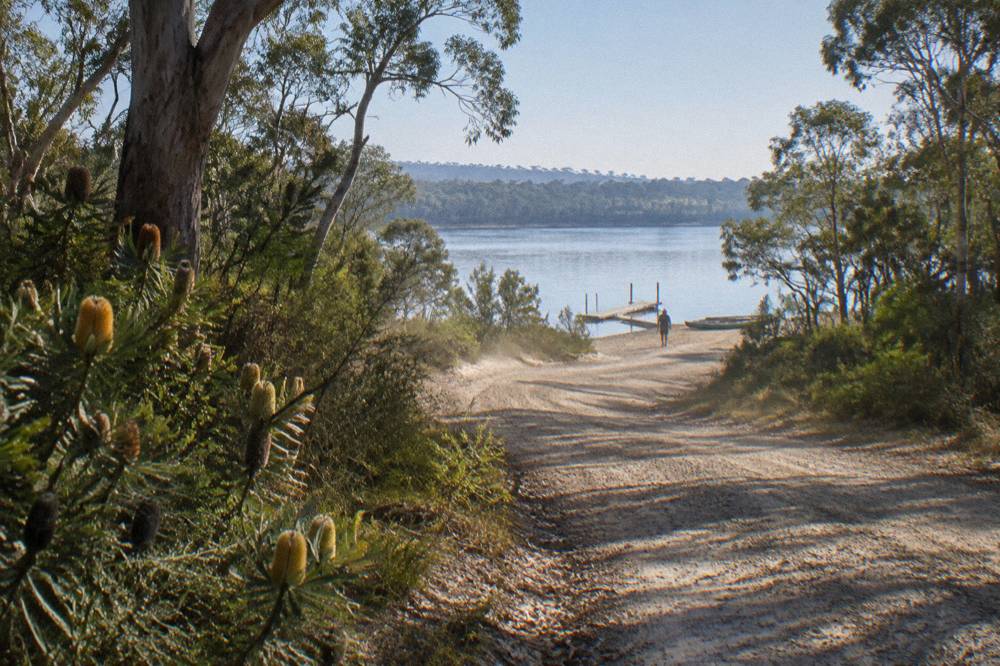
The split matters at the trip-planning stage. Teewah Beach camping and the beach drive north of the Noosa North Shore need a 4WD, a vehicle access permit and the Noosa North Shore ferry crossing, which runs roughly every 10 minutes through the day and costs $18 one way for a standard vehicle. The upper river campsites need none of that. A sedan, a canoe and a camping permit will get you to Fig Tree Point. If you're still weighing up the vehicle question, our guide to the 4WD question for Noosa North Shore covers the ferry, permits and sedan-friendly options.
The same logic applies to the mainland side. No specific roadworks or closures were reported for Lake Flat Road or the Elanda Point access as of the latest council works listings, and both launch points stay 2WD-friendly. The one local wrinkle for drivers coming from the south is Doonella Bridge in Tewantin, which runs one-way eastbound only until early December 2026, sending westbound traffic around via Eumundi-Noosa Road and Beckmans Road, so allow extra time if your route passes through Tewantin.
What Rules Come With The Permit Once You Are Camped?
Open fires are prohibited at every Upper Noosa River campsite, so bring a fuel or gas stove, and braziers are not permitted. Motorised vessels may travel only as far as campsite 3, with electric and non-motorised craft allowed beyond, a six-knot no-wash limit applies upstream from Kinaba, and there is a no-landing zone between Fig Tree Point and Harrys Hut.
The fire rule is the one that catches campers out most often. The prohibition covers all Upper Noosa River campsites, along with other areas in the recreation area, and the only cooking or heating allowed is from approved self-contained gas or manufactured-fuel appliances. A camp oven over coals is off the table; plan the menu around a stove. The parks service also asks campers at sites away from facilities, campsites 4 to 15 in particular, to carry a portable toilet and to take all rubbish out.
| Rule | What it means at camp |
|---|---|
| Fires prohibited | Gas or fuel stoves only, no braziers, at all upper river sites |
| Vessel limits | Motorised to campsite 3 only; electric or paddle craft beyond |
| Speed limit | Six knots, no wash, upstream from Kinaba Information Centre |
| No-landing zone | Keep paddling between Fig Tree Point and Harrys Hut |
| Portable toilets | Recommended for campsites 4 to 15, take all rubbish out |
The vessel rules shape which tour boats and which private craft you will share the water with. Commercial tour boats operate daily from Noosa and Tewantin and drop into Kinaba, but above campsite 3 the river belongs to paddlers and electric motors, which is a large part of why the upper section stays so quiet. The park-specific conditions page holds the full rule set and is the authoritative read before any trip.
Can A Day Tour Replace A Night Under Permit?
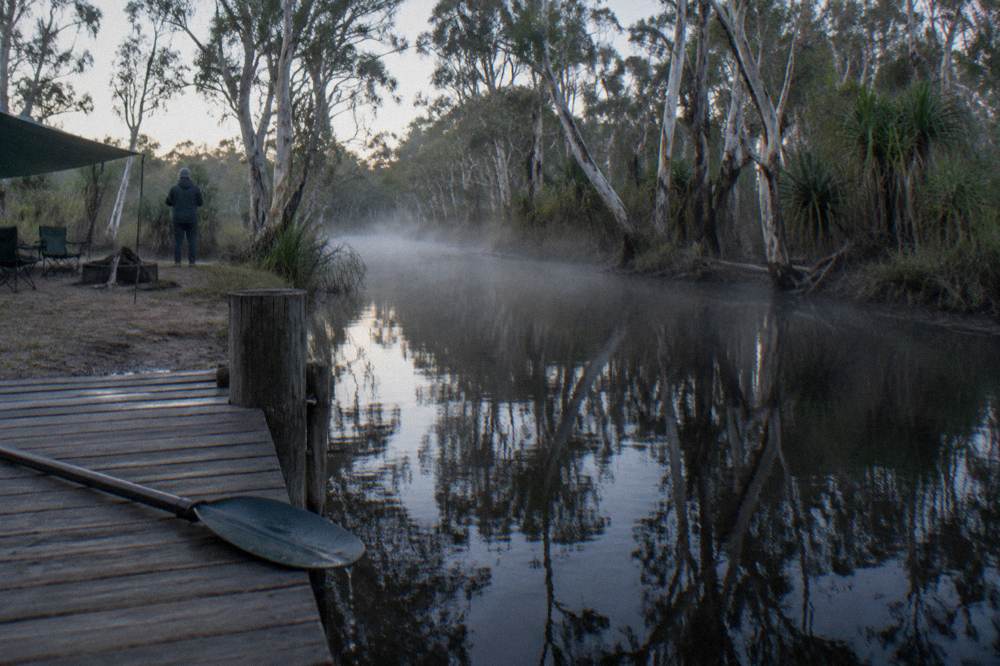
For many visitors, yes. A full-day listing covers the same water as a one-night camp for less planning and no gear, and the guided kayak and cruise-and-canoe options reach the mirrored section that draws most campers upstream. A permit trip still wins on silence, dawn light on the tannin water and the frog chorus after dark, none of which a day schedule can deliver.
The honest comparison comes down to what you want from the river. Day tours give you the Narrows, the reflections, a meal and a guide's knowledge, then return you to Noosa by mid-afternoon. A permitted campsite gives you the river at the hours nobody else sees it: dusk, night and first light, when the waterbirds that Fig Tree Point is known for, cormorants, egrets, spoonbills and darters, work the shallows. Both are legitimate ways to see the place, and many people do the tour first and camp second.
If the guided route appeals, the 7.5-hour guided kayak day from Adventure Tribe, from $137 per person with a 4.8 rating from a thin sample of 9 reviews, includes morning tea, lunch and local organic food, meeting at the Elanda Point Canoe Launch with free cancellation. Its self-guided stablemate runs the same window from $80 per person. The cruise-and-canoe alternative, about 6 hours from $119.67 per person with a 4.6 rating from 379 reviews, adds round-trip transfers from central Noosa that can be arranged at booking, with lunch and drinks to purchase on site.
Whichever way you go, the permit question has a clean answer: if you sleep on the upper river, book first through the camping service, pay the per-person or family rate, respect the fire and vessel rules, and check the park alerts for the jetty and pest control windows before you set off.
Common Questions About Camping Permits
Do You Need A Camping Permit In The Noosa Everglades?
Yes. A QPWS camping permit is required before camping at every site on the upper Noosa River, including campsites 1 to 15, Fig Tree Point and Harrys. Fees are $7.75 per person per night or $31.00 per family per night, booked through the Queensland camping service.
How much does a camping permit cost?
The rate is $7.75 per person per night or $31.00 per family per night, where a family is one or two adults plus children under 18 up to eight people. Children under five camp free and approved educational groups pay $4.25 per person.
Where do you book the permit?
Online through the Queensland camping booking service. Choose your campsite, dates and group size, pay by card and carry the confirmation with you, since there is no booking office at any upper river site.
How many nights can you stay?
Seven nights is the maximum at Upper Noosa River campsites 1 to 15. Fig Tree Point and Harrys camping areas allow up to 14 nights.
Can you have a campfire at the campsites?
No. Open fires are prohibited at all Upper Noosa River campsites. Only approved gas or manufactured-fuel appliances are allowed, and braziers are not permitted.
Is there any free camping in the Noosa area?
No. Noosa Council provides no free camping spaces and enforces against freedom camping, and every QPWS site on the upper river is a paid, permitted campground. There is no free option at Fig Tree Point or anywhere nearby.