Fig Tree Point Camping Area: Permits, Access And What To Expect
Fig Tree Point is the first landing on the upper Noosa River past Kinaba, a small camping and day-use area reachable only by canoe, kayak or boat. Here is what the park service actually says about permits, facilities, group limits and the paddle in.
Short answer
Fig Tree Point camping area sits 2 km upstream of Kinaba on the upper Noosa River, about 20 minutes by canoe. Camping permits are required, at $7.75 per person per night or $31.00 per family per night, with a 14-night maximum and up to 3 groups of 8 people, 24 people in total. Access is by river only, and open fires are prohibited.
What Is Fig Tree Point Camping Area?
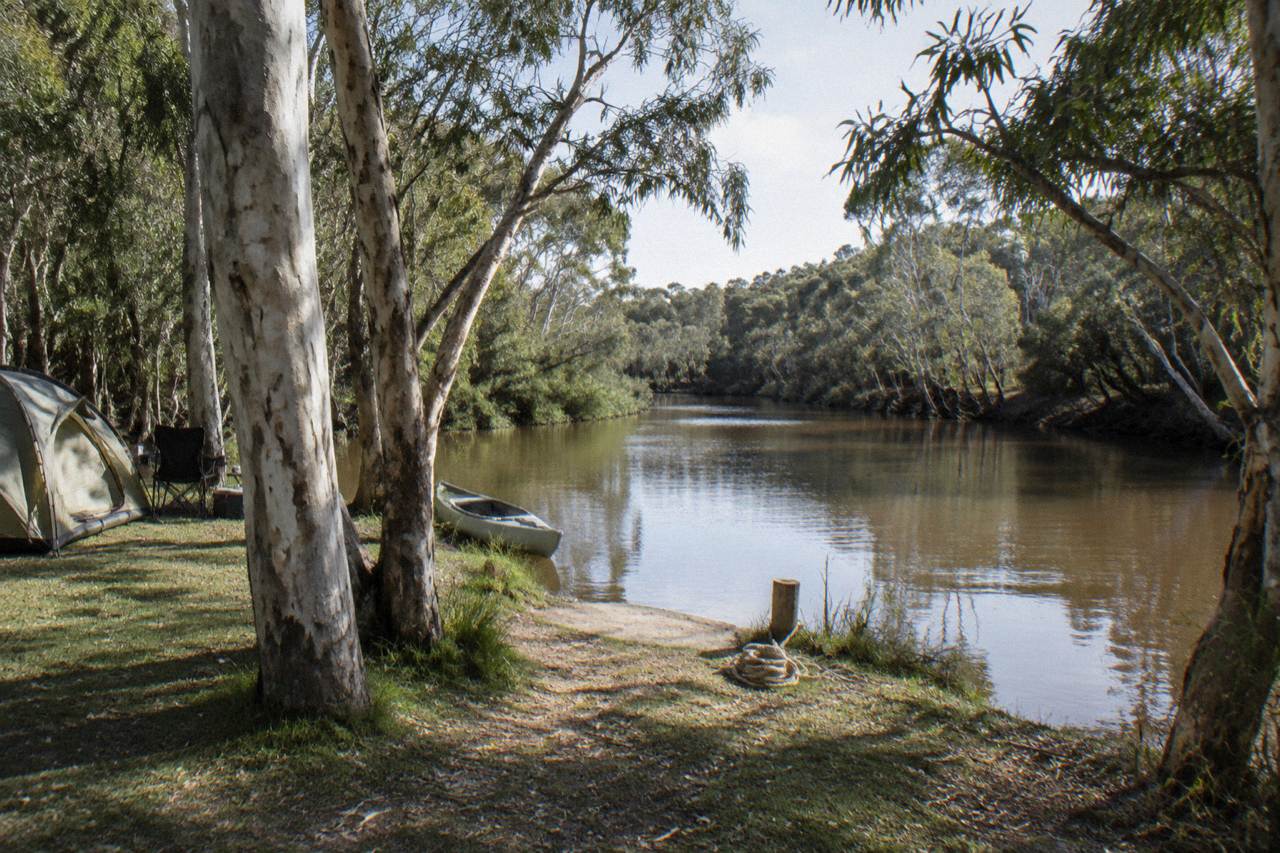
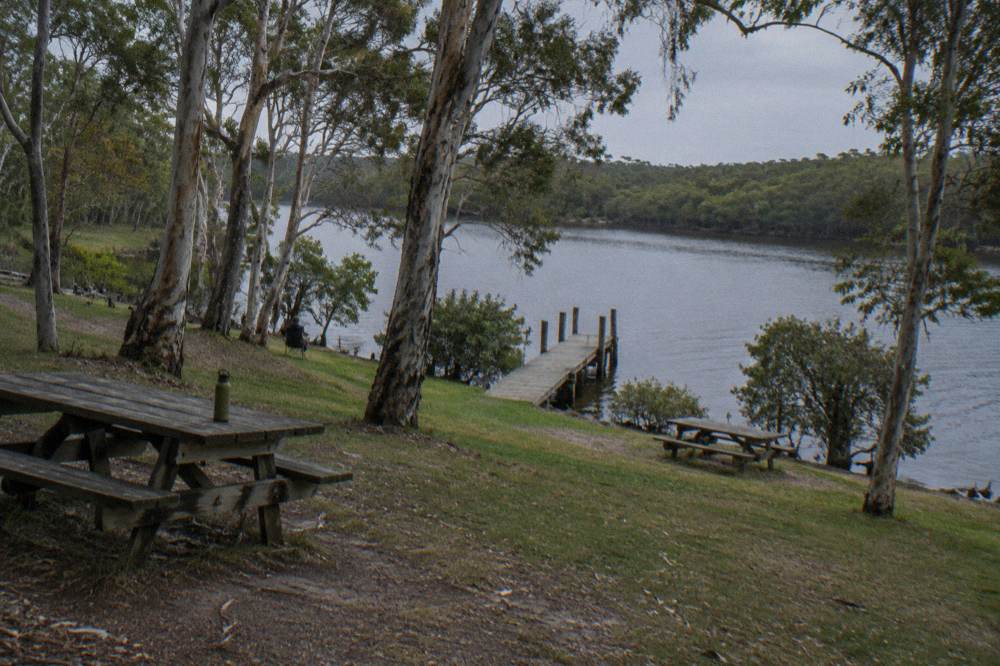
Fig Tree Point is a small camping and day-use area on the upper Noosa River inside the Cooloola Recreation Area, Great Sandy National Park, about 2 km upstream of the Kinaba Information Centre and roughly 20 minutes by canoe from there. Queensland Parks and Wildlife Service allows up to 3 groups of 8 people, to a maximum of 24 in total, and the site has toilets, picnic tables, a jetty and a canoe landing.
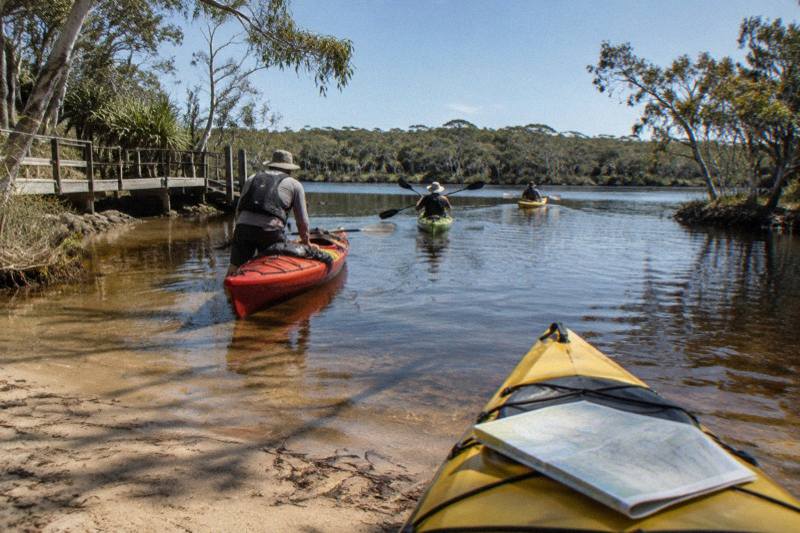
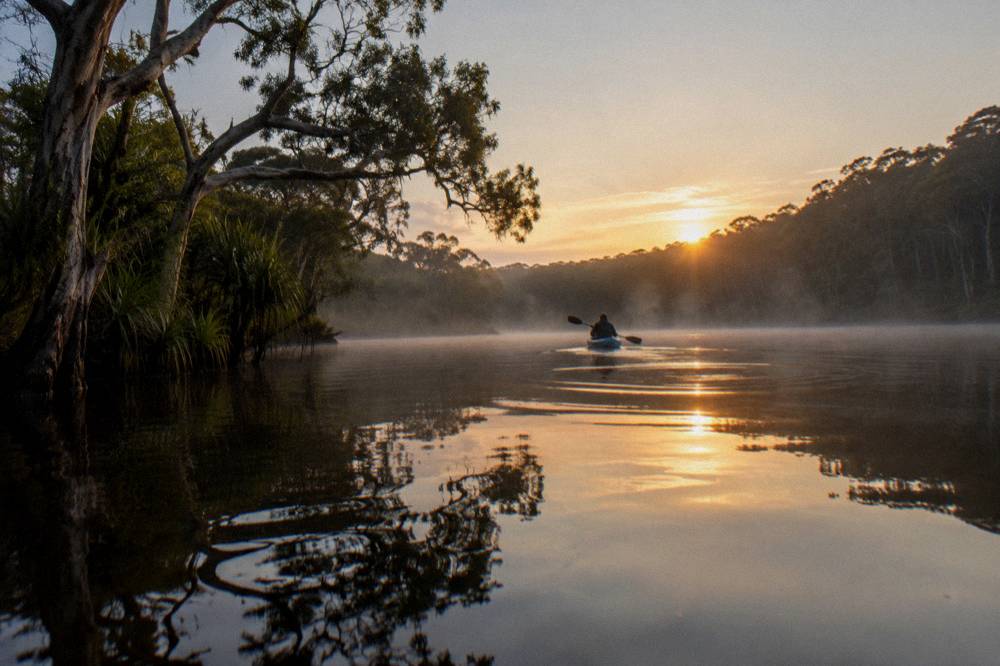
It is the natural first stop on the classic upper river journey. Paddlers leaving Elanda Point cross Lake Cootharaba to Kinaba, then push into the narrow, tannin-stained section of the river where the water turns dark tea-brown and the reflections begin. Operators and listings call this stretch the River of Mirrors; the park service itself simply names the waterway the Upper Noosa River and refers to a 2.5 km stretch called The Narrows. Fig Tree Point sits at the downstream end of that world, close enough to be an easy half-day objective and far enough in that the riverbank feels remote.
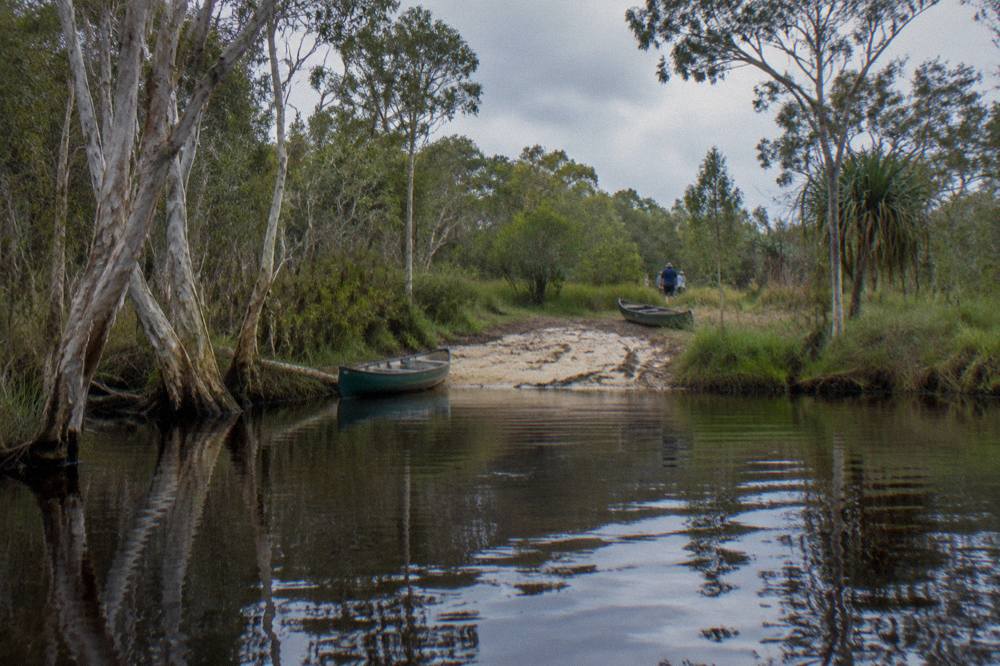
The site matters for two kinds of visitor. Day trippers use the picnic tables and the landing as a lunch stop on a canoe loop out of Elanda Point, and overnight campers use it as the easiest permitted camp on the upper river, easier to reach than the numbered campsites further upstream and less committed than Harrys. If you are planning a longer trip, the upper Noosa River campsites 1 to 15 run on from here toward Harrys Hut and the remote upper reaches.
One planning note shapes everything else: there is no vehicle access. The park service describes Fig Tree Point as river, canoe or walk-in access only, which means every tent, every litre of drinking water and every cooking stove arrives on a paddle craft or on foot. That single fact is what keeps the place quiet, and it is also what trips up visitors who arrive expecting a drive-in campground.
How Do You Get To Fig Tree Point?
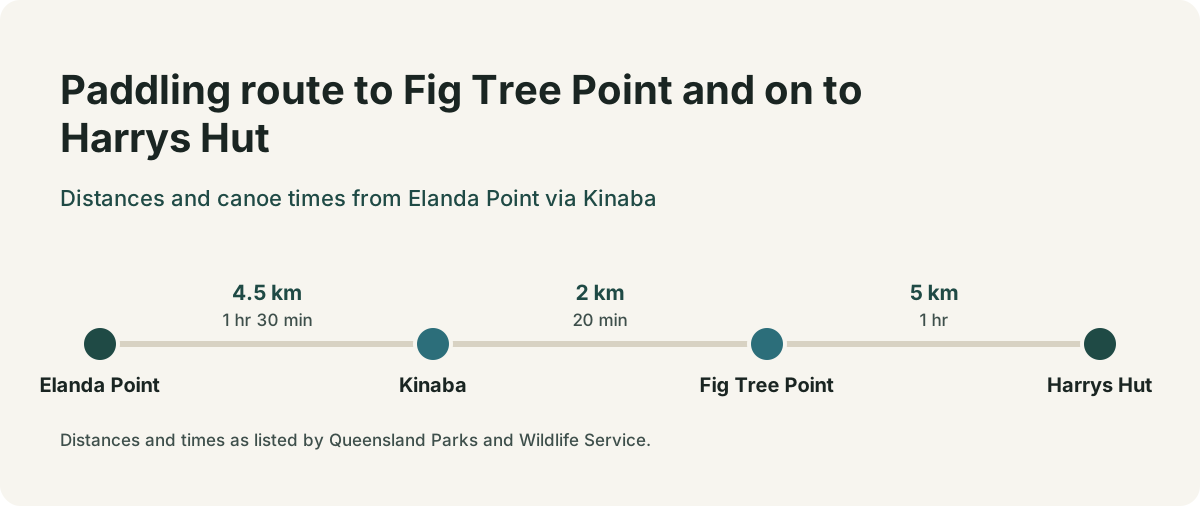
From Elanda Point it is 4.5 km to Kinaba, about 1.5 hours by canoe, then a further 2 km and about 20 minutes from Kinaba to Fig Tree Point. From the Boreen Point boat ramp it is about 7 km to Kinaba, around 15 minutes by boat at the 40-knot lake limit. Both launch points are reachable by conventional 2WD vehicles, Elanda Point via Lake Flat Road and Boreen Point via McKinnon Drive and Louis Bazzo Drive.
The paddle across Lake Cootharaba is the part that deserves respect. The lake is shallow, open and can chop up fast when the afternoon breeze arrives, and the park service advises crossing early in the morning when conditions are likely to be calm and travel is easiest (see Lake Cootharaba). Most guided and self-guided kayak days on this water start at 8:30am for exactly that reason: you want to be past Kinaba and into the sheltered river before the wind builds over the lake.
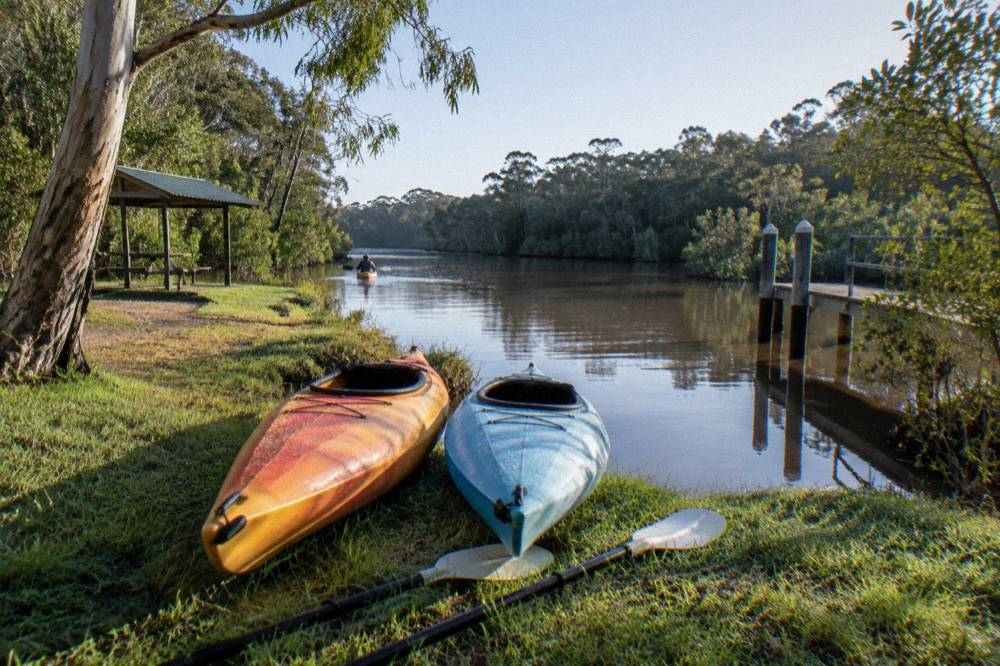
The distances below come straight from the park service waterway page for the Upper Noosa River, which lists canoe and boat times leg by leg. They are planning figures for calm conditions, not promises; a headwind on the lake or a fully loaded canoe can stretch every one of them.
| Leg | Distance | Time by canoe | Time by boat |
|---|---|---|---|
| Elanda Point to Kinaba | 4.5 km | 1 hr 30 min | n/a |
| Boreen Point to Kinaba | 7 km | n/a | 15 min |
| Kinaba to Fig Tree Point | 2 km | 20 min | 15 min |
| Fig Tree Point to Harrys Hut | 5 km | 1 hr | 30 min |
If you would rather not haul your own gear across the lake, the commercial side of this waterway is well developed. Tour boats operate daily from Noosa and Tewantin, and canoes, kayaks and small boats can be hired from private operators at Boreen Point and Elanda Point, per the park service's own waterway page. A self-guided option such as the 6-hour self-guided kayak tour from Elanda Point puts you on exactly this route with equipment supplied, from $85.68 per person, with groups of up to 20 and no pickup, so you drive to the launch yourself.
For walkers, the Kinaba Information Centre is a 6.1 km one-way walk, about 2 hours, from the Elanda Point car park, and from there the Fig Tree Point track continues along the river. Most people come by water. The Kinaba Information Centre itself is worth ten minutes either way: it has flush toilets, a lookout over the water, and stingrays are often seen around the building.
What Facilities And Rules Apply At Fig Tree Point?
Fig Tree Point has toilets, picnic tables, a jetty and a canoe landing, with untreated water on site that should be treated before use. Open fires are prohibited, so bring a fuel or gas stove. The maximum stay is 14 nights, and the no-landing zone between Fig Tree Point and Harrys Hut means you cannot stop along that 5 km stretch of riverbank. Motorised vessels are permitted only as far as Campsite 3 upstream.
The facility list is short, and that is the honest picture. There is no drinking water supply you can rely on: the park service notes untreated water at the site and advises treating all water before use, and the water supply at Harrys day-use area further up is explicitly not guaranteed. Carry what you need, or carry a filter. Toilets and picnic tables are the extent of the built infrastructure, and the jetty and canoe landing are the working end of the site for anyone arriving by boat.
| Facility or rule at Fig Tree Point | What applies |
|---|---|
| Group size | Up to 3 groups of 8 people, maximum 24 in total |
| Maximum stay | 14 nights |
| Toilets | Yes, on site |
| Picnic tables | Yes |
| Jetty and canoe landing | Yes |
| Drinking water | Untreated, treat before use |
| Open fires | Prohibited, gas or fuel stoves only |
| Vehicle access | None, river or walk-in only |
Two river rules deserve emphasis because they shape where you can actually go once you leave the landing. First, a six-knot, no-wash speed limit applies upstream from the Kinaba Information Centre, protecting the riverbanks from erosion, with penalties for vessels that generate wash. Second, motorised vessels are permitted only to Campsite 3; beyond that, electric motors and non-motorised craft only. The no-landing zone between Fig Tree Point and Harrys Hut means the 5 km of riverbank between the two is off-limits for stopping, so plan your breaks at the designated areas rather than pulling up on any appealing-looking bank.
Rubbish is a carry-out site, and the park service recommends portable toilets when camping away from facilities. The broader camping rules for the Cooloola Recreation Area are laid out on the park-specific conditions page, which covers fires, stay limits and vessel rules in one place: Cooloola park-specific camping conditions.
Do You Need A Camping Permit At Fig Tree Point?
Yes. Camping permits are required before camping at all sites in the Cooloola Recreation Area and fees apply. From 1 July 2026 the QPWS camping fees are $7.75 per person per night or $31.00 per family per night, where a family is one or two adults plus children under 18, up to eight people, and children under five camp free. There is no free camping at Fig Tree Point or anywhere in the Noosa area.
Bookings go through the Queensland Government camping booking service at qld.gov.au/camping, and the current fee schedule is published on the park service's camping bookings page. The student rate of $4.25 per person per night applies to approved educational groups, which is worth knowing if you are organising a school or club trip up the river. Noosa Council actively enforces against illegal camping, so the permit is not a formality.
| Permit item | Fig Tree Point |
|---|---|
| Permit required | Yes, before arrival |
| Per person per night | $7.75 |
| Family per night | $31.00, up to 8 people |
| Children under 5 | Free |
| Student rate | $4.25 per person per night |
| Maximum stay | 14 nights |
| Vehicle access permit | Not required for river access |
The 14-night maximum at Fig Tree Point is longer than the 7 nights allowed at the numbered Upper Noosa River campsites 1 to 15, which makes Fig Tree Point and Harrys the two sites where a genuinely long stay is possible. In practice, most visits are one or two nights, combined with a day or two of paddling. For a fuller treatment of the whole river corridor, including the numbered sites and Harrys, see the Noosa Everglades camping guide.
A permit is not the same as a tour, and plenty of visitors decide the water is best seen with a guide or a boat while still enjoying the campground independently. The 4.5-hour Everglades Explorer cruise, from $117 per person with a 4.6 rating from 279 reviews, runs the river with morning refreshments included and lunch available to buy at the on-site bistro, and it can pair well with a night at Fig Tree Point either side.
Can You Reach Fig Tree Point On A Guided Or Hired Trip?
Yes. Canoes, kayaks and small boats can be hired from private operators at Boreen Point and Elanda Point, and tour boats run daily from Noosa and Tewantin. Guided full-day kayak tours start around 8:30am and return by mid-afternoon, which covers the Elanda Point to Kinaba and Fig Tree Point section comfortably. Multi-day guided and self-guided options with camping equipment supplied also depart from the Elanda Point launch area.
The guided full-day kayak tour from Kanu Kapers runs about 6 hours from an 8:30am start, from $148 per person, rated 4.9 from 158 reviews, with lunch, fresh fruit, baked bread and drinks included and groups capped at 16. It meets at the Elanda Point Canoe Launch on Lake Flat Road, about 25 minutes north of Noosa per the listing, with no pickup, so you drive yourself to the launch. The operator also runs a half-day Young Family Guided Tour from 8:30am to 1:30pm designed for families with children up to age 10, which is a useful fallback if a full day on the water sounds like too much for small paddlers.
For a slower, more sustainable-framed day, Adventure Tribe Aus runs a 7.5-hour guided kayak tour from $137 per person, rated 4.8 from 9 reviews, a thin sample, with morning tea, lunch and coffee from local organic food included, meeting at Elanda Point with free cancellation. Its 7.5-hour self-guided sibling, from $80 per person, rated 4.8 from 16 reviews, suits confident paddlers who want the same water without a guide. Neither includes pickup, so the launch point and start time on the listing are your logistics.
The choice between guided and self-guided usually comes down to confidence on open water and interest in the interpretation. A guide adds the stories: the timber-getting history, the acid frogs, the reason the water is the colour it is. Self-guided adds freedom, and on a river with a six-knot limit and almost no motorised traffic above Campsite 3, freedom is easy to use well. Either way, if camping at Fig Tree Point is part of the plan, book the campsite permit and the kayak dates together, because the launch point is the same stretch of Lake Flat Road either way.
What Wildlife Will You See Around Fig Tree Point?
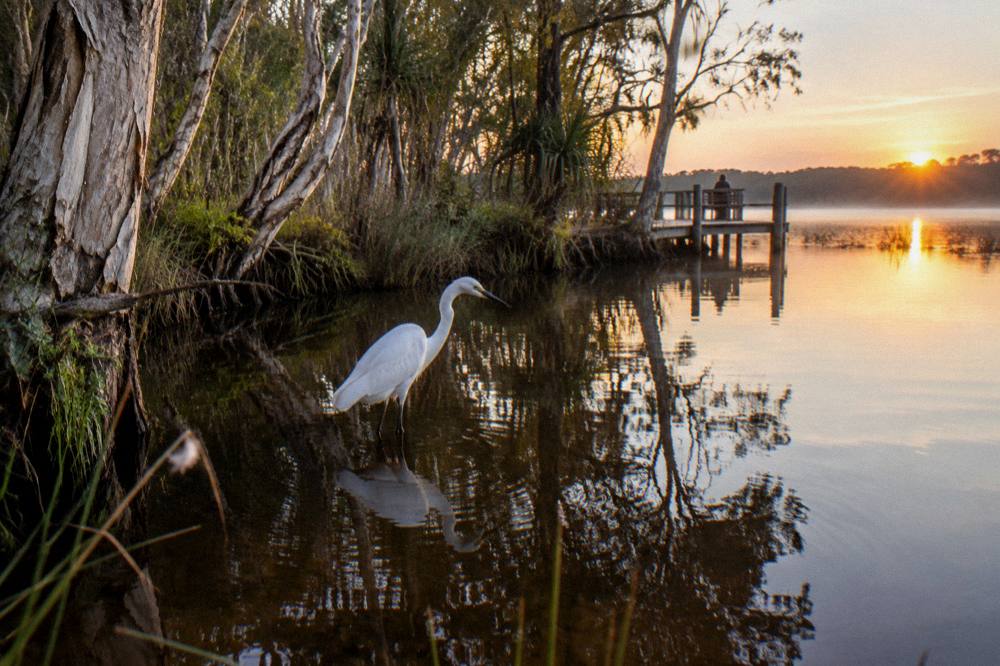
The park service names cormorants, wood ducks, egrets, spoonbills and darters as the waterbirds to look for at Fig Tree Point in the early morning or late afternoon. Across the wider Cooloola Recreation Area, more than 350 bird, 75 mammal, 21 frog and 80 reptile species are recorded, and the upper Noosa River and lake systems are noted for choruses of frog calls. Rare or threatened species here include the Cooloola acid frog and the ground parrot.
Early morning is the honest answer to when. The waterbird list is specifically tied to the first and last hours of daylight, and the mirror-calm water that makes the reflections famous also makes the birdwatching good: still water carries birds into view from a long way off. Sit still on the picnic tables for twenty minutes at dawn and the river usually delivers.
Two cautions from the park service apply to wildlife around the camp. Do not feed wildlife, which is the standing rule across the recreation area, and treat all water before use, which matters as much for what lives in it as for taste. On the question of larger animals: no official Queensland Government, QPWS or Noosa Council statement was found confirming crocodiles in the Noosa River, the upper river, Lake Cootharaba or the Cooloola Recreation Area on the pages checked, which were the Cooloola visiting safely and FAQ pages and the upper Noosa River waterway page, plus council rivers and creeks pages. The honest position is that no official statement was found, not a guarantee of anything.
Koalas are a realistic possibility in the broader area rather than at the campground itself. Noosa Council identifies land near Lake Flat Road, close to Boreen and Elanda Point, as known koala habitat within wildlife corridors linking toward Great Sandy National Park, so the drive in is worth scanning, particularly early and late in the day.
When Is The Best Time To Camp At Fig Tree Point?
Spring and early summer suit Fig Tree Point best: September averages 57.8 mm of rain over 5.8 rain days and October 112.1 mm over 8.0 at the nearest Bureau of Meteorology station at Tewantin, with mean maximums of 24.4 and 25.8 degrees. The Cooloola conditions report was updated 30 September 2026 and lists all Noosa River campsites, Harrys Hut and Fig Tree Point as open.
The Campsite 3 jetty closure runs to 24 October 2026 and a pest control program runs from 31 October to 28 November 2026, both of which matter more to trips continuing upstream or into the firebreak tracks than to a Fig Tree Point stay itself. Those climate figures come from the Tewantin station, the nearest with a full 30-year record, sitting on the Noosa River itself. Averages are the right word rather than typical: median rainfall runs lower than the mean in every month because a few wet years pull the average up. February and March are the wettest months on the table at 233.7 and 236.4 mm, and July the coolest with a mean maximum of 21.4 degrees, which is why winter camping here is more comfortable than most people expect.
The Noosa Triathlon lands on Sunday 1 November 2026 with festival events from late October, which means crowd and accommodation pressure around Noosa Main Beach in that window, though the upper river itself stays quiet. Queensland spring school holidays run to Monday 5 October 2026, so the first week of October is the tail of the family peak on the water. Campsite bookings at Fig Tree Point are capped at 24 people in total, which naturally limits how busy it can get, but the launch car park at Elanda Point has no such cap.
Always download the current conditions report before a river trip; the park service updates it regularly and it carries the track, tide and safety detail that a static article cannot. The live version sits at the Cooloola conditions report page.
Planning A Fig Tree Point Trip: The Short Version
Plan a morning launch, book the permit before you leave home, budget $7.75 per person per night for the campsite, carry treated or treatable water, and bring a gas stove because fires are prohibited. The standard first-day paddle is Elanda Point across the lake to Kinaba, 4.5 km and 1.5 hours, then 2 km and 20 minutes to Fig Tree Point. Walk-in access exists but almost everyone arrives by paddle craft.
The rest is sequencing. Cross Lake Cootharaba early while it is calm, keep to the six-knot no-wash rule above Kinaba, respect the no-landing zone between Fig Tree Point and Harrys Hut, and remember that motorised vessels stop at Campsite 3 if any part of your plan involves a boat. The site itself caps at 24 people across 3 groups of 8, and if the trip runs longer than a night, the 14-night maximum here is generous compared with the 7 nights allowed upstream at campsites 1 to 15.
Equipment is the last variable. If you do not own a kayak, the hire and tour options from Elanda Point and Boreen Point cover everything from a 2.5-hour afternoon cruise on the river, from $69 per person with a glass of sparkling wine, beer or juice included, to full-day guided paddles with lunch. The side-by-side comparison on the homepage of Noosa Everglades Tours lines up the current listings by price, duration and cancellation terms.
Common Questions About Fig Tree Point Camping
Do you need a camping permit at Fig Tree Point?
Yes. Camping permits are required before camping at all sites in the Cooloola Recreation Area and fees apply. From 1 July 2026 the fees are $7.75 per person per night or $31.00 per family per night, with children under five free. Book through the Queensland Government camping service before you travel.
Can you drive to Fig Tree Point camping area?
No. Fig Tree Point is river, canoe or walk-in access only. Both launch points on the way in, Elanda Point and Boreen Point, are reachable by conventional 2WD vehicles, but the campsite itself has no vehicle access.
How far is Fig Tree Point from Elanda Point?
Two legs by water: 4.5 km and roughly 1.5 hours by canoe from Elanda Point to the Kinaba Information Centre, then 2 km and about 20 minutes from Kinaba to Fig Tree Point. The lake crossing is best done early in the morning while conditions are calm.
How many people can camp at Fig Tree Point?
Up to 3 groups of 8 people, to a maximum of 24 people in total. The maximum stay is 14 nights, longer than the 7 nights permitted at the numbered Upper Noosa River campsites 1 to 15.
Can you have a campfire at Fig Tree Point?
No. Open fires are prohibited at all Upper Noosa River campsites, including Fig Tree Point. Bring a gas or fuel stove; only appliances meeting the park service's safety rules are allowed.
Is there drinking water at Fig Tree Point?
No reliable supply. The water on site is untreated and should be treated before use. Carry what you need or bring a filter, and take all rubbish out with you.