Best Time To Visit The Noosa Everglades
The Noosa Everglades run all year, but the experience changes with the seasons: rainfall, wind on Lake Cootharaba, school holidays and a handful of annual events all shape which month suits your trip. Here is what the climate record and the current tour listings actually say.
Short answer
The best time to visit the Noosa Everglades is spring (September to November), when Tewantin averages 24.4 to 26.9 degrees maximum, September is the driest month at 57.8 mm of rain, and tour listings run daily. Winter is cooler and clear; late summer (February to March) is the wettest period, with March averaging 236.4 mm.
What Is The Best Time To Visit The Noosa Everglades?
The best time to visit the Noosa Everglades is spring, September to November, when the Tewantin climate record averages 24.4 to 26.9 degrees maximum, September is the driest month at 57.8 mm of mean rain, and every cruise and kayak listing on the river runs its standard schedule. Winter works well too, with July averaging just 71.7 mm of rain. The wettest stretch is February to March. If you're weighing the Everglades against the coastal walks, our guide comparing Noosa National Park and the Noosa Everglades helps you decide which suits your trip.
That answer comes from the Bureau of Meteorology's 30-year averages for the Tewantin station, the nearest long-record station to the upper Noosa River, plus the practical realities of how tours operate on the water. There is no closed season here. Queensland Parks and Wildlife Service notes that tour boats operate daily from Noosa and Tewantin, and canoes, kayaks and small boats can be hired year-round at Boreen Point and Elanda Point. The operators behind the listings on this site, Everglades Eco Safaris, Kanu Kapers Australia, Adventure Tribe Aus and Joel's Journeys, all run through every month.
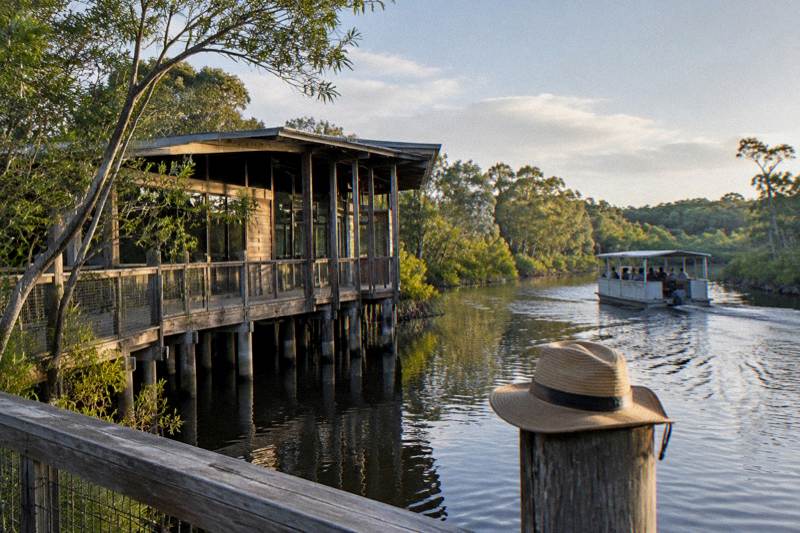
What changes across the year is comfort and reliability. The river itself, a tannin-stained stretch of the upper Noosa River inside the Cooloola Recreation Area, looks much the same in July as it does in December. The dark water reflects the paperbarks either way, and the reflections that operators market as the River of Mirrors are a feature of the water chemistry, not the calendar. Rain, wind on the open lake crossing, heat, insects and crowds are what actually move around. The open lake crossing is where wind matters most, and the Lake Cootharaba guide to wind, water and the crossing explains what that means for your timing.
This guide works through the climate numbers month by month, then the conditions that matter on the water, then the crowds and events that fill or empty the region. If you want the short version: aim for September to November, keep winter as a strong second choice, and go into February and March with flexible plans.
Noosa Everglades Weather By Month
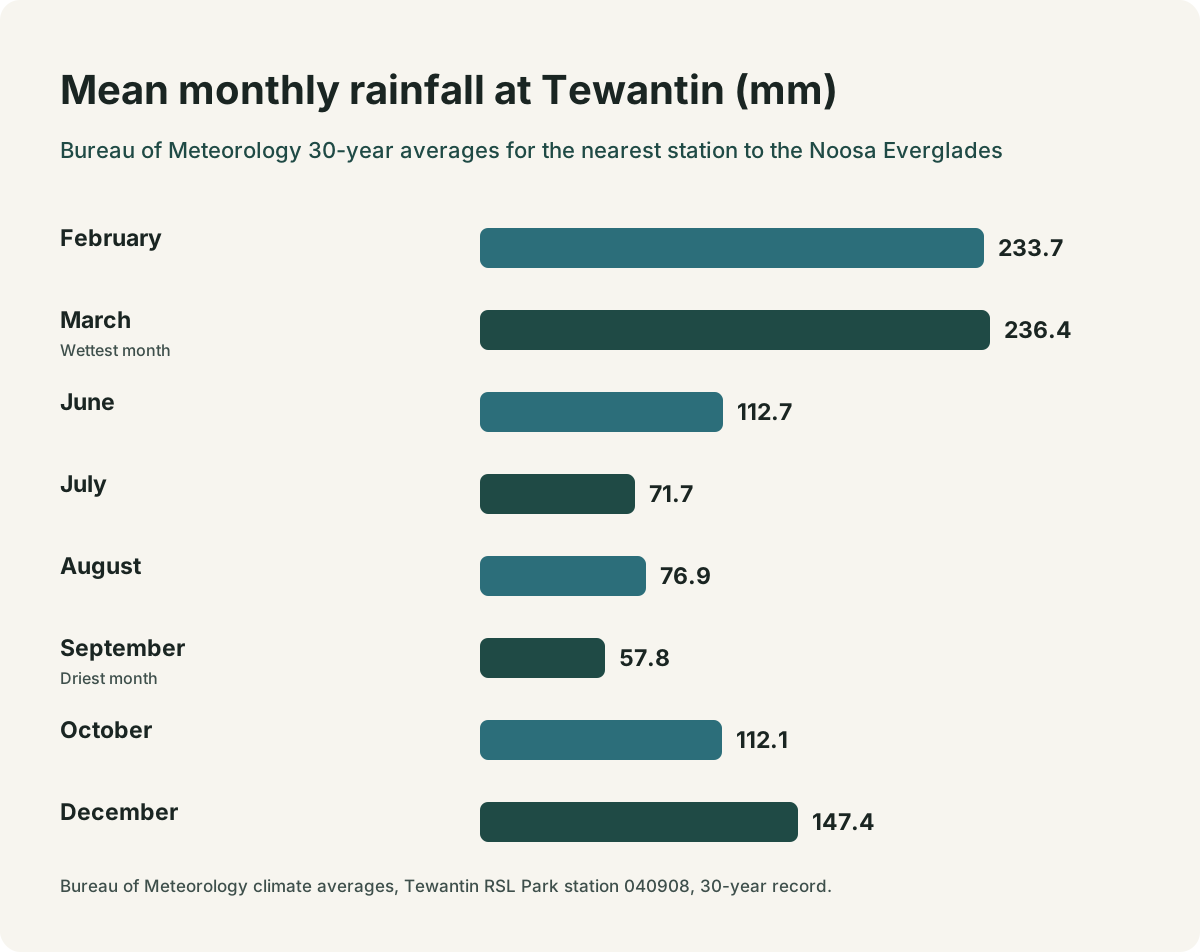
Tewantin, the nearest Bureau of Meteorology station with a 30-year record, averages 25.5 degrees maximum and 17.1 minimum across the year, with 1,607.8 mm of mean annual rain. The wettest month is March at 236.4 mm and the driest is September at 57.8 mm. Summer is warm and wet, winter is mild and dry, and spring sits in between.
These figures come from the Bureau of Meteorology's climate averages for Tewantin RSL Park, station number 040908, which has been open since 1995 and holds a 30-year record. There is no BoM normals station at Noosa Heads or Noosaville, so Tewantin, sitting on the Noosa River itself, is the official reference point for the Everglades. The full table is published at the Bureau's Tewantin climate averages page.
One caution about reading averages: the mean rainfall is pulled upward by wet years. The median, the decile 5 value, is lower than the mean in every month. August, for example, averages 76.9 mm but the median is 31.5 mm. So treat these numbers as the average year, not the typical year; a given month is more often drier than the mean suggests.
| Month | Mean max C | Mean min C | Mean rain mm | Rain days (1 mm+) |
|---|---|---|---|---|
| January | 28.7 | 22.0 | 149.8 | 10.7 |
| February | 28.6 | 22.0 | 233.7 | 12.8 |
| March | 27.7 | 21.0 | 236.4 | 14.2 |
| April | 26.0 | 18.2 | 151.6 | 11.7 |
| May | 23.7 | 14.9 | 162.1 | 10.5 |
| June | 21.7 | 12.5 | 112.7 | 8.7 |
| July | 21.4 | 11.3 | 71.7 | 7.1 |
| August | 22.5 | 11.8 | 76.9 | 5.5 |
| September | 24.4 | 14.6 | 57.8 | 5.8 |
| October | 25.8 | 17.1 | 112.1 | 8.0 |
| November | 26.9 | 18.9 | 99.0 | 7.9 |
| December | 28.2 | 20.8 | 147.4 | 9.8 |
Read plainly, the table says three things. First, the temperature never gets extreme: the warmest mean maximum is 28.7 in January and the coolest is 21.4 in July, a gentle range by Australian summer standards. Second, the rain has two distinct seasons: a dry shoulder from July through September and November, and a wet run from December through April. Third, March is the standout wet month, averaging 236.4 mm across 14.2 rain days, roughly four times September's total.
For a fuller month-by-month breakdown of what these numbers feel like on the ground, the site's Noosa weather by month guide expands on the same station record. For this page, the question is what the averages mean for a day on the river.
Which Months Give The Best River Conditions?
River conditions matter more than temperature, and the two things that matter most are wind on Lake Cootharaba and rainfall upstream. Queensland Parks and Wildlife Service advises crossing Lake Cootharaba early in the morning when conditions are likely to be calm, and that advice holds in every month. On rainfall, the July to September window averages 57.8 to 76.9 mm, versus 233.7 to 236.4 mm in February and March.
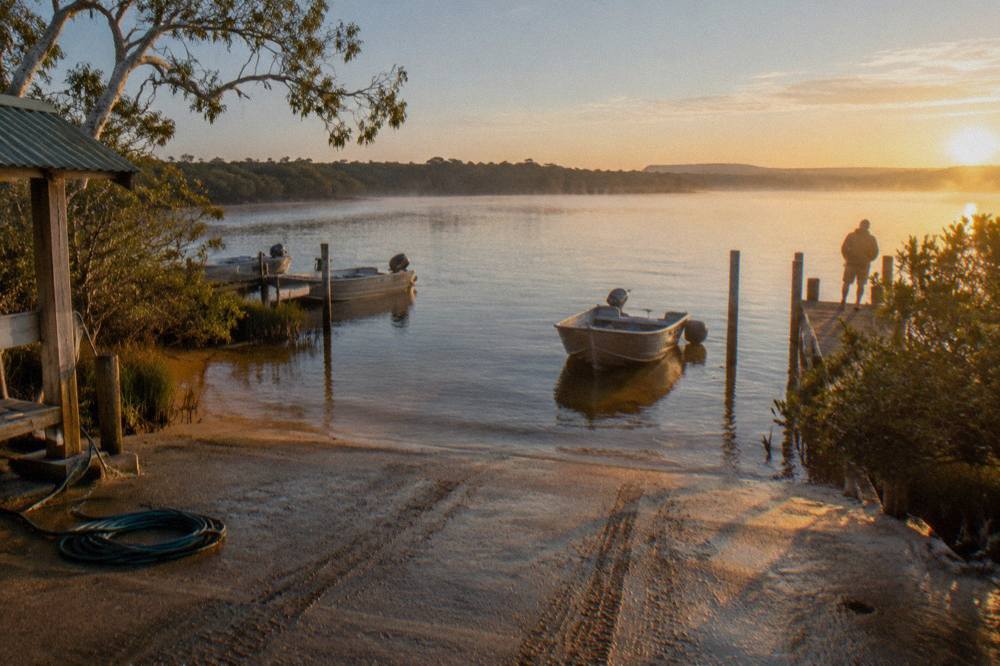
The geography explains the wind issue. Tours to the upper river launch from Boreen Point or Elanda Point, both on the shore of Lake Cootharaba, a broad shallow lake that must be crossed before the sheltered river begins. QPWS is explicit on its upper Noosa River waterway page: plan to cross the lake early in the morning when conditions are likely to be calm and travel is easiest. The motorised cruises cross at boat speed and the six-knot limit begins upstream from Kinaba, but kayakers earn that crossing with a paddle, and a fresh breeze on the lake is the single most common reason a kayak day feels harder than expected.
This is why the kayak listings start early. The Kanu Kapers guided and self-guided days both meet at the Elanda Point Canoe Launch at 8:30am, and the Adventure Tribe trips are 7.5-hour days built around a morning start. The cruise listings are less exposed: the featured 2.5-hour afternoon cruise from $69 departs Boreen Point in the afternoon, and the Serenity afternoon tea cruise, from $70.10 with 4.5 from 472 reviews, runs about 2 hours 30 minutes with a 36-person vessel. An afternoon cruise can still deliver a calm, mirror-still river even when the morning lake crossing was choppy.
Rainfall affects the river differently. The tannin staining is permanent, a product of tea-coloured water leaching from the paperbark and heath country, so the reflections do not wash out in wet months. What heavy rain does do is raise water levels, speed up the current in the narrower stretches, and occasionally put water across walking tracks in the surrounding park: a QPWS alert for water across the Cooloola Wilderness Trail ran from 8 September to 8 November 2026. Boat tours are largely unaffected; kayak days become more work in the upstream sections.
No official tide or wind forecast belongs on a page like this, because conditions change weekly. The practical pattern is simple: in the dry months the lake is usually calm early, and in the wet months you check the forecast the day before and keep a flexible booking.
Crowds, School Holidays And Events
The peak crowd windows are the Queensland spring school holidays, 19 September to 5 October 2026, and the late October to early November festival period around the Noosa Triathlon on Sunday 1 November 2026. Outside those windows, the river stays genuinely quiet, and weekdays in the dry months are the calmest combination of weather and solitude the region offers.
School holidays shape family traffic more than weather does. The spring holidays end in early October, so the first half of October is a shoulder slot: dry on average, 112.1 mm for the month, with 8.0 rain days, and past the holiday rush. The Triathlon is the other big one. The race starts at Noosa Main Beach on Sunday 1 November 2026, with festival events from late October, and the effect is felt well beyond the beach: accommodation fills, parking tightens and the roads through Tewantin carry event traffic. A river tour is still very bookable that weekend, but book earlier than you otherwise would.
| Window | Dates | Effect on an Everglades trip |
|---|---|---|
| Spring school holidays | 19 September to 5 October 2026 | Family crowds, fuller tours, book guided options early |
| Post-holiday shoulder | 6 to late October 2026 | Quietest spring slot, dry averages, best weekday value |
| Triathlon festival period | Late October to 1 November 2026 | Accommodation and parking pressure around Noosa Heads and Tewantin |
| Pest control program, Cooloola | 31 October to 28 November 2026 | Some firebreaks and inland tracks closed; river tours unaffected but check the alert |
| Summer school holidays | Mid-December to late January | Busy family period; warm, with 147.4 to 149.8 mm monthly rain averages |
One local road factor is worth knowing if you are driving from Noosa Heads or Noosaville: Doonella Bridge in Tewantin runs one-way eastbound only, from 6 July 2026 to early December 2026, with westbound traffic detoured via Eumundi-Noosa Road and Beckmans Road. Anyone routing through Tewantin toward Lake Flat Road and Boreen Point should allow extra time. The Noosa Shire Council media release has the detail.
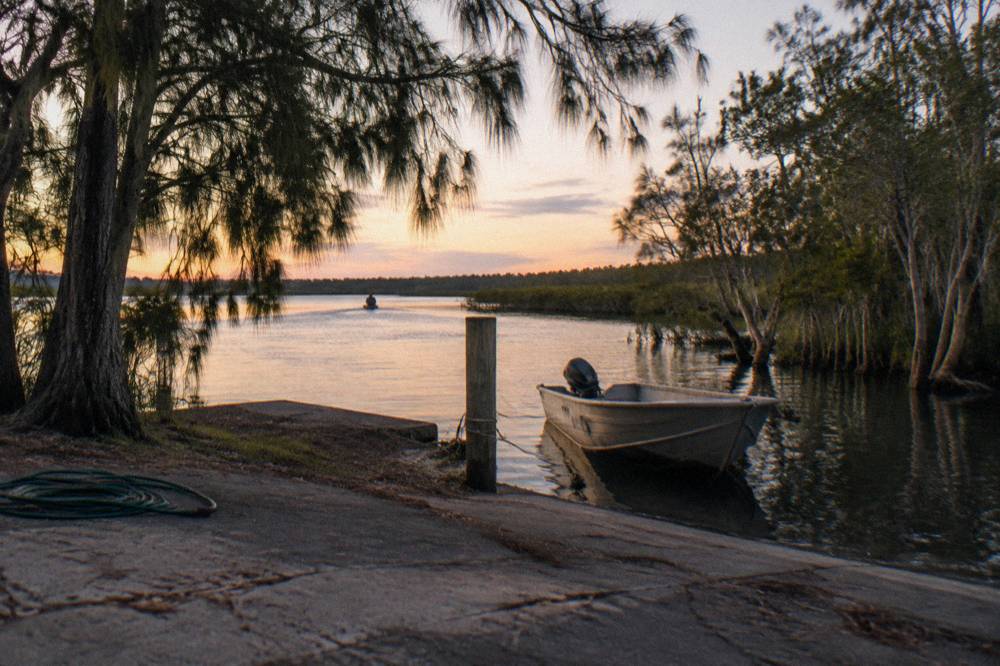
For tour capacity, the numbers matter at the margins. The Serenity cruise vessel carries 36 people per the operator. The guided kayak days cap at 16 (Kanu Kapers) or run as small groups (Adventure Tribe, whose 7.5-hour guided day from $137 has 4.8 from 9 reviews, a thin sample so far). In holiday weeks those caps fill first, especially the guided options where a guide-to-paddler ratio is part of the product.
If your dates are flexible, the arithmetic is straightforward. Weekdays from mid-October to mid-November, after the holidays and before the Triathlon build-up, give you the driest averages on the table outside winter, mild warmth, and the smallest crowds. Midweek winter days, June to August, trade a few degrees of warmth for the lowest rain-day counts of the year.
Wildlife Through The Year
The wildlife constants are impressive by any measure: the wider Cooloola Recreation Area holds more than 350 bird, 75 mammal, 21 frog and 80 reptile species, and the tannin wetlands serve as nurseries for juvenile fish. Birdlife at Fig Tree Point, cormorants, wood ducks, egrets, spoonbills and darters, is best early morning or late afternoon, which suits the tour start times in every month.
Those species counts come from Queensland Parks and Wildlife Service and cover the whole recreation area, not the river alone, so treat them as the backdrop rather than a day-list guarantee. What the river itself reliably delivers is waterbirds in the early and late hours, stingrays around the Kinaba Information Centre boardwalk per the QPWS page for that spot, and frog choruses along the upper river and lake systems, which QPWS specifically calls out as something to listen for.
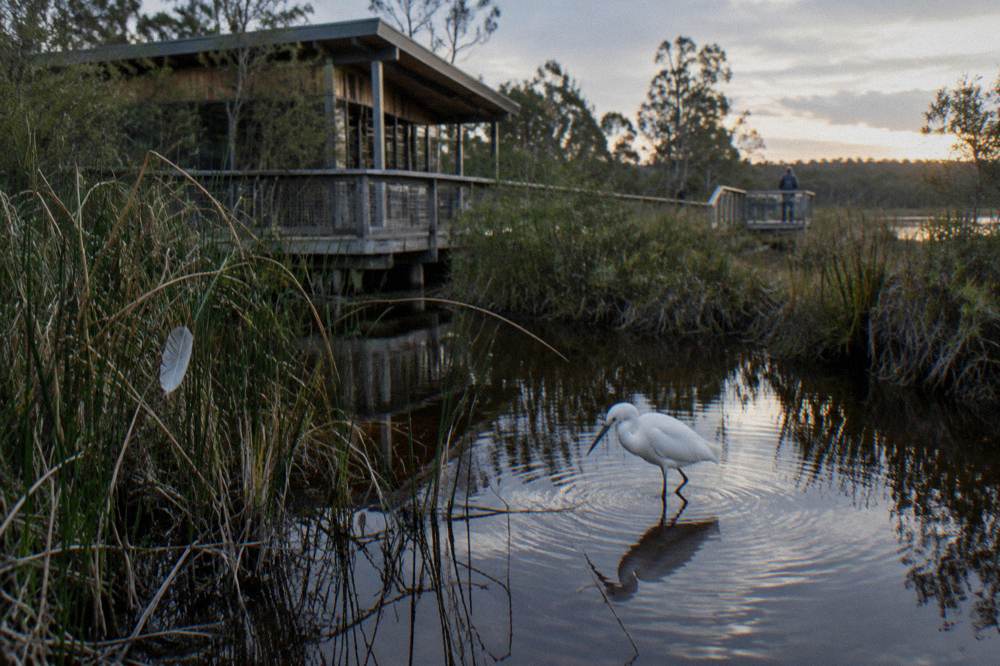
Seasonally, spring and early summer are the loud months: frog activity and bird movement both lift with the warming, and the wildflower displays in the surrounding heath country are a spring phenomenon. Winter is quieter in the soundscape but often better for long clear views across the water, with the low sun angle making the reflections pop on still mornings. The rare species that make this park notable, the Cooloola acid frogs and the ground parrot, are heard more than seen, and no honest operator promises either.
Koalas are present in the broader area: Noosa Council identifies land around Boreen Point and Lake Flat Road as koala habitat within wildlife corridors near the national park, and Noosa National Park, an hour's drive south along the coast, is officially home to koalas among its threatened species (see Fig Tree Point). A river day is not a koala tour, but the drive in passes through mapped habitat. The site's guide to where to see kangaroos in Noosa covers the land-based wildlife question if that is a priority for your trip.
Month By Month: What Each Period Means For Your Trip
The practical pattern is this: September to November is the best overall window, combining the year's lowest rainfall averages with warming temperatures and full tour schedules. December to March is warm, green and wet, with March the riskiest month at 236.4 mm. April to June is a cooling, quieting shoulder. August and September have the fewest rain days, at 5.5 and 5.8 respectively.
The table below reads the climate record against what the tour listings actually offer, so you can match a month to a style of trip rather than just a temperature.
| Period | Climate average | River character | Best suited to |
|---|---|---|---|
| September to November | 24.4 to 26.9 C max, 57.8 to 112.1 mm rain | Calm mornings likely, reflections strong | All tours: cruises, guided and self-guided kayak days |
| December to January | 28.2 to 28.7 C max, 147.4 to 149.8 mm | Warm water, afternoon storm risk | Afternoon cruises with a drink included, early kayak starts |
| February to March | 27.7 to 28.6 C max, 233.7 to 236.4 mm | Highest rain and rain-day counts, variable levels | Shorter cruises, flexible bookings |
| April to June | 21.7 to 26.0 C max, 112.7 to 162.1 mm | Cooling, quiet, occasional late-season rain | Guided kayak days with lunch included, small-group trips |
| July to August | 21.4 to 22.5 C max, 71.7 to 76.9 mm | Driest stretch, coolest mornings, glassy water | Cruises, photography-focused days |
A few notes on reading it honestly. December and January are wonderful months on the water when the day is stable, but the 10 to 11 average rain days mean you want a booking you can move, and the free-cancellation listings handle that well: the featured afternoon cruise and the Explorer cruise both offer free cancellation up to 24 hours. The kayak listings differ: the Kanu Kapers guided and self-guided days state no free cancellation, so check the booking page before committing a summer date, while the Adventure Tribe listings do offer free cancellation.
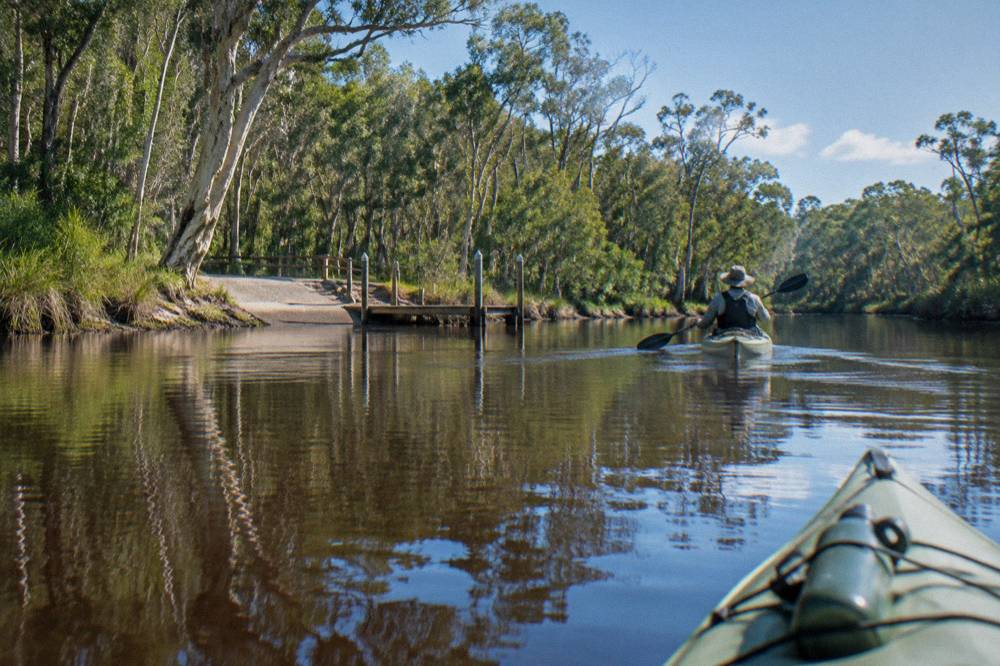
For matching a month to a tour type: the cruise family, the 2.5-hour afternoon cruise from $69, the Serenity afternoon tea cruise from $70.10, and the 4.5-hour Explorer from $117, runs in every month and is the safest wet-season choice because the vessels handle the lake crossing whatever the breeze. The kayak days reward the dry months most, because the lake crossing and the upstream paddle are the two effort points that weather amplifies. The Explorer cruise with its morning refreshments, 4.6 from 279 reviews, sits between the two, and the canoe-and-cruise day from $119.67, about 6 hours per its listing, adds a paddle component to a boat day.
When Conditions Turn Wet: Making A Wet-Season Trip Work
A wet-season trip to the Noosa Everglades still works if you plan around three habits: book cancellable listings, start early, and watch the official conditions report. The QPWS Cooloola conditions report, updated 30 September 2026, is the single document that tracks track closures, water alerts and access notes, and the free-cancellation cruise listings let you shift a day without cost up to 24 hours ahead.
The tannin river does not become unpleasant in rain; it becomes moody, darker under cloud, and the reflections depend on stillness rather than sunshine. A cruise in light rain still delivers the paperbark corridor, the included sparkling wine or beer on the afternoon listings, and often a nearly empty boat, because fair-weather visitors stay away. What rain does change is the open lake, and that is where the early-start habit earns its keep.
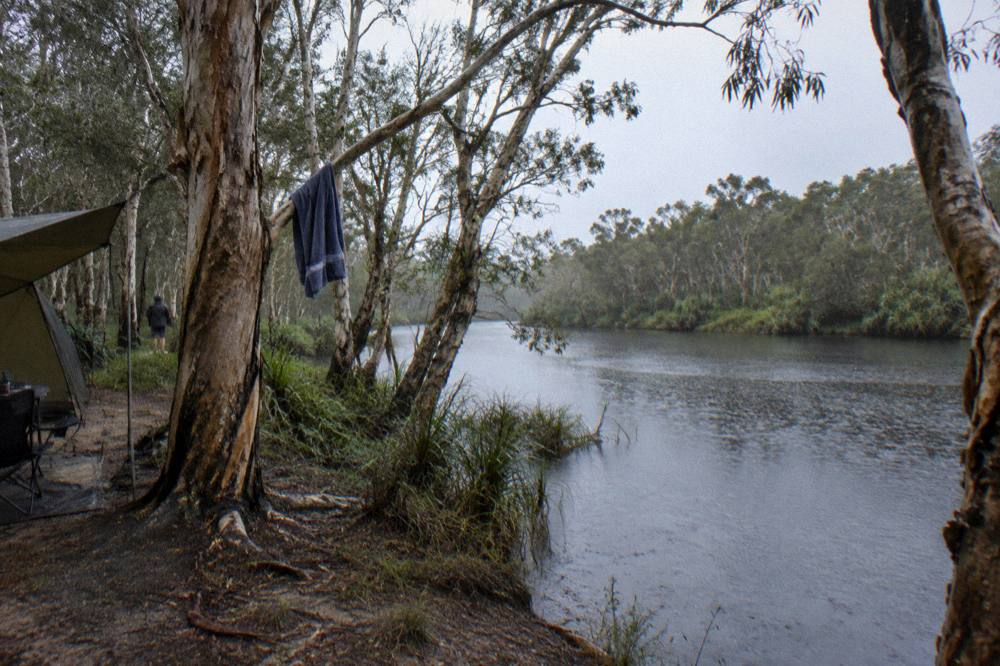
Two current items show how the alerts system works in practice. The Campsite 3 jetty closure, southern day-use jetty closed until 24 October 2026 with the northern jetty open, is a minor detail for most day tours but matters if you are planning a camping extension. The pest control program across the Cooloola Recreation Area, 31 October to 28 November 2026, closes some firebreaks and inland tracks for that window; the upper river waterway tours are not the focus, but anyone combining a river day with a wider Cooloola itinerary should read the alert before locking dates. The site's guide to Noosa Everglades camping covers the permit and campsite picture if that is your plan.
For the booking itself, the cancellation terms are the tool. The featured afternoon cruise, the Explorer cruise and the private hinterland day all offer free cancellation up to 24 hours; the Serenity cruise's operator asks 48 hours notice on its own terms. That difference is exactly the kind of detail worth matching to your season: in March, take the 24-hour flexibility; in September, it hardly matters.
Putting It Together: Choosing Your Dates
Choose September to November for the best balance of dry averages, warm days and full schedules. Choose July to August for the lowest rain-day counts and glassy winter water. Choose December to January for warmth and storm drama with a cancellable booking. Avoid hard commitments in February and March, when 12.8 to 14.2 average rain days make any fixed-date plan a gamble.
Within those windows, let the tour shape the date more than the date shape the tour. A cruise is a fair-weather-proof product in any month: the vessel does the work, the drink is included, and the 2.5-hour format fits an afternoon even on a morning that misbehaves. A guided kayak day wants your best weather slot, and the full-day guided kayak from $148, 4.9 from 158 reviews with lunch, fresh fruit, baked bread and drinks included, is the listing that most rewards a calm, clear day, because you spend the whole day out in it. The self-guided options, from $80 and $85.68 across the two operators, suit confident paddlers in the dry months and are the ones to defer if the forecast turns.
The site's broader planning pieces can take you further: the how to choose a Noosa Everglades tour guide compares the tour families in detail, and the Noosa Everglades cruise guide focuses on the cruise listings. For the full current picture of what runs on the river and at what price, the side-by-side comparison on the homepage of Noosa Everglades Tours lists every cruise, cruise-and-canoe and kayak day with its rating and from-price.
One last habit that costs nothing: before any booking, read the current QPWS conditions report for the Cooloola Recreation Area. It is the document the alerts above feed into, it is refreshed regularly, and five minutes with it tells you whether anything on your date has changed on the water. Pair that check with a cancellable listing and almost any month on the table above becomes a good month for the river.
Whichever window you land on, the trio below covers the three ways most visitors actually see the river: the short afternoon cruise, the full-day guided kayak and the mid-length Explorer cruise. Match the format to your season rather than the other way round, keep the free-cancellation options where the forecast is uncertain, and the upper Noosa River delivers in nearly every month of the year.
Common Questions About The Best Time To Visit The Noosa Everglades
What is the best month to visit the Noosa Everglades?
September is the best single month on the climate record: it is the driest month in the Tewantin averages at 57.8 mm of mean rain and 5.8 rain days, with a 24.4 degree mean maximum. October and November run close behind, with 112.1 mm and 99.0 mm respectively and warmer days.
Is the Noosa Everglades worth visiting in winter?
Yes. July and August have mean maximums of 21.4 and 22.5 degrees and low rain-day counts, 7.1 and 5.5 days, which is comfortable on the water with a layer. Winter mornings are often glassy, which suits the reflections the river is known for.
When is the wet season on the upper Noosa River?
The wettest stretch in the Tewantin record runs from December through April, peaking in February and March at 233.7 and 236.4 mm of mean rain. March also has the most rain days, 14.2 on average. Tours still run through this period; book cancellable listings and keep dates flexible.
Do Noosa Everglades tours run all year?
Yes. Queensland Parks and Wildlife Service notes that tour boats operate daily from Noosa and Tewantin, and hire craft are available year-round at Boreen Point and Elanda Point. The listings on this site, cruises, cruise-and-canoe days and kayak days, all run through every month.
What time of day is best for an Everglades tour?
Early morning, for two reasons. Queensland Parks and Wildlife Service advises crossing Lake Cootharaba early when conditions are likely to be calm, and the kayak listings all start at 8:30am for that reason. The afternoon cruises, from $69 and $70.10, are the exception, using the afternoon for a shorter river experience.
Are there times to avoid visiting the Noosa Everglades?
Avoid hard-fixed dates in late February and March, the wettest period, and expect crowds around the spring school holidays from 19 September to 5 October 2026 and the Noosa Triathlon period ending with the race on 1 November 2026. None of these close the river; they just change how early you should book.