Do You Need A 4WD For Noosa North Shore Camping?
A plain answer to the 4WD question for Noosa North Shore and Teewah Beach camping, plus the ferry, permit and no-4WD alternatives for reaching the upper Noosa River.
Do You Need A 4WD For Noosa North Shore Camping?
Yes for the beach camping zones, no for the river side. Queensland Parks and Wildlife Service states that high-clearance 4WD is required or recommended for Teewah Beach camping and driving, and for reaching Harrys by road, while the Everglades launch points at Boreen Point and Elanda Point are accessible by conventional 2WD vehicles on sealed roads. Vehicle access permits apply to beach driving but not to Harrys Hut Road itself.
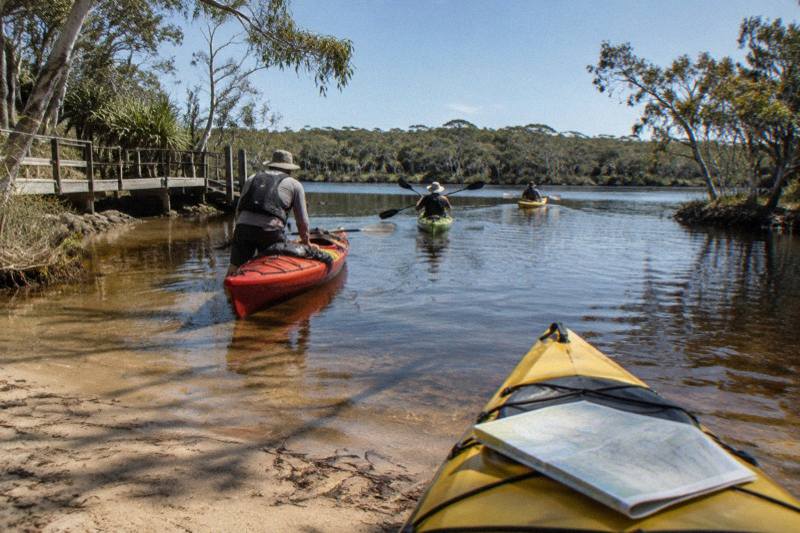
That single split decides most trips. The North Shore is a narrow sand spit across the river from Noosa Heads, and its camping is concentrated along Teewah Beach, a designated beach-driving and camping zone where soft sand, tides and washouts make a high-clearance four-wheel drive the practical and official requirement. The upper Noosa River side of the same recreation area, the part operators call the Noosa Everglades, is a different world: you drive there on sealed roads through Tewantin and Boreen Point, launch a canoe or kayak, and the 4WD question never arises.
The confusion comes from the names. "Noosa North Shore" gets used loosely for the beach strip, for the ferry crossing at Tewantin, and sometimes for the whole Cooloola corner of Great Sandy National Park. Campers read about a 4WD requirement in one paragraph and a riverside eco camp in the next, and reasonably conclude they need one vehicle that covers both. Mostly they do not. If your plan is Fig Tree Point, the Upper Noosa River campsites, or a guided paddle, a standard rental car will do the job.
It also matters which direction you are arriving from. QPWS describes the drive as 135km north from Brisbane on the Bruce Highway or Sunshine Motorway to Tewantin, or 58km south and east from Gympie, then 19km west and north via McKinnon Drive and Louis Bazzo Drive to Boreen Point. Every kilometre of that final stretch is ordinary road. The only genuinely rough driving in the entire recreation area sits on the beach and the sand tracks behind it, which is precisely where the 4WD rules bite.
This article separates the two sides properly: which campsites genuinely need the four-wheel drive, what the ferry costs and how often it runs, what permits you book before you go, and how to camp deep in the river system with nothing but a 2WD and a paddle. The side-by-side comparison on the homepage of Noosa Everglades Tours covers the tour options in more depth if the river side is where you land.
Which Noosa North Shore Campsites Actually Require A 4WD?
Teewah Beach camping zones and the beach drive itself need a high-clearance 4WD, and so does the road route to Harrys camping area. Vehicle access permits are required for beach driving and some Cooloola tracks, but not for Harrys Hut Road or Cooloola Way. Everything reached by water from Boreen Point or Elanda Point, including campsites 1 to 15 and Fig Tree Point, needs no 4WD at all because it needs no road.
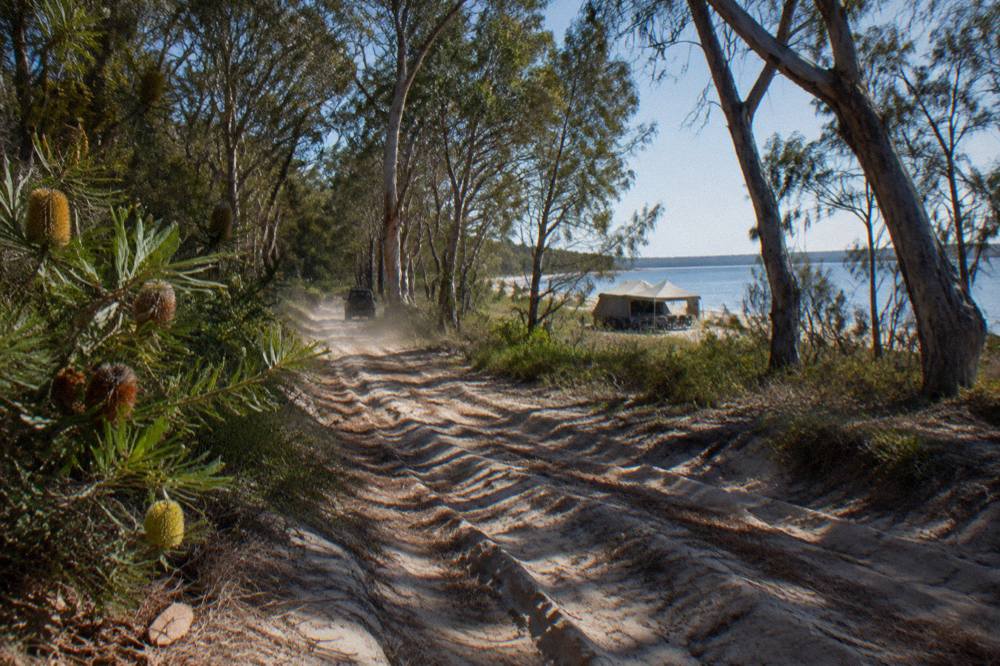
QPWS is explicit on the vehicle side. The Cooloola pages state that Boreen Point and Elanda Point, the two main launch areas for the upper river, are accessible by 2WDs, while Teewah Beach camping and driving calls for high-clearance four-wheel drive. Harrys camping area sits at the end of Harrys Hut Road, a rough sand track where the same high-clearance 4WD guidance applies, though the road itself carries no vehicle access permit requirement. The beach and some firebreak tracks do require one, bought with the camping booking through the Queensland camping service.
The river campsites flip the question entirely. Upper Noosa River campsites 1 to 15, plus Fig Tree Point and Harrys camping, are canoe, kayak or boat access only, which is why our guide to Upper Noosa River campsites 1 to 15 treats them as a paddling itinerary rather than a driving one. You cannot drive to campsite 8 regardless of what you own. Motorised vessels are permitted only as far as campsite 3, and beyond that the river belongs to paddlers and electric motors, so the deepest camps are unreachable by anything with an engine anyway. It is not possible to proceed upstream beyond campsite 15 at all, by any craft.
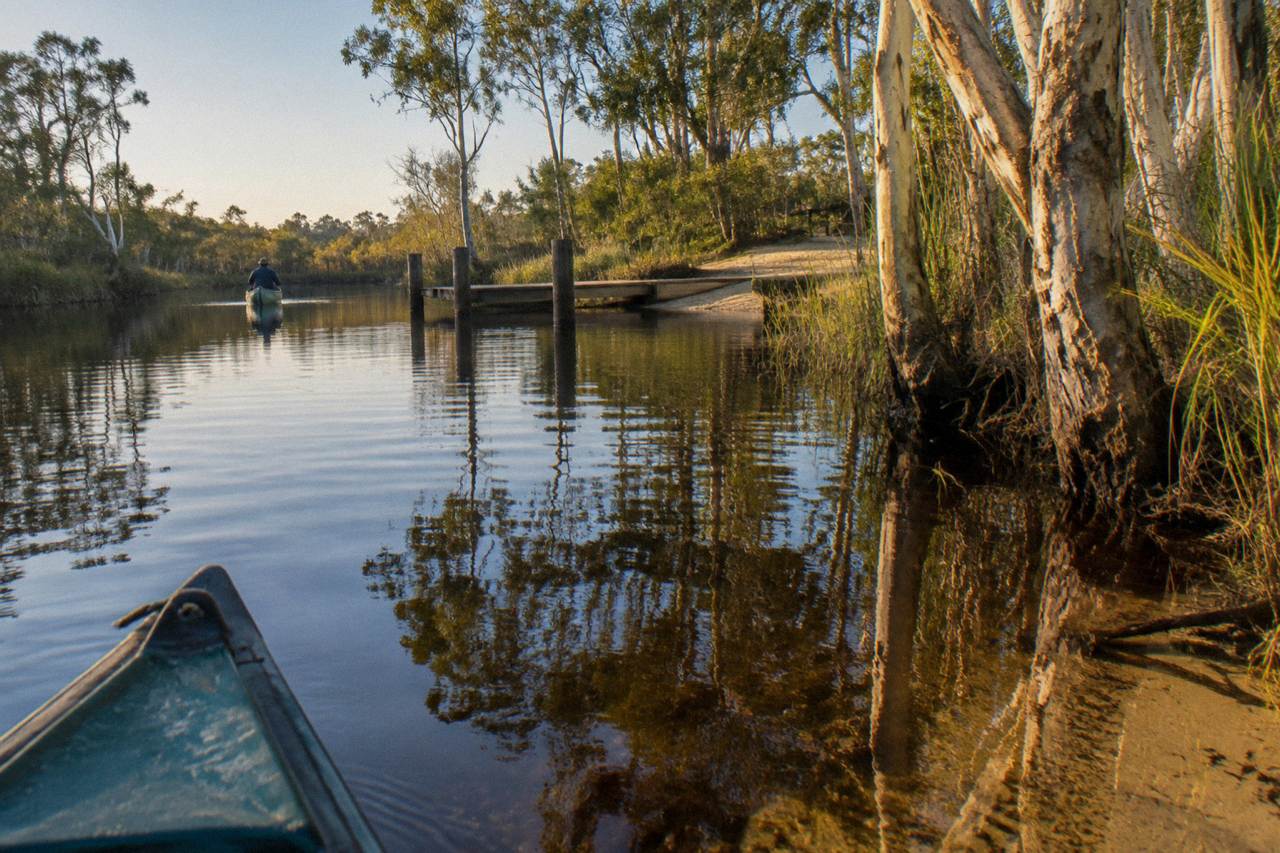
The distances explain why the river system rewards paddlers rather than drivers. The full waterway journey runs 27.7km one way with a suggested 5 hours of paddling time. From the Elanda Point launch it is 4.5km and about 1.5 hours by canoe to the Kinaba Information Centre, then 2km more to Fig Tree Point, and a further 5km, roughly an hour of paddling, from Fig Tree to the Harrys day-use area. A six-knot, no-wash speed limit applies upstream from Kinaba to protect the riverbanks from erosion, with penalties for vessels that generate wash. None of that is 4WD territory; it is boat and paddle country by design.
One more wrinkle worth knowing before you pack: a pest control program runs across the Cooloola Recreation Area from 31 October to 28 November 2026, closing the eastern and western firebreaks, including Pettigrews and Kings Bore Roads, for the full period, with Teewah Beach and Freshwater campsites closed 2 to 4 November. If your beach camping window falls in late spring, check the park alerts page before you book anything.
How Do You Reach The North Shore Without Driving The Beach?
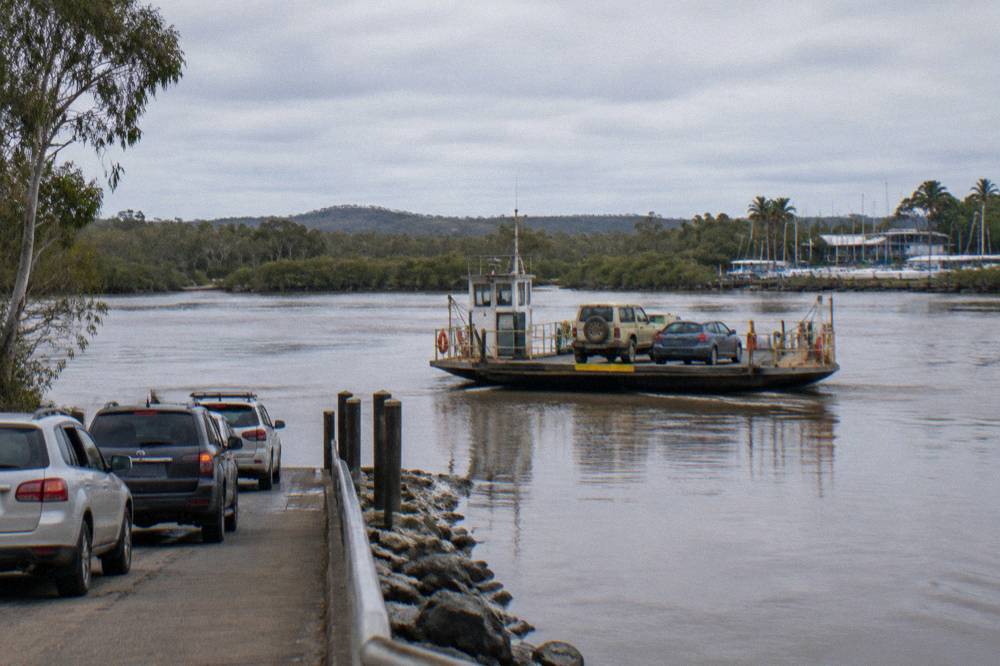
The Tewantin ferry is the answer. It runs 365 days a year from Moorindil Street in Tewantin to Maximillion Road on the North Shore, departing roughly every 10 minutes from 5:30am, until 10:20pm Sunday to Thursday and 12:20am Friday and Saturday, with after-hours callouts available for a fee. A standard vehicle under 4.5 tonnes pays $18 one way or $36 return, and pedestrians and cyclists pay $2 return. For the full timetable and current fares, check our complete Tewantin ferry schedule guide.
That ferry is the only vehicle route onto the North Shore, and it is a genuinely ordinary piece of infrastructure: a council-contracted cable ferry that has run under a new operator since July 2024, with two vessels and a 20-year contract, and no 2026 change to hours or service announced on the council page. You drive on sealed suburban streets in Tewantin, wait a few minutes, and roll off onto the North Shore. The 4WD decision starts after the crossing, when the beach camping zones begin.
For campers whose real destination is the river, the ferry is optional rather than essential. The Everglades launches sit on the western side of the system, reached from Tewantin via McKinnon Drive and Louis Bazzo Drive to Boreen Point, then Lake Flat Road to Elanda Point, all on roads a 2WD handles comfortably. QPWS suggests crossing Lake Cootharaba early in the morning when conditions are likely calm, which is also why so many kayak tours start at 8:30am. Our piece on getting to the Everglades from Noosa and Brisbane maps that drive in full.
Public transport covers part of the way for travellers without any car. TransLink routes 627 and 628 link the Noosa area to Tewantin on regular daytime timetables, from where a taxi or arranged shuttle covers the last leg to Boreen Point. One caveat from October 2026: a single 2:52pm route 627 service to Tewantin was cancelled on 1 October due to bus availability, a reminder that same-day bus connections on this corridor can wobble, so check the live timetable on the day rather than trusting a printed plan.
If you would rather not drive at all, one tour on this site removes the car from the equation completely. The private hinterland day trip from Joel's Journeys includes hotel pickup and drop-off across the Sunshine Coast, Noosa and the Hinterland, runs 7.5 hours from $527 per person, and pairs a lakeside coffee stop with a 2.5 hour Serenity cruise and a gourmet lunch in Pomona. It is a new listing with no reviews yet, so judge it on its itinerary rather than a rating that does not exist, but for a no-4WD, no-driving day it is the most complete option in the roster.
Can You Camp In The Noosa Everglades Without A 4WD?
Yes, and it is the easiest half of the question. Every upper river campsite is water access only, reached by canoe, kayak or boat from launches that QPWS confirms are 2WD accessible. Camping permits are required at all sites and cost $7.75 per person per night or $31.00 per family per night, with stays capped at 7 nights at campsites 1 to 15 and 14 nights at Fig Tree Point and Harrys. For the full fee structure, booking steps and campsite rules, see our guide on camping permits for the Noosa Everglades.
The permit system is the only paperwork. Book through the Queensland camping service before you go, because rangers check permits and fees apply at every site. The family rate covers one or two adults plus children under 18, up to eight people, and children under five camp free, which makes the river camps some of the cheaper family camping on the Sunshine Coast once you are on the water. Fires are prohibited at all Upper Noosa River campsites, so pack a fuel or gas appliance, and portable toilets are recommended for the sites away from facilities, campsites 4 to 15 in particular. Take all rubbish out with you; there is no bin service upriver. If you were hoping to skip the permit fees altogether, our guide to whether free camping exists anywhere in Noosa explains why that is not an option here.
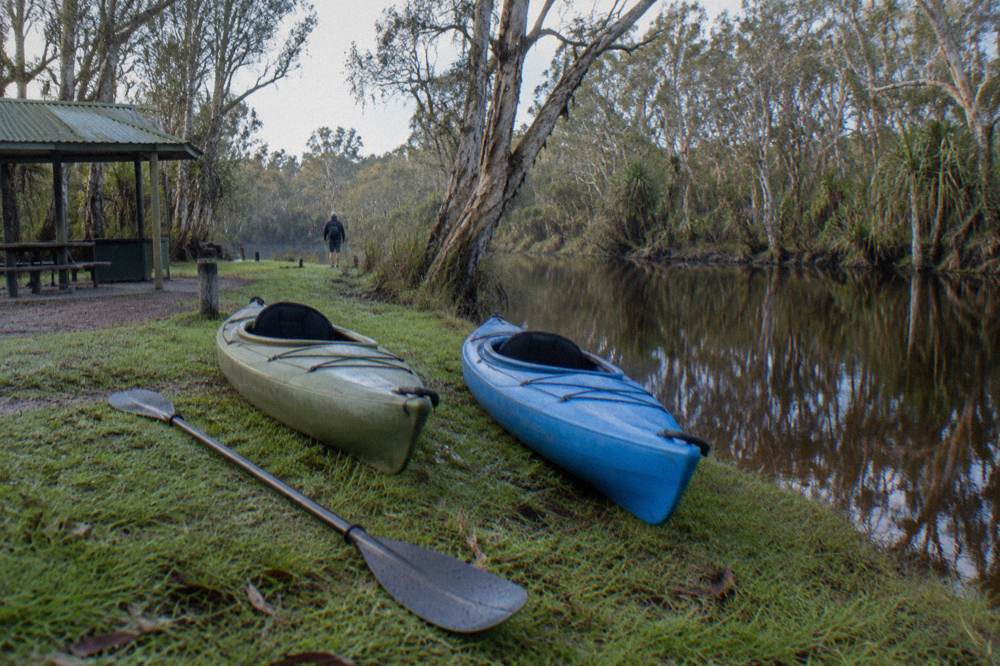
Getting a paddle is where a tour earns its keep. The self-guided kayak listing from Kanu Kapers Australia runs about 6 hours from the Elanda Point canoe launch, from $85.68 per person, rated 4.8 from 133 reviews, with groups of up to 20 and no meal listed, so bring your own lunch. Its guided sibling, from $148 per person and rated 4.9 from 158 reviews, includes lunch, fresh fruit, baked bread and drinks, and caps groups at 16. Both start at 8:30am. You can compare them on the self-guided canoe and kayak hire guide, or check availability on the live listing.
One alert to fold into a spring plan: the southern day-use jetty at Upper Noosa River campsite 3 has been closed since flood damage in April, with the closure running to 24 October 2026 and the northern camper's jetty staying open throughout. Paddlers heading upstream past campsite 3 should plan landings around the northern jetty. The same stretch of river is where the tannin-stained water earns the "River of Mirrors" name operators use, reflected in our guide to the River of Mirrors stretch.
What Should You Check Before Booking A North Shore Trip?
Three things: the park alerts and conditions report, the ferry timetable for your travel day, and your vehicle access permit if you are driving any beach or firebreak track. The Cooloola conditions report was updated 30 September 2026 and is the document that carries track, water and safety detail, and the alerts page carries the dated closures, including the pest control window from 31 October to 28 November 2026.
Treat those two sources as the pre-trip ritual. The conditions report PDF covers the whole recreation area, including the Wilderness Trail, where a water-across-track alert has been active since 8 September and runs to 8 November 2026. The alerts page is where the jetty closure, the pest control program and any new notice will appear first. Neither takes long to read and both change, which is exactly why a static blog answer, including this one, should never be your last check.
Closer to the river, Noosa Council has its own list of small frictions. The Boreen Point N4 amenities block on Boreen Parade is closed for roof replacement from 19 to 24 October 2026, with alternatives about 500 metres away at the N3 boat ramp block and the caravan park picnic area. Further out, the Noosa Triathlon on Sunday 1 November 2026 will crowd roads, parking and accommodation around Noosa Heads in the days either side, a real consideration if your ferry day and the race weekend collide. Queensland spring school holidays ran 19 September to 5 October 2026, so the first week of October is the tail of the family peak. Our Noosa weather by month guide helps with the other half of the timing question.
| Access question | What applies | Where it comes from |
|---|---|---|
| Beach camping at Teewah | High-clearance 4WD, vehicle access permit, camping permit | QPWS Cooloola pages |
| Harrys by road | High-clearance 4WD, no vehicle access permit for Harrys Hut Road | QPWS Harrys camping page |
| Boreen Point and Elanda Point launches | Sealed 2WD access, no permit | QPWS upper river waterway page |
| River campsites 1 to 15, Fig Tree Point | Water access only, camping permit, 7 or 14 night caps | QPWS park-specific conditions |
| Crossing to the North Shore | Ferry every 10 minutes, $18 one way per standard vehicle | Council and operator ferry pages |
| Open fires on the upper river | Prohibited at all sites, gas or fuel appliances only | QPWS park-specific conditions |
The pattern in that table is the whole article in one glance: permits follow the camping, the 4WD follows the sand, and the river side asks only for a booking and a paddle. Plan around which half you actually want, and the vehicle question answers itself.
Common Questions About Noosa North Shore Camping
Do You Need A 4WD For Noosa North Shore Camping?
Only for the beach side. Teewah Beach camping and driving requires a high-clearance 4WD with a vehicle access permit, and the road to Harrys camping needs one too. The Everglades launch points at Boreen Point and Elanda Point are sealed 2WD access, and every upper river campsite is reached by water, not road.
How often does the Tewantin ferry run?
Roughly every 10 minutes, 365 days a year, from 5:30am until 10:20pm Sunday to Thursday and 12:20am Friday and Saturday. A standard vehicle under 4.5 tonnes pays $18 one way or $36 return, and pedestrians and cyclists pay $2 return. After-hours callouts are available for a fee.
Do you need a vehicle access permit for Harrys Hut Road?
No. QPWS states that no vehicle access permit is required for Harrys Hut Road or Cooloola Way themselves, though permits do apply to beach driving and some tracks in the Cooloola Recreation Area. A high-clearance 4WD is still recommended for the Harrys road itself.
Can you camp at Fig Tree Point without a 4WD?
Yes, but not without a boat or canoe. Fig Tree Point is river access only, launched from Boreen Point or Elanda Point, both reachable by 2WD. A camping permit is required, at $7.75 per person per night or $31.00 per family, with a 14 night maximum stay.
Are there any closures affecting North Shore camping in late 2026?
Yes, a few. A pest control program runs 31 October to 28 November 2026 across the Cooloola Recreation Area, closing the eastern and western firebreaks for the full period and Teewah Beach and Freshwater campsites on 2 to 4 November. The campsite 3 southern day-use jetty on the upper river is closed to 24 October 2026. Check the park alerts page before booking.
Can you get to the Everglades campsites by motorboat?
Partly. Motorised vessels are permitted only as far as campsite 3 on the upper Noosa River. Beyond that, only electric motors and non-motorised craft are allowed, so the upstream camps, 4 through 15, are paddle-only territory.