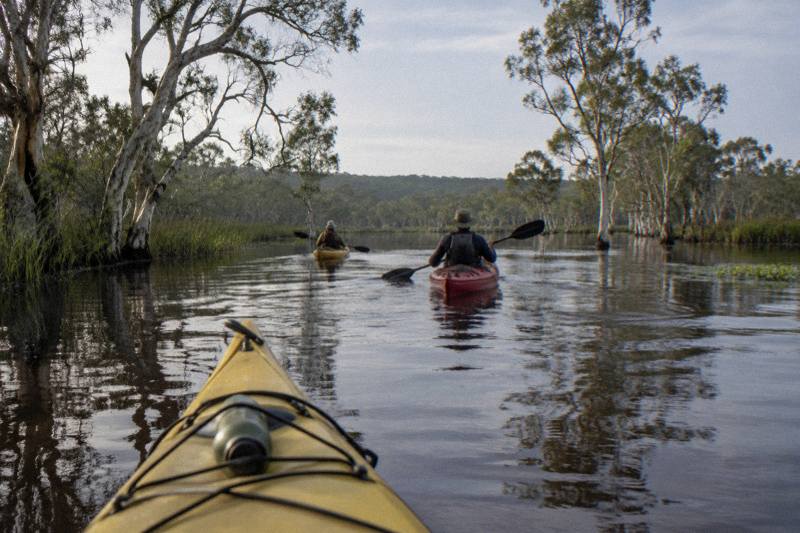
Can You Kayak In The Noosa Everglades?
Yes, you can kayak the Noosa Everglades. QPWS lists the upper Noosa River as a 27.7 km canoe and kayak journey. Here is how the four bookable kayak tours compare, plus rules, distances and permits.
Can You Kayak In The Noosa Everglades?
Yes, kayaking is one of the two official ways to travel this waterway. Queensland Parks and Wildlife Service lists the upper Noosa River as a canoe and kayak journey, 27.7 km one way with a suggested five hours of paddling time, and states that canoes and kayaks can be hired from private operators at Boreen Point and Elanda Point. Four bookable kayak tours, two guided and two self-guided, cover the same river.
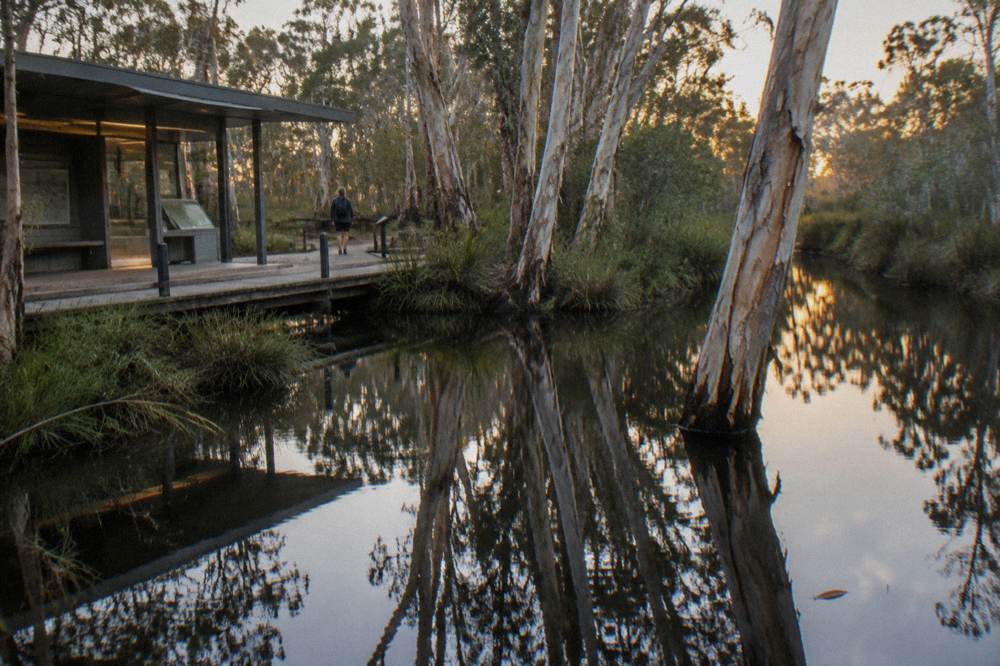
The park service is explicit about the journey type on its upper Noosa River waterway page: this is a paddling waterway first, with tour boats operating daily from Noosa and Tewantin alongside it. The river above Lake Cootharaba is narrow, tannin-stained and winding, fringed by twisted paperbarks and bloodwoods whose reflections give the listings their "River of Mirrors" name. That name, like "Noosa Everglades" itself, comes from operators and common usage rather than the park service, which calls the place the Upper Noosa River in the Cooloola Recreation Area, Great Sandy National Park, and names the famous stretch "The Narrows".
For a paddler, that distinction matters less than the practical shape of the water. The journey runs from Elanda Point or Boreen Point across Lake Cootharaba to Kinaba Information Centre, then upstream through The Narrows toward Fig Tree Point, Harrys Hut and the numbered campsites beyond. It is not possible to proceed upstream beyond Upper Noosa River campsite 15, so the full journey has a natural end. Most tour kayakers see only the first third of it, which is the part the reflections are famous for. If those numbered campsites tempt you to stay overnight, the permit rules and booking steps for Noosa Everglades campsites explain what you need to arrange before setting out.
The four bookable kayak options sit at two price points. Guided days run from $148 per person with Kanu Kapers Australia and from $137 with Adventure Tribe Aus. Self-guided days run from $85.68 and from $80 respectively. All four launch from Elanda Point, and none offers hotel pickup, so you drive yourself to Lake Flat Road.
Where Do The Kayak Tours Start And How Do You Get There?
Every kayak tour on this river launches from Elanda Point, on Lake Flat Road at Boreen Point, roughly 25 minutes north of Noosa by road. None of the four kayak listings includes hotel pickup, so you drive yourself, and the park service confirms both Elanda Point and the Boreen Point boat ramp are accessible by conventional 2WD vehicles. The launch itself is the Elanda Point canoe launch at 204 Lake Flat Road.
The drive in is straightforward from Tewantin: 19 km west and north via McKinnon Drive and Louis Bazzo Drive to Boreen Point, then left onto Lake Flat Road and 2 km to the Elanda Point access road, then 1.4 km to the QPWS car park. From Brisbane the park service gives 135 km north on the Bruce Highway or Sunshine Motorway to Tewantin. One local wrinkle for drivers coming from the south: Doonella Bridge in Tewantin runs one-way eastbound only, from Tewantin toward Noosaville, until early December 2026, with westbound traffic detoured via Eumundi-Noosa Road and Beckmans Road. If you are routing through Tewantin toward the river, check a mapping service for the detour before you set out.
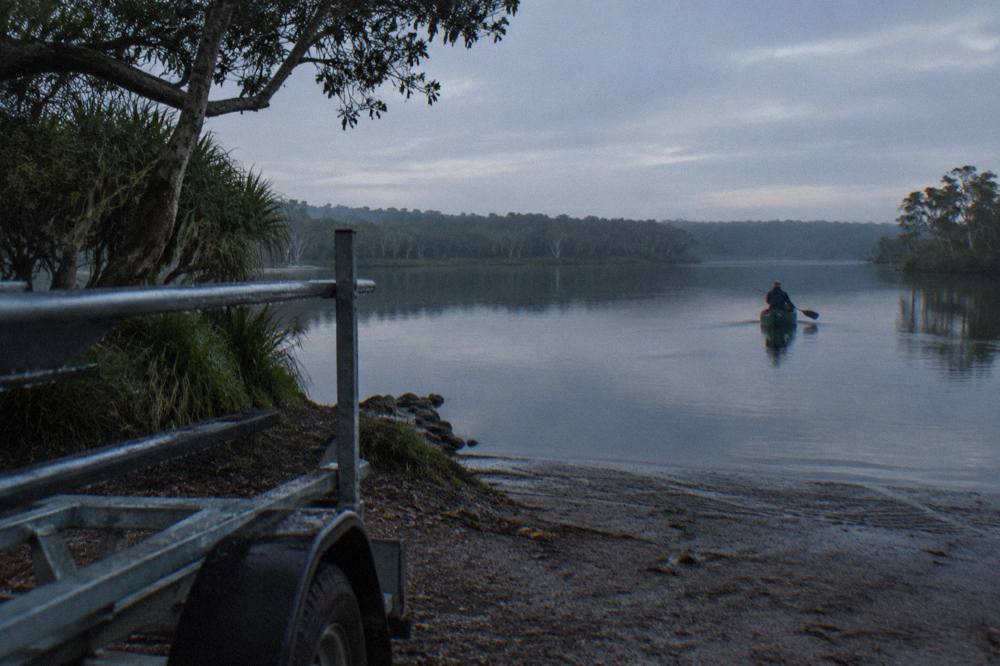
The park service gives one piece of timing advice that kayakers should take seriously: plan to cross Lake Cootharaba early in the morning when conditions are likely to be calm and travel is easiest. The lake is the exposed part of the day. Both Kanu Kapers listings start at 8:30am, which lines up with that advice. If you are staying in Noosa Heads, that means an early start to cover the drive north.
If you would rather not drive at all, the cruise family of tours is the alternative. The afternoon cruises depart Boreen Point and the Explorer cruise's departure point and transfer options are on the live booking page, so check there before assuming anything. Our getting to the Everglades from Noosa and Brisbane guide covers the bus and shuttle picture in detail.
Guided Or Self-Guided: Which Kayak Day Should You Book?
Guided days cost from $137 to $148 per person and include a guide, equipment and food; self-guided days cost from $80 to $85.68 and give you the same waterway without a guide and, on the two listings we compared, no stated meal. The strongest guided listing is rated 4.9 from 158 reviews; the strongest self-guided option is rated 4.8 from 133 reviews. Cancellation terms differ sharply between operators, so read them per listing.
We compared the four listings side by side, and the differences are bigger than the price gap suggests.
| Listing | Format | From price | Rating | Duration | Food | Cancellation |
|---|---|---|---|---|---|---|
| Full-Day Guided Kayak (Kanu Kapers Australia) | Guided, groups up to 16 | $148 | 4.9 from 158 reviews | About 6 hours, 8:30am start | Lunch, fresh fruit, baked bread, drinks | No free cancellation stated, check the booking page |
| Truly Sustainable Guided Kayak (Adventure Tribe Aus) | Guided | $137 | 4.8 from 9 reviews, a thin sample | 7.5 hours | Morning tea, lunch and coffee, local organic food | Free cancellation |
| Self-Guided Kayak (Kanu Kapers Australia) | Self-guided, groups up to 20 | $85.68 | 4.8 from 133 reviews | About 6 hours, 8:30am start | No meal listed | No free cancellation stated |
| Truly Sustainable Self-Guided Kayak (Adventure Tribe Aus) | Self-guided | $80 | 4.8 from 16 reviews, a thin sample | 7.5 hours, 6 hours kayaking | No meal listed | Cancel ahead for a full refund |
The Kanu Kapers guided day is the most-reviewed kayak product on the river at 158 reviews, and its 4.9 sits on a real sample. The Adventure Tribe listings are well rated but thin: 9 reviews and 16 reviews respectively. We print the counts beside the ratings for that reason. A 4.8 from 16 people is a good sign, not a verdict.
What the guide actually buys you, beyond the food, is local knowledge on a river where the interesting paddling is upstream of Kinaba and the navigation is not always obvious. The self-guided format suits confident paddlers who want to set their own pace and stop where the reflections are best. Both formats cover the same first stretch: across the lake, into The Narrows, and as far upstream as time allows.
The other honest difference is cancellation. The Kanu Kapers listings state no free cancellation; the Adventure Tribe guided listing offers free cancellation and the self-guided one asks you to cancel ahead for a full refund. If your travel dates are soft, that is worth weighing against the $60-odd saving.
What Rules Apply To Paddling Upstream Of Kinaba?
A six-knot, no-wash speed limit applies upstream of the Kinaba Information Centre, which barely affects kayaks but shapes the boat traffic around you. Motorised vessels are permitted only as far as campsite 3; beyond it, only electric motors and non-motorised vessels like kayaks are allowed. There is also a no-landing zone between Fig Tree Point and Harrys Hut, so paddlers cannot step ashore along that 5 km stretch.
These rules come from the park service's park-specific conditions and things-to-do pages, and they explain why the upper river stays quiet. The six-knot limit protects the riverbanks from erosion, and penalties apply to vessels that generate wash. For a kayaker the practical effect is that any tour boat you meet above Kinaba is moving slowly and politely, and the water above campsite 3 is paddlers-only country. The full index of guides sits on Noosa Everglades Tours.
The no-landing zone between Fig Tree Point and Harrys Hut is the one that catches self-guided paddlers out. You cannot picnic or stretch your legs on the bank through that section; your landing options are Fig Tree Point itself and then Harrys day-use area. Plan your stops around it.
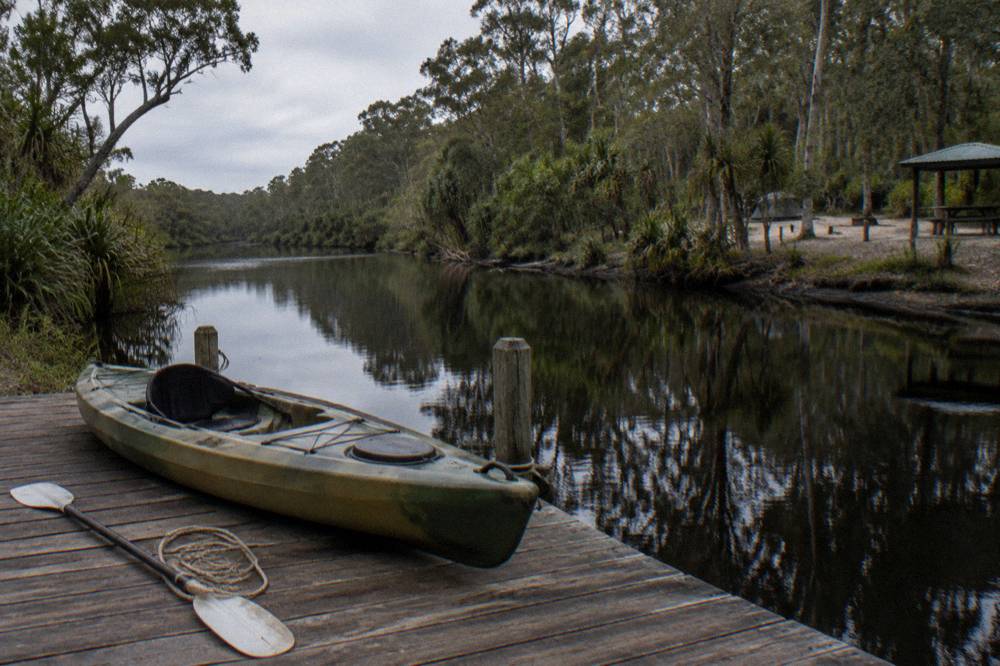
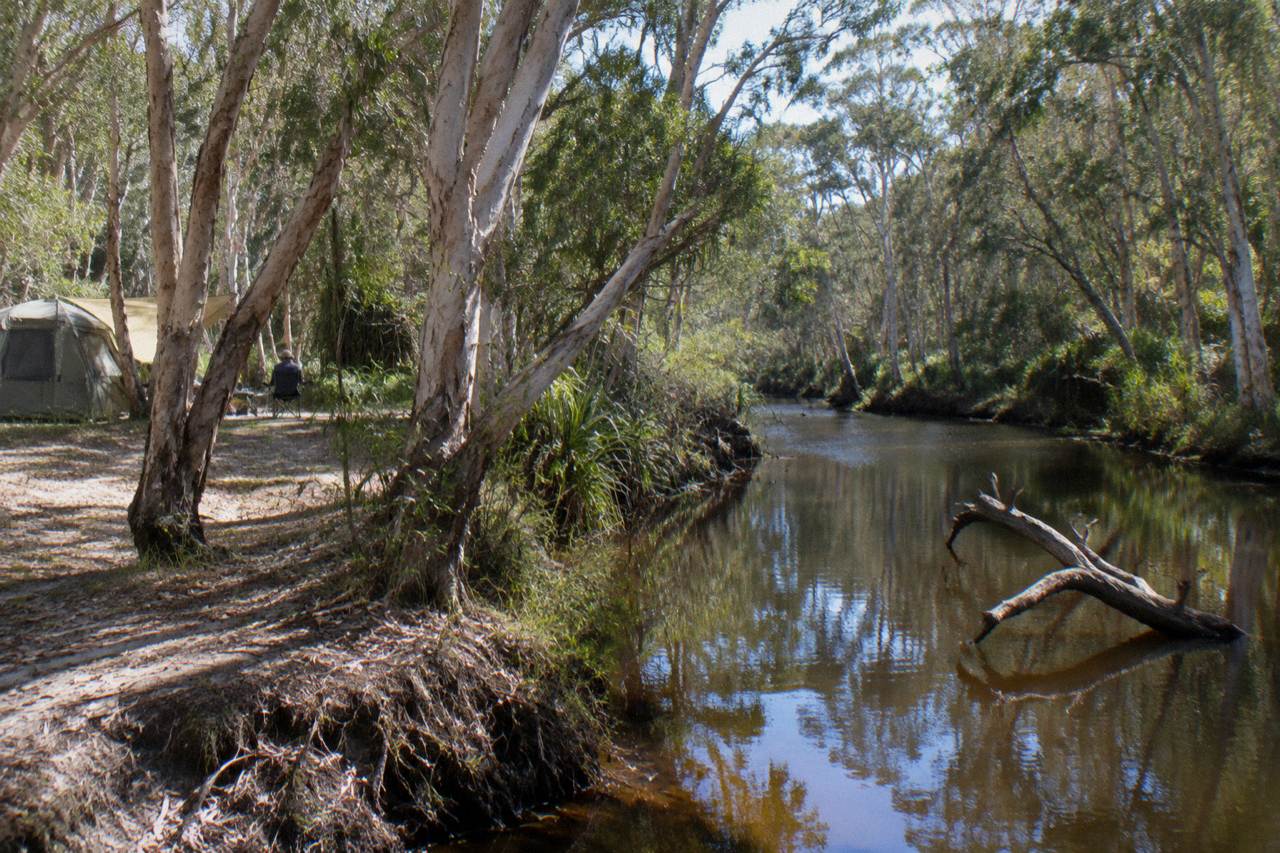
If you want to turn the paddle into an overnight, camping is permitted at Upper Noosa River campsites 1 to 15, at Fig Tree Point and at Harrys, with a permit booked before you go. Fees from 1 July 2026 are $7.75 per person per night or $31.00 per family per night, bookable through the QPWS camping booking service. The maximum stay is 7 nights at campsites 1 to 15 and 14 nights at Fig Tree Point and Harrys. Open fires are prohibited at every Upper Noosa River campsite, so bring a gas or fuel appliance. Our Noosa Everglades camping guide walks through the sites and permits in full.
How Far Can You Actually Paddle In A Day?
Most paddlers cover about 11.5 km on a standard day tour, which takes roughly three hours of pure paddling time spread across a six or 7.5 hour tour day. The full waterway is 27.7 km one way, but no single-day tour covers all of it. Instead, the usual route runs from Elanda Point to Kinaba, on to Fig Tree Point, and finishes at Harrys Hut.
The park service's distance table is the most useful planning tool on this river, because it lets you build your own day from real figures.
| Leg | Distance | Canoe time |
|---|---|---|
| Elanda Point to Kinaba | 4.5 km | 1.5 hr |
| Kinaba to Fig Tree Point | 2 km | 20 min |
| Fig Tree Point to Harrys Hut | 5 km | 1 hr |
| Harrys Hut to campsite 1 | 3.5 km | 35 min |
| Campsite 1 to campsite 2 | 1.7 km | 15 min |
| Campsite 2 to campsite 3 | 2.5 km | 30 min |
Add the legs up and the shape of a tour day becomes clear. Elanda Point to Harrys Hut is three legs of 4.5, 2 and 5 km, roughly three hours of paddling by the park service's own timings, before any stops, photos or floating still to watch the reflections. That is what a six-hour tour day delivers, with the lake crossing at the start and lunch in the middle. The 7.5-hour Adventure Tribe listings, which the operators describe as six hours of kayaking inside the day, push further toward the numbered campsites.
Going beyond campsite 3 is where the waterway changes character entirely. No motorised vessels follow you there, only electric motors and other paddlers, and the campsites thin out toward campsite 15, the furthest upstream point. That section is multi-day territory: Kanu Kapers Australia offers two and three-day self-guided options with camping equipment provided, departing from the Elanda Point launch. For most visitors the day tour is the right first taste, and the multi-day format is the reward for a second trip.
Kinaba Information Centre itself is worth the stop. It sits on the water with a lookout, flush toilets, and stingrays sometimes visible in the water around the building, and commercial boat tours also drop in there. Paddlers get the same welcome. Our Kinaba Information Centre guide covers what to expect at the halfway mark.
What Should You Know Before Paddling In Late 2026?
Three dated items affect the river right now: the southern day-use jetty at campsite 3 is closed until 24 October 2026, a pest control program runs across the Cooloola Recreation Area from 31 October to 28 November 2026, and the Cooloola conditions report was updated 30 September 2026. None of these closes the waterway to kayakers, but the jetty closure changes where you land at campsite 3 and the conditions report is the official pre-trip read.
The jetty closure is the most concrete one for paddlers. Flood damage closed the southern day-use jetty at campsite 3, with the closure running until 24 October 2026; the northern camper's jetty stays open through the period. If your tour or your own paddle plan includes a stop at campsite 3, use the northern jetty.
The pest control program runs 31 October to 28 November 2026 and involves firearms, poisons and traps in parts of the Cooloola Recreation Area, with firebreak roads closed for the full period and some beach-side campsites closed 2 to 4 November. The upper river waterway tours are not the focus of it, but if your trip extends into camping elsewhere in Cooloola, read the alert before you book a site. If you're planning to camp at Teewah Beach or Noosa North Shore as well, check whether you need a 4WD for Noosa North Shore camping before you commit to a site.
Weather-wise, October is a kind month on this water. The Tewantin station's 30-year averages put October at a mean maximum of 25.8 degrees with 112.1 mm of rain across about eight rain days, and September is the driest month in the table. The park's advice to cross Lake Cootharaba early still holds in every season, because the lake is where the wind gathers whatever the calendar says. Mosquitoes and biting midges are a fair question on a tannin river, and no official location-specific statement was found on the Parks and Wildlife pages for Cooloola; pack repellent and long sleeves for the campsites, which is standard practice on any Queensland lowland water. Our mosquitoes in the Everglades article covers what official sources do and do not say. Biting insects aside, the question of larger wildlife comes up too, and our crocs in the Everglades guide covers what the official record actually shows.
Swimming is a separate question again. Council monitors recreational water quality at the Boreen Point and Elanda Point sites and advises avoiding discoloured or murky water and swimming shortly after heavy rain, and there are no lifeguards at Boreen Point or anywhere on the upper river. The can you swim in the Everglades piece sets out the official advice in full.
Common Questions About Kayaking In The Noosa Everglades
Can You Kayak In The Noosa Everglades?
Yes. Queensland Parks and Wildlife Service lists the upper Noosa River as a canoe and kayak journey, 27.7 km one way with a suggested five hours of paddling time, and kayaks can be hired from operators at Boreen Point and Elanda Point. Four bookable kayak tours, guided from $137 and $148 and self-guided from $80 and $85.68, run on the same water.
Do You Need A Permit To Kayak The Upper Noosa River?
No permit is needed to paddle the waterway itself for a day trip. Camping permits are required at all Upper Noosa River campsites, at Fig Tree Point and at Harrys, at $7.75 per person per night or $31.00 per family per night from 1 July 2026, booked before you go through the QPWS camping booking service.
Where Do The Kayak Tours Launch From?
All four kayak listings launch from the Elanda Point canoe launch at 204 Lake Flat Road, Boreen Point, about 25 minutes north of Noosa by road. None includes hotel pickup, so you drive yourself. Both Elanda Point and the Boreen Point boat ramp are accessible by 2WD vehicles.
How Far Can You Paddle In One Day?
By the park service's distance table, Elanda Point to Harrys Hut is three legs of 4.5, 2 and 5 km, roughly three hours of paddling before stops, which is what a standard six-hour tour day covers. The full waterway is 27.7 km one way to campsite 15 and is multi-day territory, with two and three-day self-guided options available with camping equipment provided.
Are Motorboats Allowed Where Kayaks Paddle?
Motorised vessels are permitted only as far as campsite 3 on the upper river; beyond it only electric motors and non-motorised vessels are allowed. A six-knot no-wash speed limit applies upstream of Kinaba Information Centre, so any boat traffic you meet is moving slowly.
Can You Land Anywhere Along The Riverbank?
No. A no-landing zone applies between Fig Tree Point and Harrys Hut, a 5 km stretch, so paddlers cannot step ashore there. Land at Fig Tree Point or continue to the Harrys day-use area, which has toilets, picnic tables and drinking water that should be treated before use.