What Is The Noosa Everglades River Of Mirrors?
The mirror reflections on the upper Noosa River come from dark tannin-stained water winding through paperbark forest. Here is what the River of Mirrors actually is, where it sits, and which cruises and paddles reach it.
What Is The Noosa Everglades River Of Mirrors?
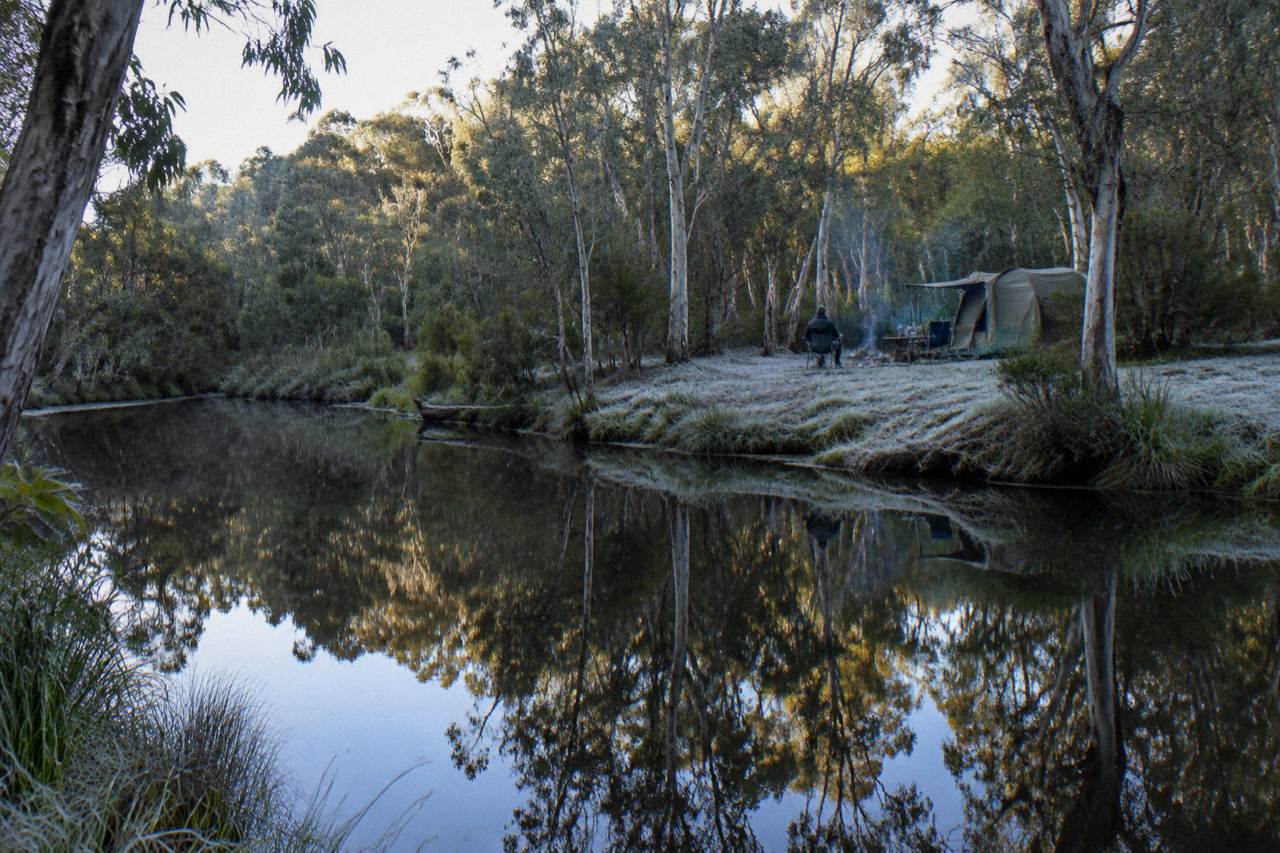
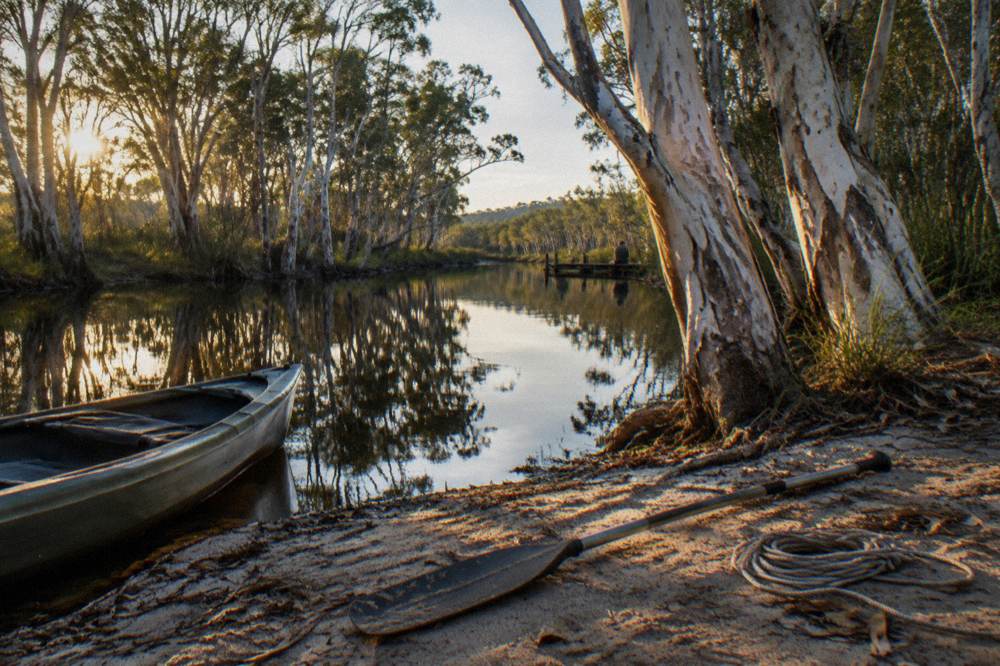
The River of Mirrors is the popular name for the tannin-stained upper reaches of the Noosa River, inside the Cooloola Recreation Area of Great Sandy National Park, about 155 to 240 km north of Brisbane. Dark, tea-coloured water absorbs light rather than scattering it, so the twisted paperbarks and bloodwoods along the banks reflect almost perfectly on a calm day. Operators and listings use the name; the parks service does not. The still, dark water also suits biting insects, so check what official sources say about mosquitoes there before you plan a trip.
That last point matters more than it first appears. Queensland Parks and Wildlife Service, the agency that manages the waterway, never writes "Noosa Everglades" or "River of Mirrors" on its own pages. Its description of the same place is plainer and, in its way, more striking: the dark tannin-stained waters offer spectacular reflections of the twisted paperbarks and bloodwoods that line the riverbanks. The mirror effect is official fact. The mirror name is marketing shorthand that stuck. So before you book anything, read our honest verdict on whether the Noosa Everglades lives up to the hype.
The stretch most associated with the name is a 2.5 km section called The Narrows, where the river pinches between forested banks and the reflections are at their densest. Boats and canoes pass through it daily, and nearly every tour into the area, cruise or paddle, routes through it. Visitors who have taken those trips describe mirror lakes in guest reviews on the live listings, usually in the same breath as the tea colour of the water.
If you want to see it for yourself, the choice is essentially between a cruise and a kayak, and the differences between them are bigger than price alone.
The featured afternoon cruise is the most-reviewed way in: 4.5 from 1,093 reviews, from $69 per person, 2.5 hours from Boreen Point with a glass of sparkling wine, beer or juice included. The Serenity cruise from the same family of operator covers similar water from $70.10, and the full-day guided kayak puts you on the mirror surface itself rather than above it.
Why Does The Water Look Like A Mirror?
The mirror look has two causes working together. Tannins leached from paperbark and other vegetation stain the water dark brown, like strong tea, and dark water absorbs light instead of scattering it. Combine that with the wind shelter of a narrow, forested channel and the surface becomes a genuine reflector, holding a near-perfect image of the trees and sky.
The tannin itself is natural and common in coastal Queensland waterways. Leaves, bark and litter fall into the slow-moving river and decompose, releasing tannic compounds that colour the water. Two-thirds of the Noosa River catchment is protected within the national park, so the water arrives essentially unpolluted and heavily stained. The parks service describes the upper river and its tributaries as forming scenic waterways, with those dark waters offering the reflections visitors come to photograph. Those dark, mirror-like waters are just one of the draws in the area, and our guide to what makes Noosa a standout destination covers the rest, from its famous surf breaks to its coastal walks.
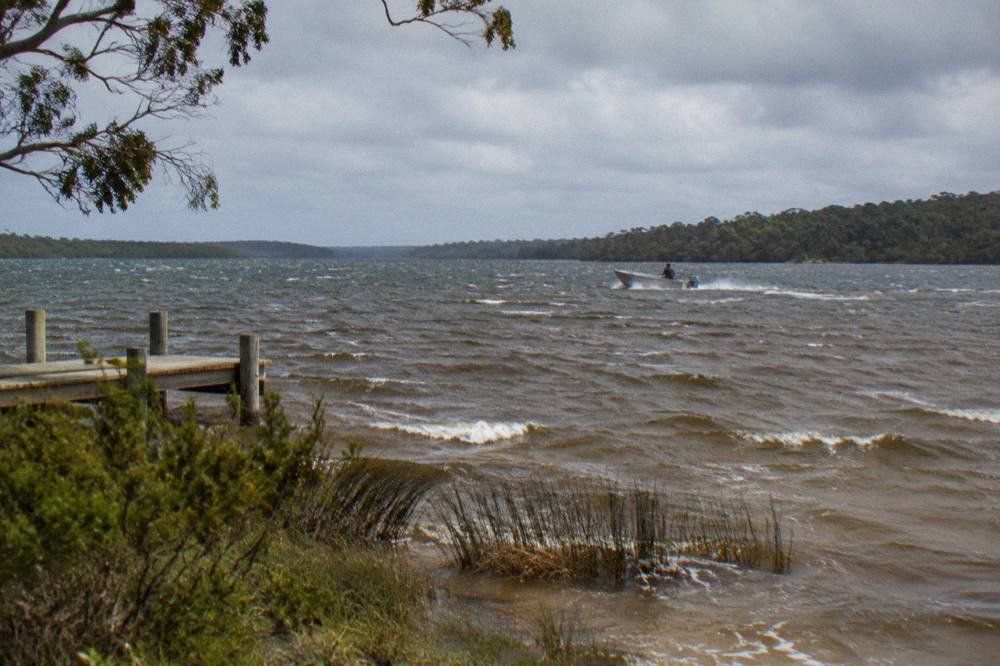
The shelter matters as much as the chemistry. The Narrows sits between high banks of forest, which blocks the breeze that would otherwise ripple the surface open water. Lake Cootharaba, the broad lake you cross to reach the river section, is a different proposition: it is shallow and exposed, and its surface choppy on a windy afternoon. That is why the same trip can feel like two different waterways in a single hour, glassy river inside the forest, textured lake outside it.
The colour also changes with depth and light. In the early morning, when tour boats first cross the lake, the low sun turns the tannin amber. Under midday cloud it reads almost black. Paddlers report that from water level, in a kayak, your own reflection rides beside you the whole way, which is an experience a cruise deck cannot quite reproduce.
For most visitors the afternoon cruise is the simplest first encounter with the mirror water, and the free cancellation window of up to 24 hours makes it a low-commitment booking.
One practical note before the geography: whichever format you pick, you will be crossing open lake water to reach the still section, so a windproof layer is worth having even on a warm day. The lake breeze is the one thing the forest cannot shelter you from.
Where Is The River Of Mirrors Exactly?
The mirror section sits on the upper Noosa River upstream of Kinaba Information Centre, reached across Lake Cootharaba from Boreen Point or Elanda Point. The Narrows, the most photographed 2.5 km, runs between Kinaba and Fig Tree Point, and the river continues upstream past Harrys day-use area toward campsites 1 to 15.
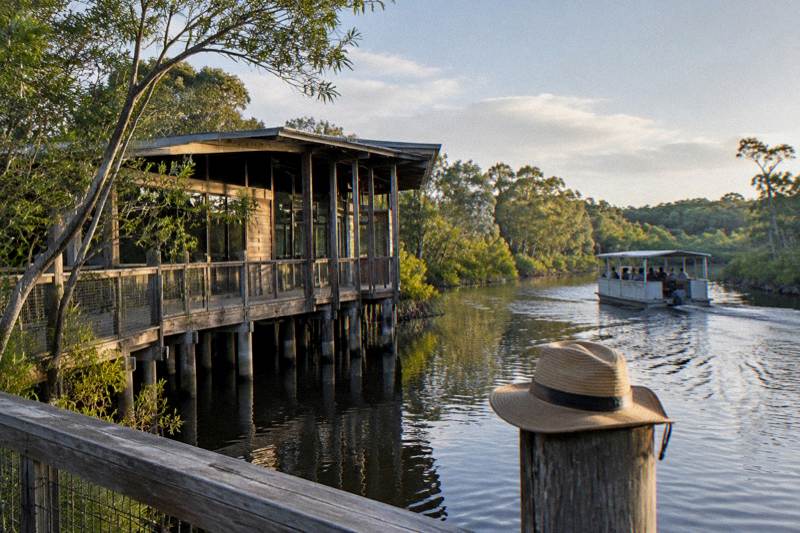
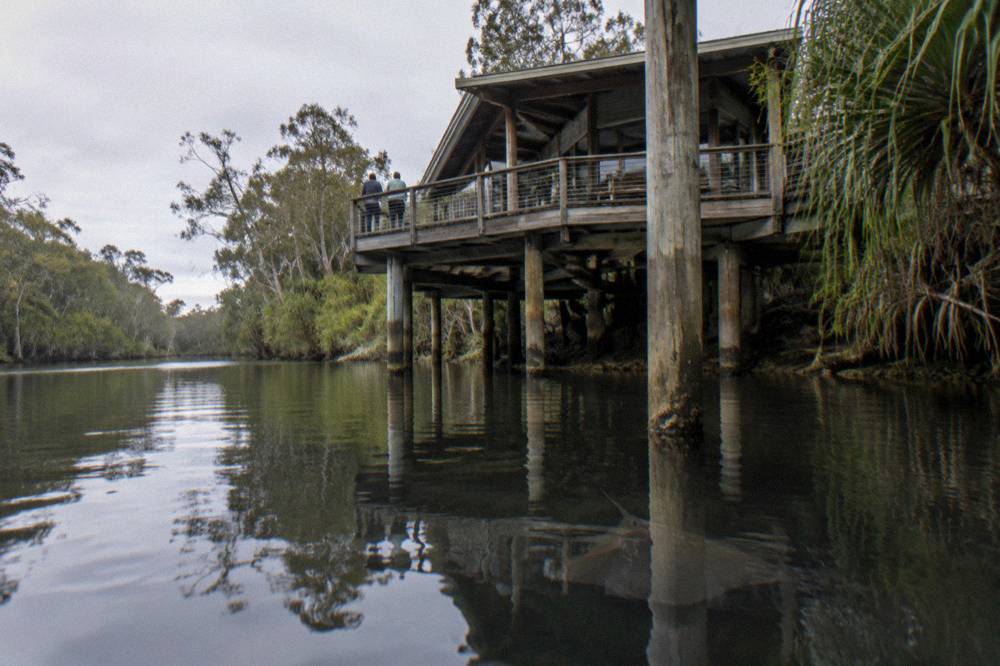
The journey works like this. From Boreen Point it is about 7 km by boat to Kinaba, roughly 15 minutes at the 40 knot lake limit. From Elanda Point by canoe it is 4.5 km, about 1.5 hours of paddling. Kinaba, also called the Sir Thomas Hiley Information Centre, is a stilted building over the water with flush toilets and a lookout, and commercial boat tours drop in there. Look for stingrays in the waters around the building, as the parks page for the centre suggests.
Above Kinaba the character changes. A six-knot, no-wash speed limit applies upstream from the information centre, which protects the banks from erosion, and the water goes properly still. Kinaba to Fig Tree Point is 2 km, then Fig Tree Point to Harrys Hut is another 5 km, about an hour by canoe. The no-landing zone between Fig Tree Point and Harrys Hut keeps the banks undisturbed, which is part of why the reflections hold up.
| Leg | Distance | By canoe | By boat |
|---|---|---|---|
| Elanda Point to Kinaba | 4.5 km | 1.5 hr | n/a |
| Boreen Point to Kinaba | 7 km | n/a | 15 min |
| Kinaba to Fig Tree Point | 2 km | 20 min | 15 min |
| Fig Tree Point to Harrys Hut | 5 km | 1 hr | 30 min |
| Harrys Hut to campsite 1 | 3.5 km | 35 min |
Distances and times come from the parks service's own waterway figures, which assume a steady canoe pace or a boat at six knots above Kinaba. The full journey is 27.7 km one way to campsite 15, with a suggested five hours of paddling, and it is not possible to proceed upstream beyond campsite 15. Most tour traffic never goes past Harrys, and most mirror photographs are taken inside The Narrows. If you are planning your own route, the Kinaba Information Centre guide covers the mid-lake stop in detail, and the hiking and paddling route guide maps the whole waterway.
The Serenity cruise from Everglades Eco Safaris is the other boat option through this section: about 2 hours 30 minutes, 4.5 from 472 reviews, from $70.10 per person, with sparkling wine and beer included and a vessel capacity of 36 per the operator.
That cruise and the featured afternoon cruise cover the same core water, so the choice between them usually comes down to departure point and timing rather than scenery. Both stop at Kinaba and both idle through The Narrows. The Serenity operator asks 48 hours notice for cancellations, so it suits travellers whose plans are already firm.
Is The Name Official?
No. The parks service names the place the Upper Noosa River in the Cooloola Recreation Area, Great Sandy National Park, and uses "The Narrows" for the narrow 2.5 km stretch. "Noosa Everglades" and "River of Mirrors" come from operators, listings and common usage. The claim that it is one of only two everglades in the world is operator copy, not a parks service statement.
This is worth knowing before you repeat it at a dinner party. The two-everglades line appears across tour listings and has spread widely, but no Queensland Parks and Wildlife Service page carries it. What the parks service does say is specific and verifiable: the scenic waterways of the Upper Noosa River and its tributaries form part of the Noosa River catchment, with two-thirds of that catchment protected inside the national park. The wetlands around the upper river also provide extensive nurseries for juvenile fish. Everything else covered here is indexed on Noosa Everglades Tours.
None of this makes the place less impressive. If anything, the official version is the more remarkable claim: a wild, tannin-dark river with rare acid frogs and ground parrots, one of the few remaining coastal emu populations in Queensland, and more than 350 bird species across the recreation area, all within an easy drive of a resort town. The mirror name is the hook. The protected catchment is the reason the hook still works.
So when you read "River of Mirrors" on a booking page, read it as a description of an effect, not a place name. The effect is what you are buying a ticket to see.
Which Tours Take You Onto The Mirror Water?
Three formats reach the mirror section: afternoon cruises from Boreen Point, longer cruise-and-canoe days that add a paddle, and dedicated kayak tours launching from Elanda Point. Cruises start from $69 per person, cruise-and-canoe days from $117, and guided kayak days from $148 with lunch included. All three put you inside The Narrows; only the paddles put you on the surface.
The cruise family is the easiest fit for most visitors. The featured afternoon cruise runs 2.5 hours from Boreen Point, 4.5 from 1,093 reviews, from $69, with a glass of sparkling wine, beer or juice and free cancellation up to 24 hours. Pickup varies by tour: cruises include a Noosa shuttle, kayak tours do not. The Serenity cruise covers similar water from $70.10. Both cross the lake, stop at Kinaba, and idle through The Narrows while the reflections do the work.
The cruise-and-canoe days go longer. The Explorer cruise runs 4.5 hours, 9am to 1.30pm, from $117 with morning refreshments included and lunch to buy at the on-site bar and bistro, rating 4.6 from 279 reviews. Its sister listing, the canoe and BBQ day, runs about 6 hours and adds a canoe segment, from $119.67, 4.6 from 379 reviews, with round-trip transfers from central Noosa that can be arranged, confirm at booking. The two Explorer listings state different durations, 4.5 hours versus about 6 hours, so check each listing's own figure.
| Format | Example listing | From price | Duration | Rating |
|---|---|---|---|---|
| Afternoon cruise | 2.5-Hour Afternoon Cruise | $69 | 2.5 hours | 4.5 from 1,093 reviews |
| Afternoon tea cruise | Afternoon Tea Cruise | $70.10 | about 2.5 hours | 4.5 from 472 reviews |
| Cruise and lunch day | 4.5-Hour Cruise, Lunch Extra | $117 | 4.5 hours | 4.6 from 279 reviews |
| Cruise and canoe | 6-Hour Canoe Trip, BBQ Lunch Extra | $119.67 | about 6 hours | 4.6 from 379 reviews |
| Guided kayak | Full-Day Guided Kayak, Lunch Included | $148 | about 6 hours | 4.9 from 158 reviews |
The kayak days are the deepest immersion. The full-day guided tour with Kanu Kapers Australia runs about 6 hours from 8:30am at Elanda Point Canoe Launch, from $148, 4.9 from 158 reviews, with lunch, fresh fruit, baked bread and drinks included and groups capped at 16. No free cancellation is stated on that listing, so check the booking page before committing. For the full picture on paddling the waterway, see can you kayak in the Noosa Everglades.
There are also two sustainable kayak listings from Adventure Tribe Aus, a 7.5-hour guided day from $137 with morning tea, lunch and coffee included, and a 7.5-hour self-guided day from $80. Both rate 4.8, from 9 and 16 reviews respectively, thin samples worth knowing about. A private hinterland day with hotel pickup across the Sunshine Coast, from $527 per person, adds a 2.5 hour Serenity cruise and a gourmet lunch in Pomona; it is a new listing with no reviews yet.
When Do The Best Reflections Happen?
Calm, early mornings give the best mirror conditions, which is why tour boats cross Lake Cootharaba early and kayak tours start at 8:30am. Breeze builds through the day on the exposed lake, though The Narrows stays sheltered. September is the driest month on the Tewantin record with 57.8 mm average rain; February and March are the wettest, at 233.7 and 236.4 mm.
The parks service gives its own planning hint: plan to cross Lake Cootharaba early in the morning when conditions are likely to be calm and travel is easiest. The same logic applies to reflections. The lake is the bumpy part, and the river beyond Kinaba is the still part, so an early start buys you calm water on the crossing and low light on the tannin.
Rain matters less than wind for the mirror itself, but more for the whole trip. The nearest Bureau of Meteorology station with a long record is Tewantin, 30 years of data, and its averages show a clear spring dip: 57.8 mm in September against 233.7 mm in February. Averages are pulled up by wet years, though, so a typical month is drier than the mean suggests. A day or two after heavy rain the tannin darkens further and the reflections sharpen; during heavy rain you will be looking at the inside of a rain jacket.
Closures on land barely touch the water tours, but they matter if you are extending a trip with camping. The upper river campsites sit inside the mirror landscape itself, and a night on the water is the one way to see The Narrows at dawn, before any boat arrives. The upper river campsites guide covers sites 1 to 15, and the best time to visit guide works through the seasons month by month.
Whichever way you go, the mirror water is the reason this corner of the Great Sandy National Park shows up on itineraries at all, and the trio of formats above all deliver it. The choice is really about how close to the water you want to sit.
Common Questions About The River Of Mirrors
What Is The Noosa Everglades River Of Mirrors?
It is the popular name for the tannin-stained upper Noosa River inside the Cooloola Recreation Area, Great Sandy National Park. Dark water and sheltered banks produce near-perfect reflections of the paperbark forest, especially through the 2.5 km stretch called The Narrows. The parks service uses the place name Upper Noosa River; the mirror name comes from operators and common usage.
Why is the water so dark?
Tannins from decomposing leaves and bark stain the water brown, like strong tea. Dark water absorbs light rather than scattering it, so it reflects the forest and sky instead of glowing. Two-thirds of the Noosa River catchment is protected within the national park, which keeps the water unpolluted and heavily stained.
Where does the mirror section start?
Most tours cross Lake Cootharaba from Boreen Point or Elanda Point to Kinaba Information Centre, about 7 km by boat or 4.5 km by canoe. Upstream of Kinaba a six-knot, no-wash speed limit applies and the water goes still. The Narrows runs 2.5 km between Kinaba and Fig Tree Point.
When is the best time of day for reflections?
Early morning, when the lake crossing is calm and the light is low. The parks service itself advises crossing Lake Cootharaba early when conditions are likely to be calm. Kayak tours start at 8:30am for the same reason. The Narrows stays sheltered through the day, but the lake can chop up by afternoon.
Can you kayak the River of Mirrors?
Yes. Guided and self-guided kayak tours launch from Elanda Point Canoe Launch, and the full journey upstream is 27.7 km one way with about five hours of paddling suggested. Guided full-day tours run about 6 hours from $148 with lunch included; self-guided options start from $80.
Is the River of Mirrors an official name?
No. Queensland Parks and Wildlife Service calls the place the Upper Noosa River and uses The Narrows for the narrow section. The names Noosa Everglades and River of Mirrors, and the claim of one of only two everglades in the world, come from operator and listing copy.